

No. 197
Baba Yaga: Who She Is in Slavic Folklore and Why Her Fence Has Skulls
Baba Yaga is the old woman of the forest in East Slavic folktales, told especially in Russia, Belarus and Ukraine. She lives in a hut that stands on chicken legs, flies through the air in a mortar that she steers with a pestle, and sweeps away her tracks with a broom. Depending on the tale, she threatens, tests or helps the people who come to her door.
Her fence of skulls comes from one tale in particular. In "Vasilisa the Beautiful," as the collector Aleksandr Afanasyev set it down, her hut stands behind a fence of human bones crowned with human skulls, and at night the skulls' eyes glow so brightly that the whole clearing is lit as if by day.
Whether you met her in a book of fairy tales as a child, heard the name in an action film or ran into her in a game, the folktale figure underneath is stranger and more interesting than any single version of her.
Who Baba Yaga is in the tales
Baba Yaga belongs to the storytelling of the East Slavs, the peoples of Russia, Belarus and Ukraine. A folklorist-authored guide from the University of Florida lists the traits that keep returning across her tales: the hut in the forest, the mortar, the pestle, the broom, and the epithet "Bony Leg."
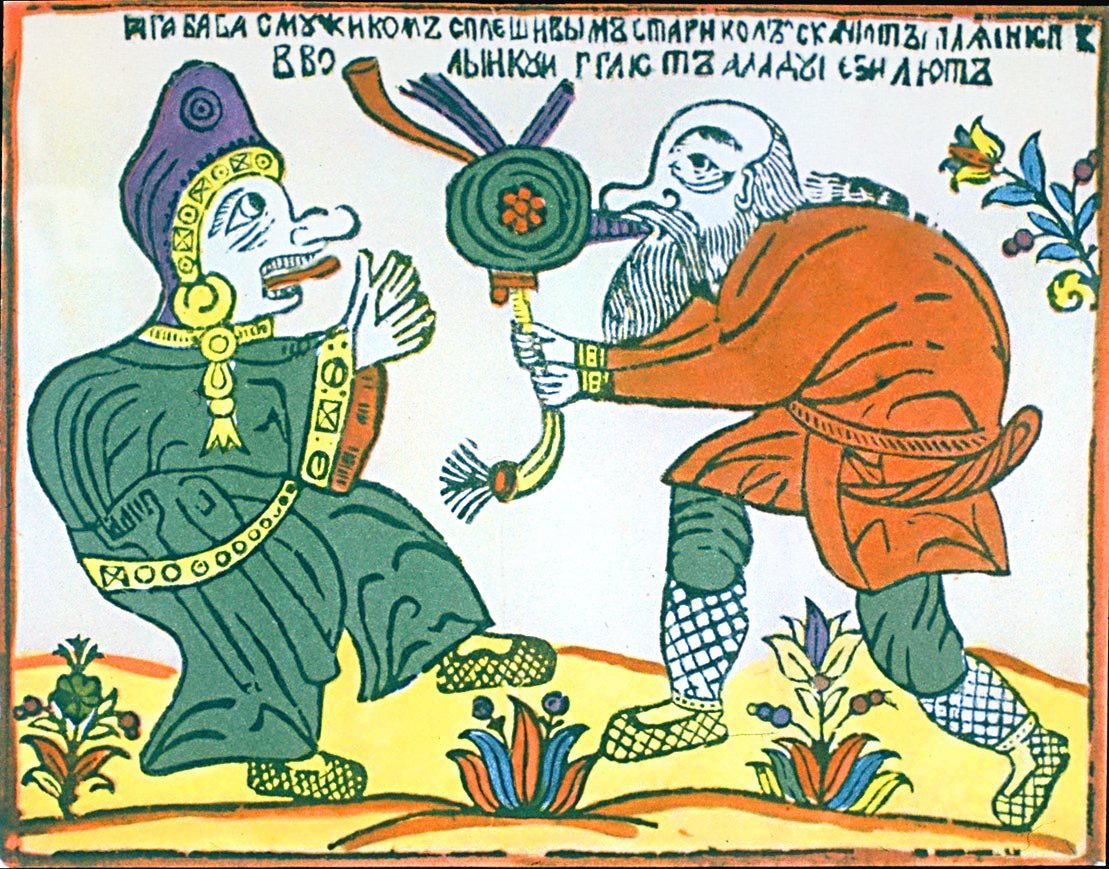
What she does with visitors changes from tale to tale. She may threaten them, test them, punish them, advise them or reward them. In tales with boys as heroes she is usually the villain. In tales with girls she is often a dangerous tester, who rewards the girl who shows kindness and courage.
The hut on chicken legs, the mortar and the pestle
Her house is the first thing most people remember. The hut is a recurring motif rather than one fixed design, and the University of Florida guide records versions in which it stands on chicken legs, on ram's horns or on a spindle. In the East Slavic tales the visitor commonly has to tell the hut to turn and face them before they can go in. It may be the only house in folklore that needs to be asked nicely to show you its front door.
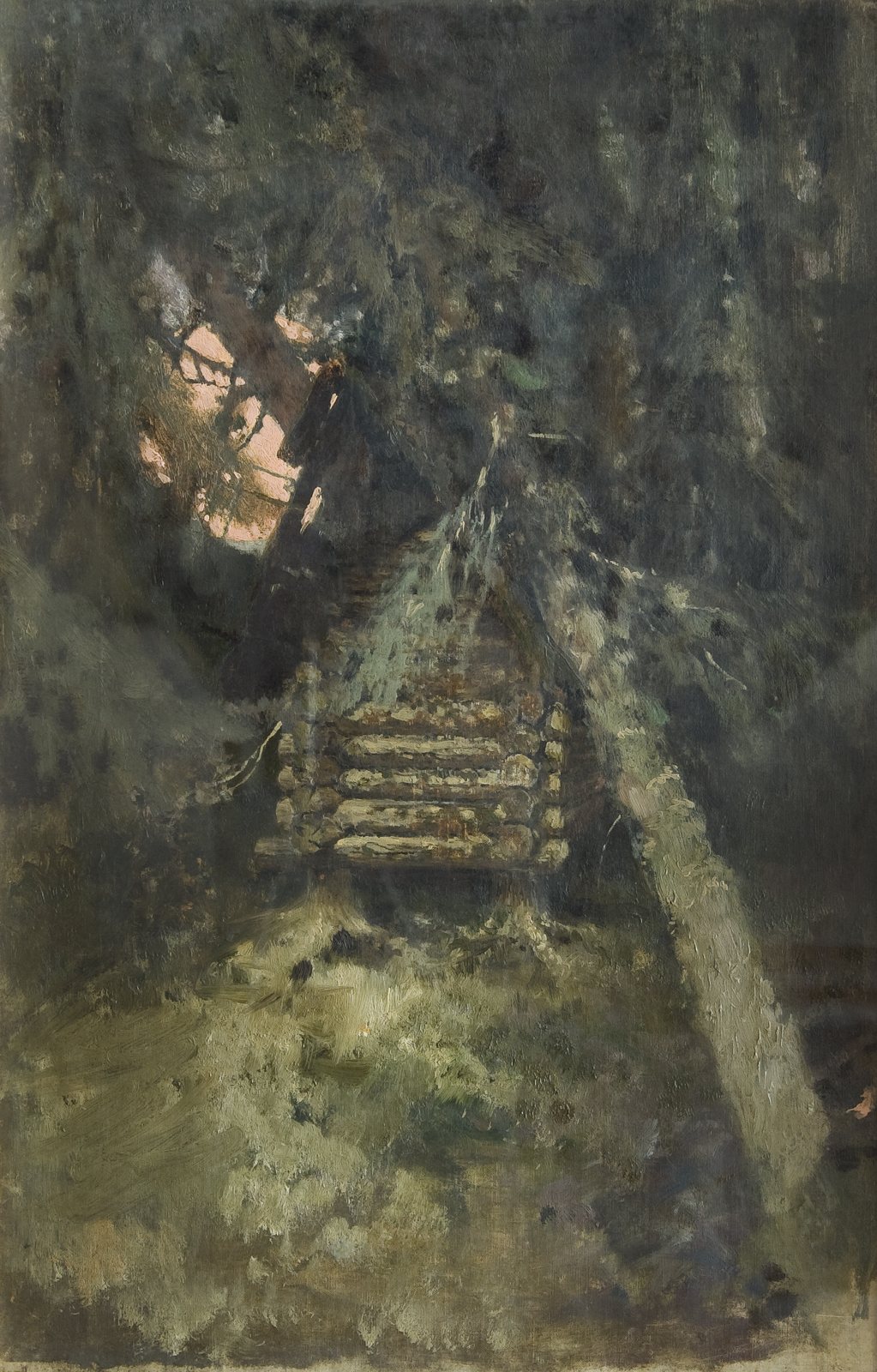
So, why chicken legs? In the tales, the legs are part of what makes the hut uncanny: it moves, it turns, and it belongs to the forest more than to any village. The folklorist Vladimir Propp later read the animal-shaped hut as a possible remnant of an initiation structure. That is his scholarly interpretation, an idea about where the image might come from, and not an established history.
Baba Yaga's way of getting around is just as memorable. She travels in a mortar, a heavy grinding bowl, drives it with a pestle and sweeps away the trail behind her with a broom. Plenty of storybook witches ride their brooms; she uses hers to tidy up after herself. For more on the witch figure and its skulls, see our story on skulls in witchcraft.
The fence of bones and the glowing skulls
The skull fence that brings many readers here comes from "Vasilisa the Beautiful," one of the Russian folktales gathered by Aleksandr Afanasyev, whose collection was published between 1855 and 1863. You can read the tale in an English translation of Afanasyev's text.
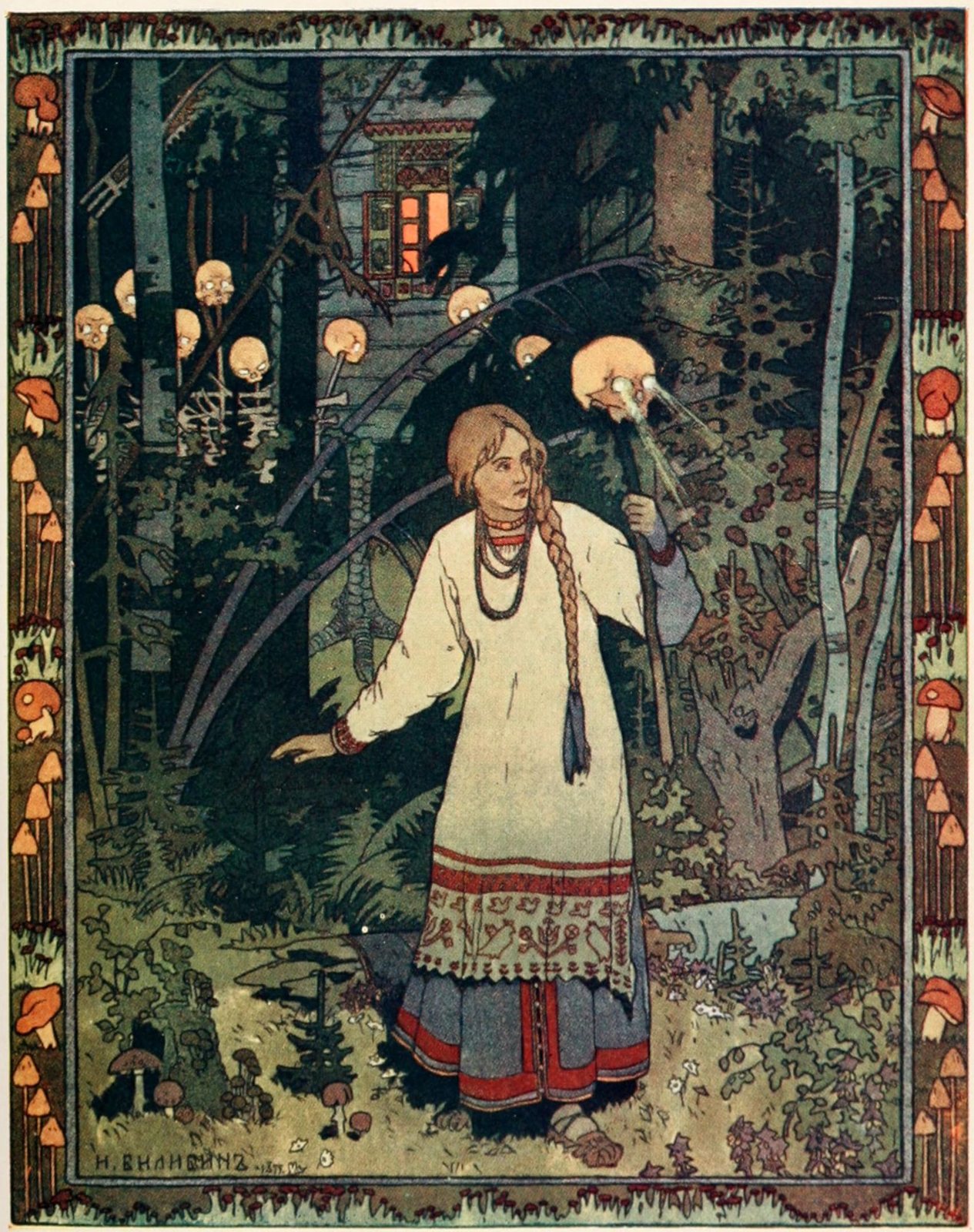
Vasilisa comes to Baba Yaga in the forest to ask for a light. When she reaches the hut, she sees a fence made of human bones, and on top of the fence stand human skulls. The gate is made of men's leg bones, the bolts of arm bones, and the lock of sharp teeth. When night falls, the eyes of the skulls begin to glow, and the clearing around the hut becomes as bright as day.
Vasilisa survives her stay, and when she leaves, Baba Yaga gives her what she came for: one of the skulls, set on a stick, to light her way home. Back at the house, the skull's burning eyes fix on her cruel stepmother and stepsisters and burn them to ashes. Vasilisa is left unharmed.
In this tale the skulls do two jobs at once. On the fence they are a boundary marker, a warning to anyone who comes near that this is Baba Yaga's ground. In Vasilisa's hand they become a supernatural lamp, a light that spares her and punishes the stepfamily who treated her cruelly. Not every Baba Yaga tale has a skull fence; this one is the reason she is remembered with it. For other ways a skull has served as a source of light and meaning, see our story on the skull candle.
Baba Yaga's fence in Vasilisa the Beautiful
Tap a card to bring it forward.
- The fence: Made of human bones.
- The top: Crowned with human skulls.
- The gate: Made of men's leg bones.
- The bolts: Made of arm bones.
- The lock: Made of sharp teeth.
- At night: The skulls' eyes glow and light the clearing as bright as day.
- The gift: Baba Yaga gives Vasilisa one skull on a stick as her light home.
Helper, tester or witch?
The short answer to whether Baba Yaga is good or evil is that she is both, depending on the tale. Folklorist Andreas Johns, in his 2004 book Baba Yaga: The Ambiguous Mother and Witch of the Russian Folktale, sorts the Russian tales into three broad types, as a review in Folklorica describes: Baba Yaga as a donor, as an ambiguous figure, and as an evil witch.
As a donor, she gives a hero advice, a horse or magical objects that help him on his way. As an evil witch, she abducts children, threatens to eat her visitors or punishes the ones who fail her tests. The Baba Yaga of "Vasilisa the Beautiful" shows how blurred the line can be: frightening and dangerous, yet the one who hands the heroine the light that saves her.
What decides which Baba Yaga you get is the kind of tale, the hero or heroine in it, and how that visitor behaves at her door. In the tales with girls, kindness and courage are what earn her reward.
What her name means
The first half of her name is the easier half. "Baba" broadly means an old woman or a grandmother in Slavic languages. "Yaga" is harder, and its meaning is still disputed. The University of Florida guide notes suggested links to words for anger, horror, illness, pain, a witch or a forest spirit, along with possible borrowings from languages outside the Slavic family. None of these has settled the question, so the name keeps a little of its mystery, which suits her.
Ivan Bilibin's Baba Yaga
The way many people see Baba Yaga today owes a great deal to the illustrator Ivan Bilibin, whose illustrations for Russian fairy tales helped set her look. His "Baba Yaga" from "Vasilisa the Beautiful" is dated 1900 on Wikimedia Commons, where it is marked public domain; Bilibin died in 1942. BGSU University Libraries dates a Bilibin illustration of the same tale to 1899.
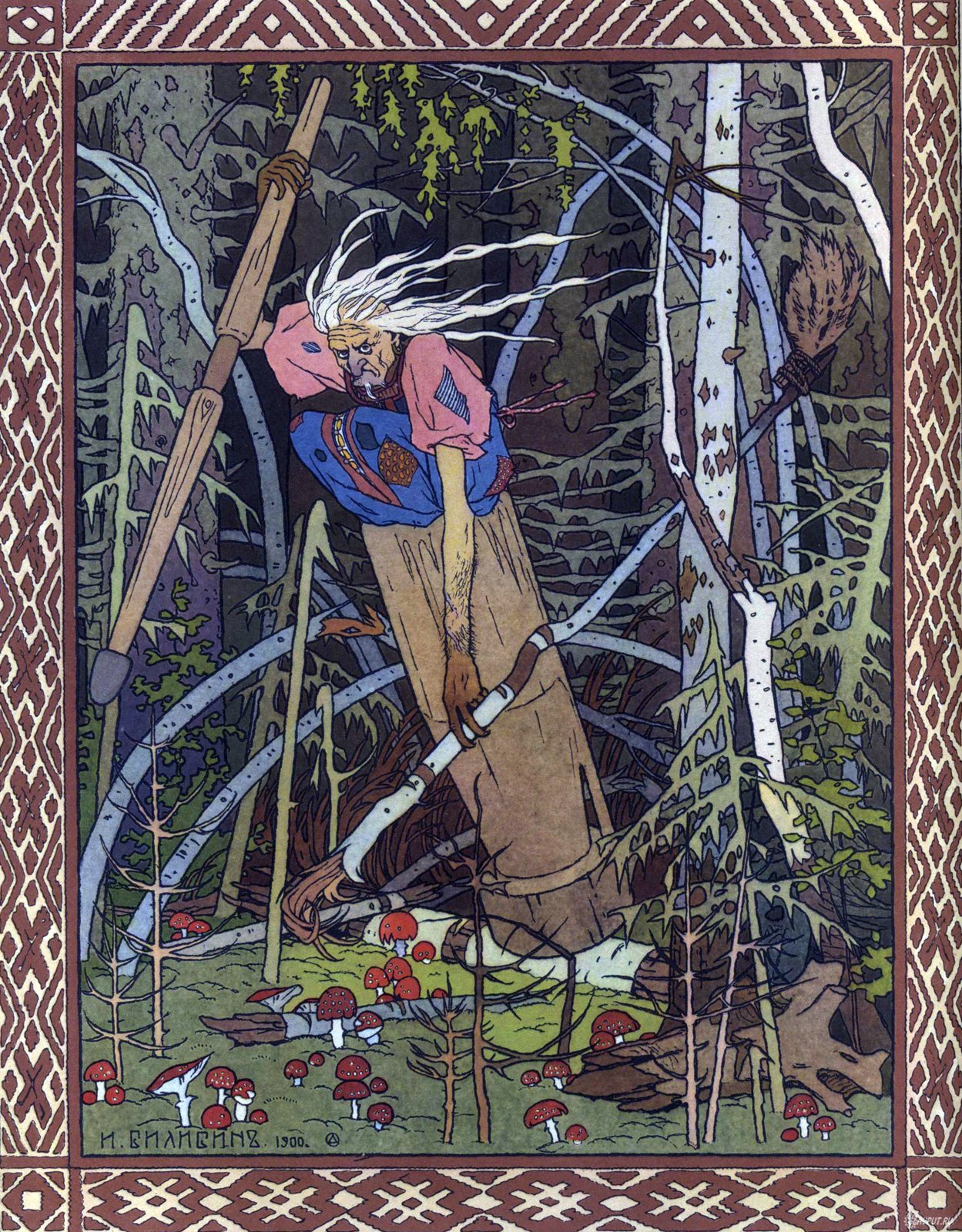
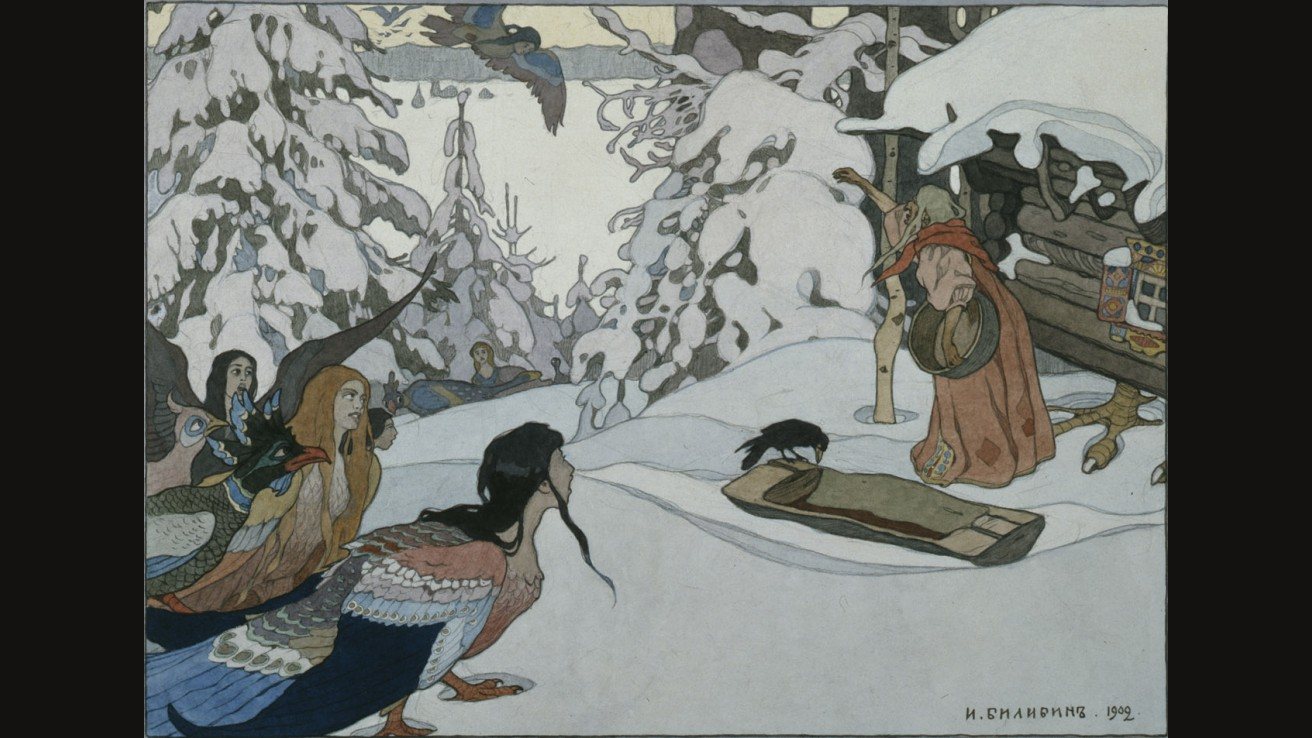
He returned to her more than once. The Tretyakov Gallery Magazine lists his "Baba Yaga and the Bird-maidens" as a 1902 work in watercolor and gouache, held by the Pushkin Museum of Fine Arts.
Baba Yaga through the years
Tap or hover a step to follow the order.
1855 to 1863
Aleksandr Afanasyev's collection of Russian folktales is published, including "Vasilisa the Beautiful" and its fence of skulls.
1899
BGSU University Libraries dates a Bilibin illustration of "Vasilisa the Beautiful" to this year.
1900
Wikimedia Commons dates Ivan Bilibin's "Baba Yaga" from the same tale to this year.
1902
Bilibin paints "Baba Yaga and the Bird-maidens," now held by the Pushkin Museum of Fine Arts.
2004
Andreas Johns publishes Baba Yaga: The Ambiguous Mother and Witch of the Russian Folktale.
2014
An action film borrows "Baba Yaga" as the nickname of its feared assassin.
Baba Yaga on the big screen
Many readers first heard her name in the 2014 film John Wick. In the film's dialogue, Viggo Tarasov calls Wick "Baba Yaga" and then explains that Wick is the one sent to kill the boogeyman.
That is the film's own use of the name, a nickname for a feared assassin. It borrows the fear her name carries, and leaves the hut, the mortar and the skull lamp behind in the forest. In the folktales, Baba Yaga is not anyone's hired hand; she is the one who sets the tests.
How well do you know Baba Yaga?
Answer every question to check.
Questions about Baba Yaga
A few quick answers for anyone who met her somewhere and wants the rest of the story.
Is Baba Yaga Russian?
Baba Yaga is especially prominent in Russian folklore, but she belongs more broadly to the East Slavic traditions of Russia, Belarus and Ukraine. Related forms of her also appear in other Slavic traditions.
Are the boogeyman and Baba Yaga the same?
No, they are different figures. Baba Yaga is a specific East Slavic folktale figure with her own hut, mortar and tests, while "the boogeyman" is a broad English label for any frightening figure used to scare children. The 2014 action film links the two in a line of dialogue, but that pairing is the film's, not the folklore's.
What does Baba Yaga mean in Russian?
"Baba" means an old woman or a grandmother, while the meaning of "Yaga" is still disputed. Suggestions range from words for anger, horror, illness or pain to words for a witch or a forest spirit, and some point to a borrowing from a non-Slavic language.
More witches, weeping women and bones of folklore
Baba Yaga has relatives of a sort around the world. Scholar Tatyana Mikhailova has compared the comb of Ireland's banshee with the rusalka of Russian tradition. In Mexico, La Llorona wanders the riverbanks at night, and Japanese folklore has a bony figure of its own in the gashadokuro. For a wider look at what skulls have meant across cultures, start with our story on skull symbolism, and for the figures who stand at the door of death, see the gods of death.
Terms in this story
Tap a term to see what it means.
Baba Yaga. The old woman of the forest in East Slavic folktales, who may threaten, test or help the people who come to her hut.
---