

No. 342
Warthog Skull: How Those Curved Tusks Work, and How It Differs From a Pig's
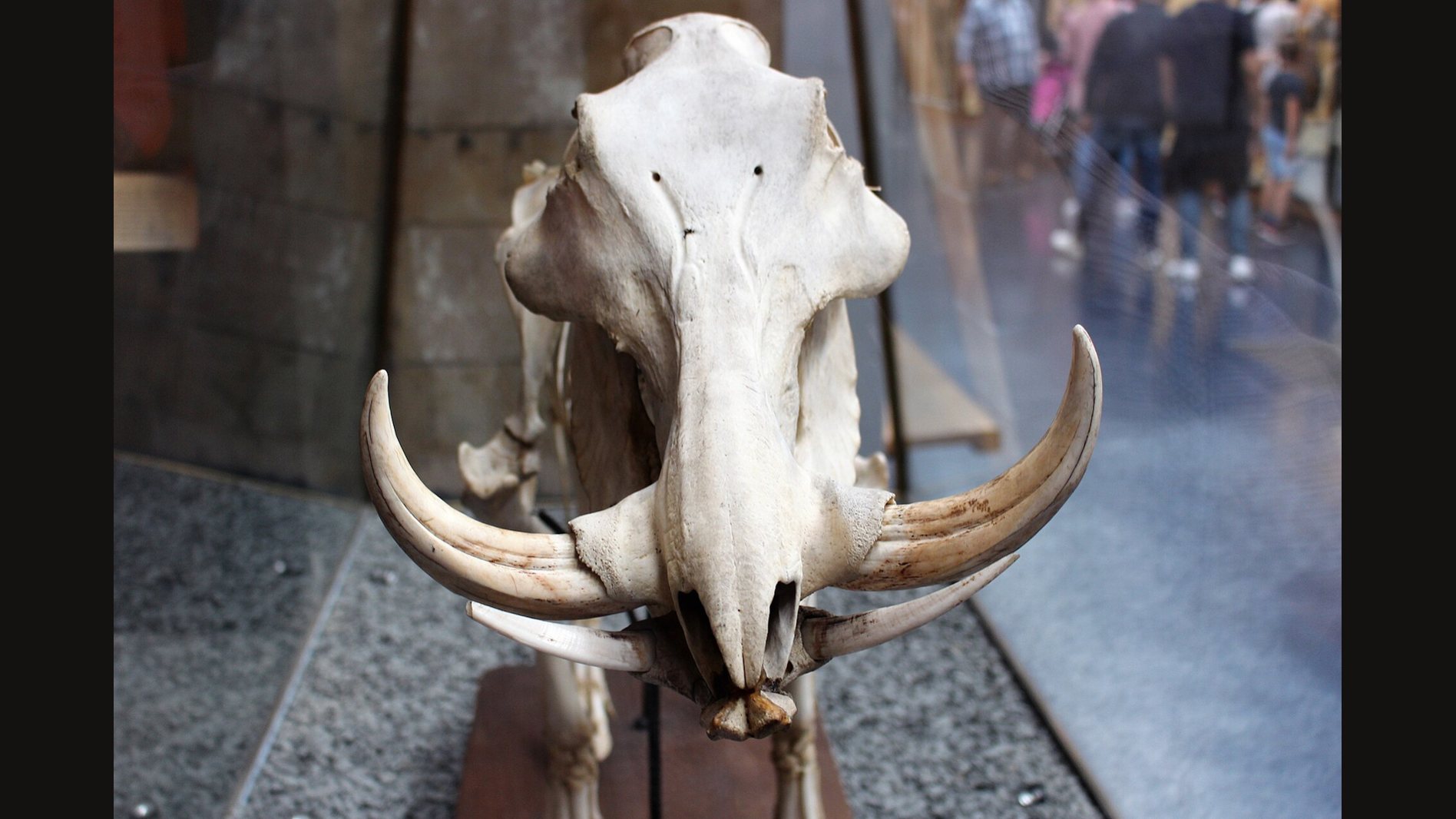
A warthog skull carries four tusks, and all four are teeth. The common warthog, *Phacochoerus africanus*, turns its canine teeth into tusks: a long upper pair that curves up and inward, and a shorter, straighter lower pair with sharp, blade-like edges. Every time the jaws work, the lower tusks rub against the upper ones, and that contact keeps the lower edges sharp.
The rest of the skull explains why it looks so unlike a farm pig. A warthog's head is broad, flat and shovel-shaped, and its eyes sit high and wide on the head. Put those features together with the big exposed upper tusks and you have a skull that is hard to mistake once you know what to look for. Domestic pig skulls vary a lot and their canines are often much smaller, while the bushpig, an African relative, keeps its tusks far less on show.
What a warthog skull shows
The warthog fact sheet published through the International Environment Library Consortium describes the head and muzzle as broad, flattened and shovel-shaped. On a cleaned skull that shape is the first thing you notice: wide, low and solid, more like a spade than a snout.
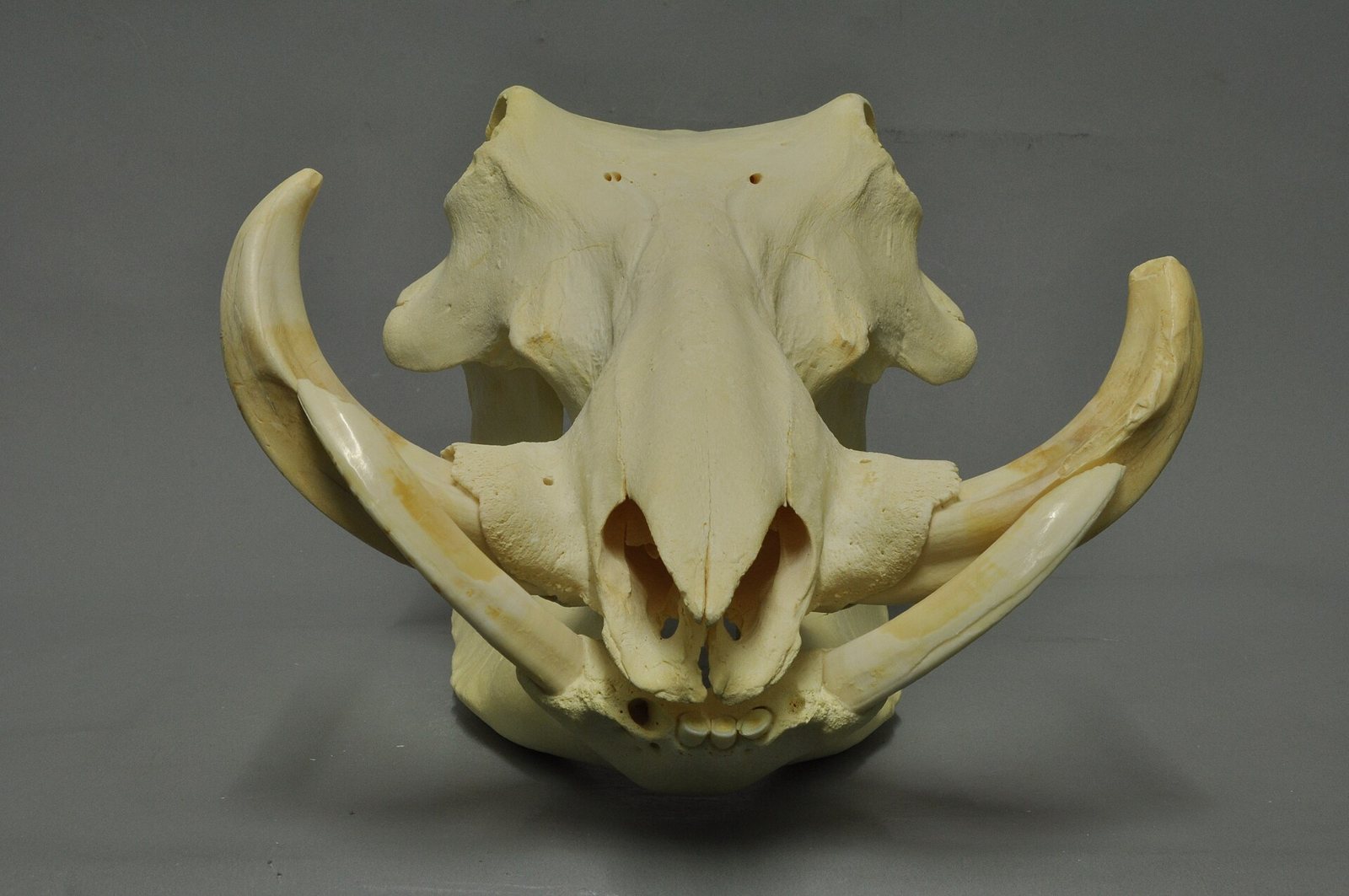
The eye sockets sit high and well apart. In the living animal, the Toronto Zoo explains, that placement gives a warthog a better view of its surroundings while its head is down feeding. A grazing animal with its nose in the grass can still keep watch over the top of it.
Then come the four canines, the tusks, which dominate the front of the skull. The upper pair is the dramatic one, sweeping up and curving inward. The lower pair is shorter and straighter, sitting snug against the uppers.
What you will not see on a skull are the warts. The bumps on a living warthog's face that give the animal its name are fibrous tissue, not bone, so they disappear completely once the skull is cleaned. A warthog skull is, in a sense, a warthog with its most famous feature politely removed.
How the tusks grow and wear
Warthog tusks are enlarged canine teeth that keep growing, according to the Toronto Zoo. They are not horns and they are not a separate kind of structure; they are teeth that never stop.
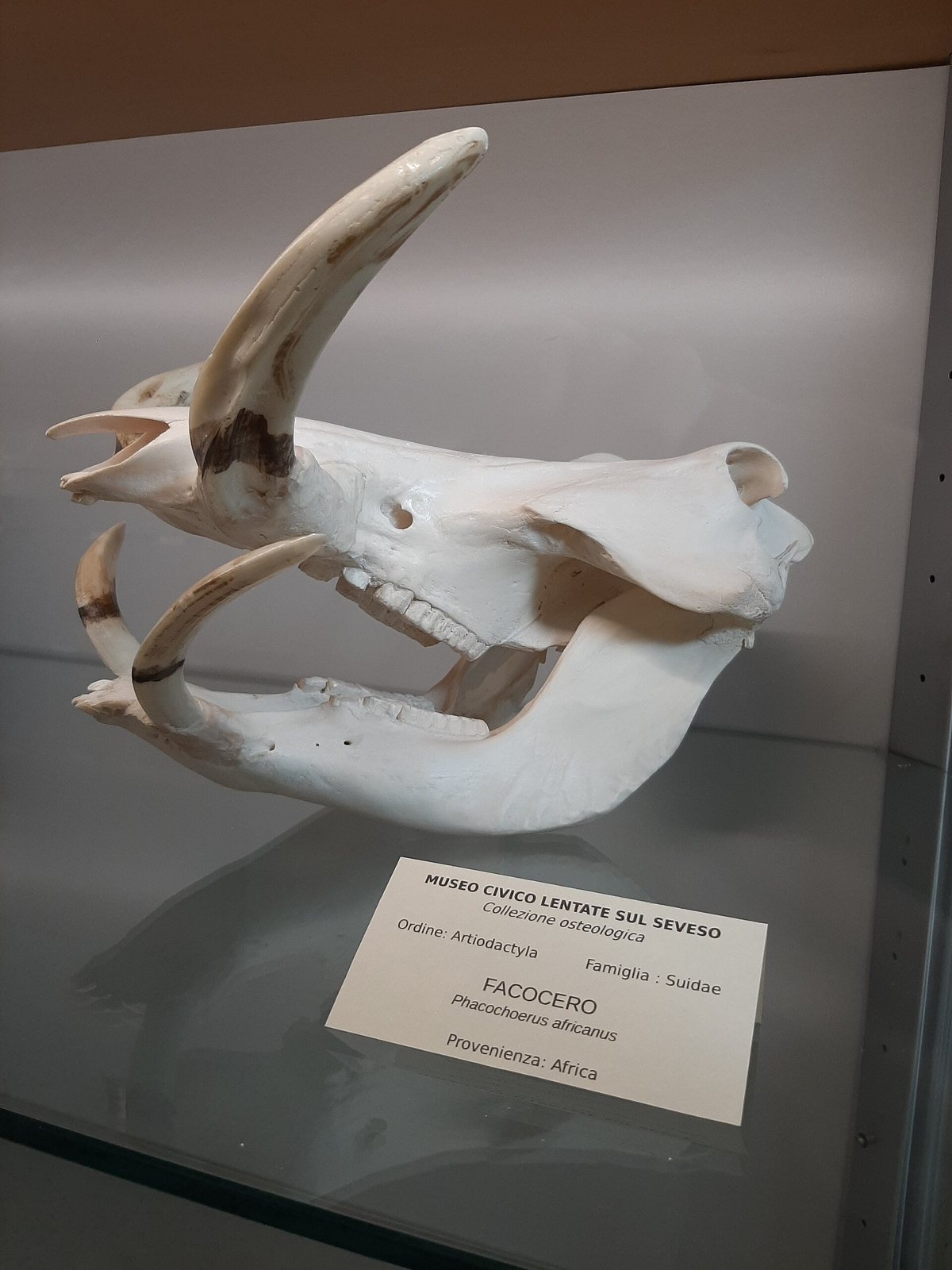
They can get long. The Toronto Zoo gives adult upper tusk lengths of 25 to 63 cm in males and 15 to 25 cm in females, so a big male's upper tusk can be longer than a ruler. That size gap between the sexes is worth remembering when you compare two skulls side by side.
The lower tusks tell the other half of the story. They are blade-like and sharpen themselves against the upper tusks as the animal moves its jaws. That steady grinding is why the lower pair stays keen even as both pairs keep growing.
What warthogs use their tusks for
Defense comes first. The lower tusks, with their sharp edges, are important weapons, especially in fights and when a warthog backs into a burrow. Reversing into a hole means the business end faces the doorway.
Feeding is where the accounts part ways. Warthogs use the snout and tusks while foraging, but two well-known references describe that use differently. Animal Diversity Web, run by the University of Michigan Museum of Zoology, describes warthogs digging out rhizomes and bulbs. The warthog fact sheet, on the other hand, says the tusks are not used to dig holes or root for tubers, and names defense and harvesting grass seeds as the functions it supports. So, if you have heard that warthogs dig with their tusks, that is one reading of their behavior rather than a settled fact.
The skull carries a quieter clue to diet as well. Warthogs have high-crowned molars, tall teeth that suit chewing abrasive, fibrous plants, which fits an animal that spends much of its time grazing.
What warthog tusks are made of
Warthog tusks are tooth material. The Canadian Conservation Institute describes tusks like these as mainly dentine, the hard tissue that forms the bulk of a tooth, with enamel covering parts of the surface.
You will sometimes hear warthog tusks called ivory. Ivory is a material term for certain kinds of mammal tooth and tusk material, not a separate body part, so the word describes what the tusk is made of rather than what it is. A warthog tusk is a canine tooth, whatever name the material goes by.
Warthog, domestic pig or bushpig
Telling these three apart comes down to looking at several features together.
The warthog has a broad, shortened face, eye sockets set high, large exposed upper tusks, straight lower tusks and those high-crowned molars. The IUCN Wild Pig Specialist Group gives the common warthog's dental formula as I 1/3, C 1/1, P 3/2, M 3/3. A dental formula counts the incisors, canines, premolars and molars on one side of the mouth, upper over lower, so that formula adds up to 34 teeth in all.
A domestic pig, *Sus scrofa domesticus*, usually has much less specialized defensive teeth, because breeding has reduced the tusk-like canines in many domestic animals. Domestic pig skulls also vary a great deal by breed, age and sex, so no single feature settles the question. The University of Dundee's zoology collections and Oxford University's Pond catalogue both list warthog and domestic pig skulls held for comparison, which is how specialists build up a feel for the differences. For the pig side in detail, including wild boar, the pig skull story covers it.
The bushpig, *Potamochoerus larvatus*, is the African neighbor most likely to cause confusion. Bushpigs have far less conspicuous tusks than warthogs. The comparative skull drawings in *Mammals of Africa* show bushpig and warthog skulls differing in the angle of the snout against the braincase, and in the shape of the upper third molars.
Whichever animal you suspect, the safest identification uses the complete skull, the teeth and where the skull came from, all together. If big tusks in a wide skull have you thinking of a different animal entirely, the hippo skull story is the place to compare, and the javelina skull story makes another useful comparison.
Tap or hover a row to highlight it.
| Feature | Common warthog, Phacochoerus africanus | Domestic pig, Sus scrofa domesticus | Bushpig, Potamochoerus larvatus |
|---|---|---|---|
| FeatureHead profile | Common warthog, Phacochoerus africanusBroad, flattened and shovel-shaped | Domestic pig, Sus scrofa domesticusVariable by breed and age | Bushpig, Potamochoerus larvatusLess warthog-like; comparative keys show a different snout angle |
| FeatureEyes in living animal | Common warthog, Phacochoerus africanusHigh and wide on the head | Domestic pig, Sus scrofa domesticusTypical pig placement | Bushpig, Potamochoerus larvatusWithout the warthog's high-set look |
| FeatureUpper canines | Common warthog, Phacochoerus africanusLong, exposed and curved upward | Domestic pig, Sus scrofa domesticusOften reduced in domestic forms | Bushpig, Potamochoerus larvatusUsually less visible outside the mouth |
| FeatureLower canines | Common warthog, Phacochoerus africanusShorter, straighter and blade-like | Domestic pig, Sus scrofa domesticusVariable and often reduced | Bushpig, Potamochoerus larvatusSharp, but generally less conspicuous than in warthogs |
| FeatureAdult dental formula | Common warthog, Phacochoerus africanusI 1/3, C 1/1, P 3/2, M 3/3, total 34 | Domestic pig, Sus scrofa domesticusVariable with breed and age | Bushpig, Potamochoerus larvatusCompare complete tooth rows and molars |
Old skulls and old names
Warthog skulls have been sitting in European collections for a long time. The Oxford University Museum of Natural History holds a warthog cranium and lower jaw that came to Oxford through the Tradescant collection and had been catalogued there by 1683. That is more than a century before *Phacochoerus africanus* was formally described as a species in 1788. The skull was on a shelf long before the animal had its scientific name.
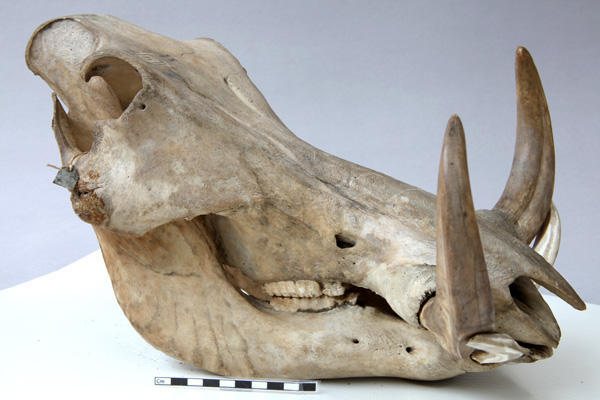
Names have shifted since, too. Older museum specimens sometimes label the common warthog *Phacochoerus aethiopicus*. Current usage, followed by the IUCN Wild Pig Specialist Group, gives that name to the desert warthog and uses *Phacochoerus africanus* for the common warthog, so an old label is worth reading with that change in mind.
Warthog skulls through the years
Tap or hover a step to follow the order.
By 1683
A warthog cranium and lower jaw from the Tradescant collection appear in Oxford catalogues.
1788
The common warthog, Phacochoerus africanus, is formally described as a species.
2009
A warthog skull at the Natural History Museum in Berlin is photographed and shared under an open licence.
January 15, 2026
USDA APHIS last modifies its guidance on trophies and approved establishments.
Warthog tusks in Senufo art
Warthog tusks matter in art as well as anatomy. In the Senufo Poro masquerade traditions of Côte d'Ivoire, Mali and Burkina Faso, masks carry warthog tusk imagery. The Metropolitan Museum of Art's record for a Senufo wanyugo, dated from the late nineteenth to the mid-twentieth century, explains that the tusks stand for danger, power and protection.
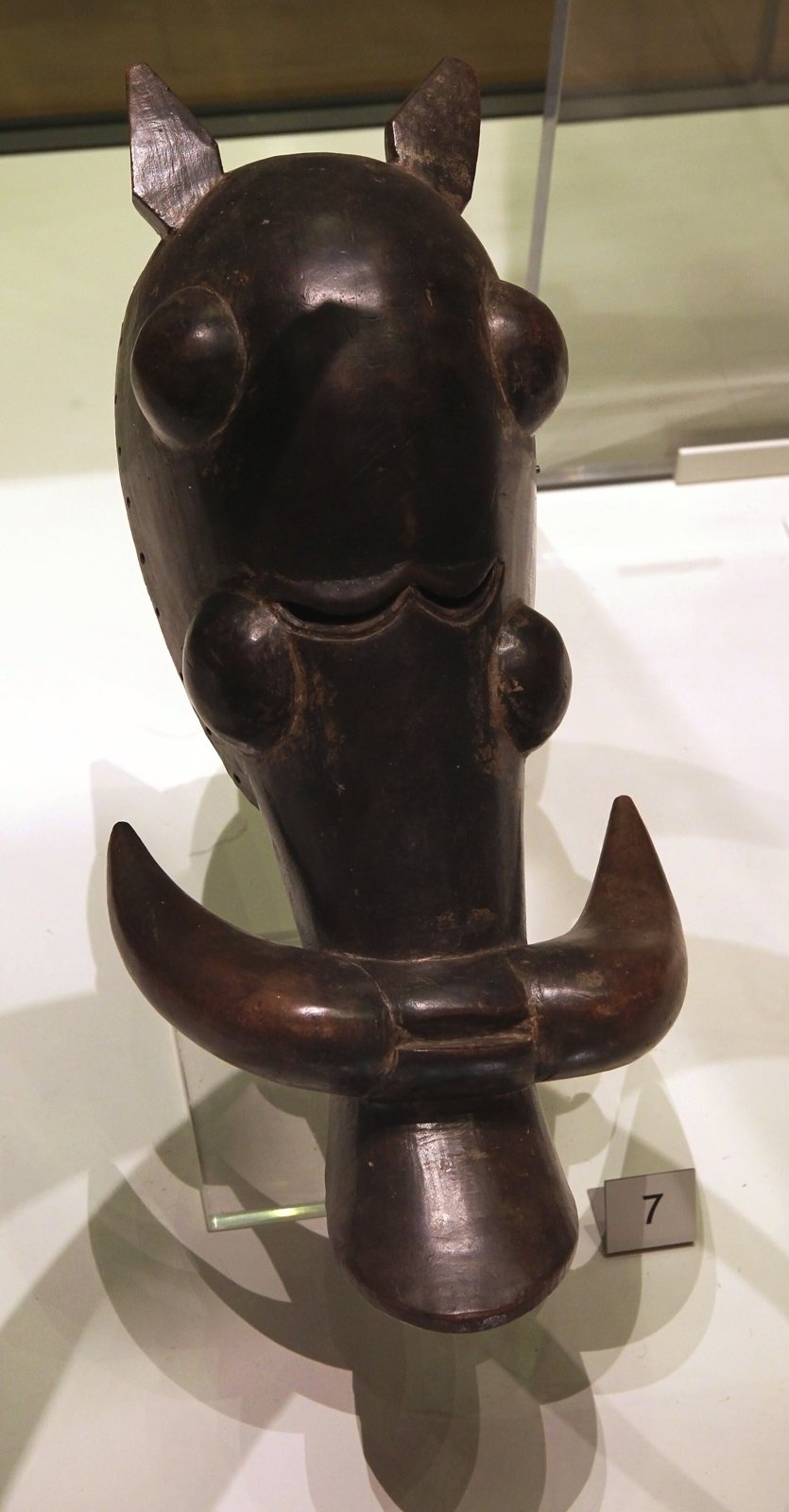
The same curved teeth that make a skull striking on a shelf carried that meaning in Senufo masquerade, and the Met's mask is one place to see it in a museum setting.
Mounts, found skulls and bringing one into the US
Everything in this section is general information, not legal advice, and the law is different from one country or state to another.
A warthog skull you came across outdoors is a question for the local rules where it lay. Before keeping or moving one, check ownership, wildlife and protected-species rules with the relevant wildlife agency, or with the US Fish and Wildlife Service. The found an animal skull story covers the general situation, and the how to clean an animal skull story covers preparing one.
A warthog skull or mount brought in from abroad is treated as wildlife. The US Fish and Wildlife Service counts wild mammals and their parts as wildlife, and imported wildlife normally has to come in through a designated USFWS port, with a declaration usually filed on Form 3-177. For personal sport-hunted trophies from Africa, the agency's trophy guidance calls for declaration and inspection at an authorized port before Customs and Border Protection releases the shipment. CITES documents are needed when the species or product is CITES-controlled, and the export rules of the country where the animal was taken apply as well.
Animal health is a separate track run by USDA APHIS. Its approved establishments page, last modified January 15, 2026, says that finished or mounted trophies, and cleaned, dried bones used as trophies, do not need processing at an approved establishment under the conditions it lists. CBP Agriculture still reviews imported animal products. The answer can change with the country of origin, how the specimen was processed and how it is shipped, so confirm the current rules with USFWS, APHIS and CBP before any trip or shipment.
A warthog trophy crossing into the US
Tap a card to bring it forward.
- Designated port: Imported wildlife normally enters through a designated USFWS port.
- Declaration: Wildlife declarations are generally filed on Form 3-177.
- Inspection: Personal sport-hunted trophies from Africa are declared and inspected before CBP releases them.
- CITES documents: Needed when the species or product is CITES-controlled.
- Country of origin: The export rules of the country where the animal was taken also apply.
- Animal health: APHIS sets the processing rules, and CBP Agriculture reviews animal products.
FAQ
A few more warthog skull questions, with short answers.
How can I confirm a skull is a warthog?
Compare the whole skull, the tooth rows, the molars and the tusks with a museum key or a known specimen, and factor in where the skull came from. A broad, flat skull with high eye sockets, long upward-curving upper tusks and 34 teeth in the warthog pattern is a strong match. A natural history museum or university collection can confirm a difficult one.
Is this a warthog or a wild pig?
If the face is broad and flat, the eye sockets sit high and the upper tusks are large and exposed, it points to a warthog. Bushpigs and domestic pigs have far less conspicuous tusks. For wild boar and farm pig skulls, the pig skull story has the details.
Do female warthogs have tusks?
Yes, both sexes have them, but the females' are shorter. The Toronto Zoo gives adult upper tusks of 15 to 25 cm in females against 25 to 63 cm in males.
A face built around its teeth
A warthog skull is a lesson in how much a set of teeth can shape a head. The long upper tusks, the self-sharpening lower pair, the wide flat face and the high-set eyes all make sense for an animal that grazes in the open and backs into a burrow to defend itself. If your warthog skull shares a wall with other African mounts, the antelope skull story explains the horns beside it, and human vs animal skull is a good next read for sorting a mixed collection.
Warthog skull quiz
Answer every question to check.
Terms in this story
Tap a term to see what it means.
Tusk. A tooth that grows long enough to show outside the mouth. A warthog's four tusks are its canine teeth.
---