

No. 343
Lemur Skull: The Toothcomb, the Eye Sockets and How It Differs From a Monkey's
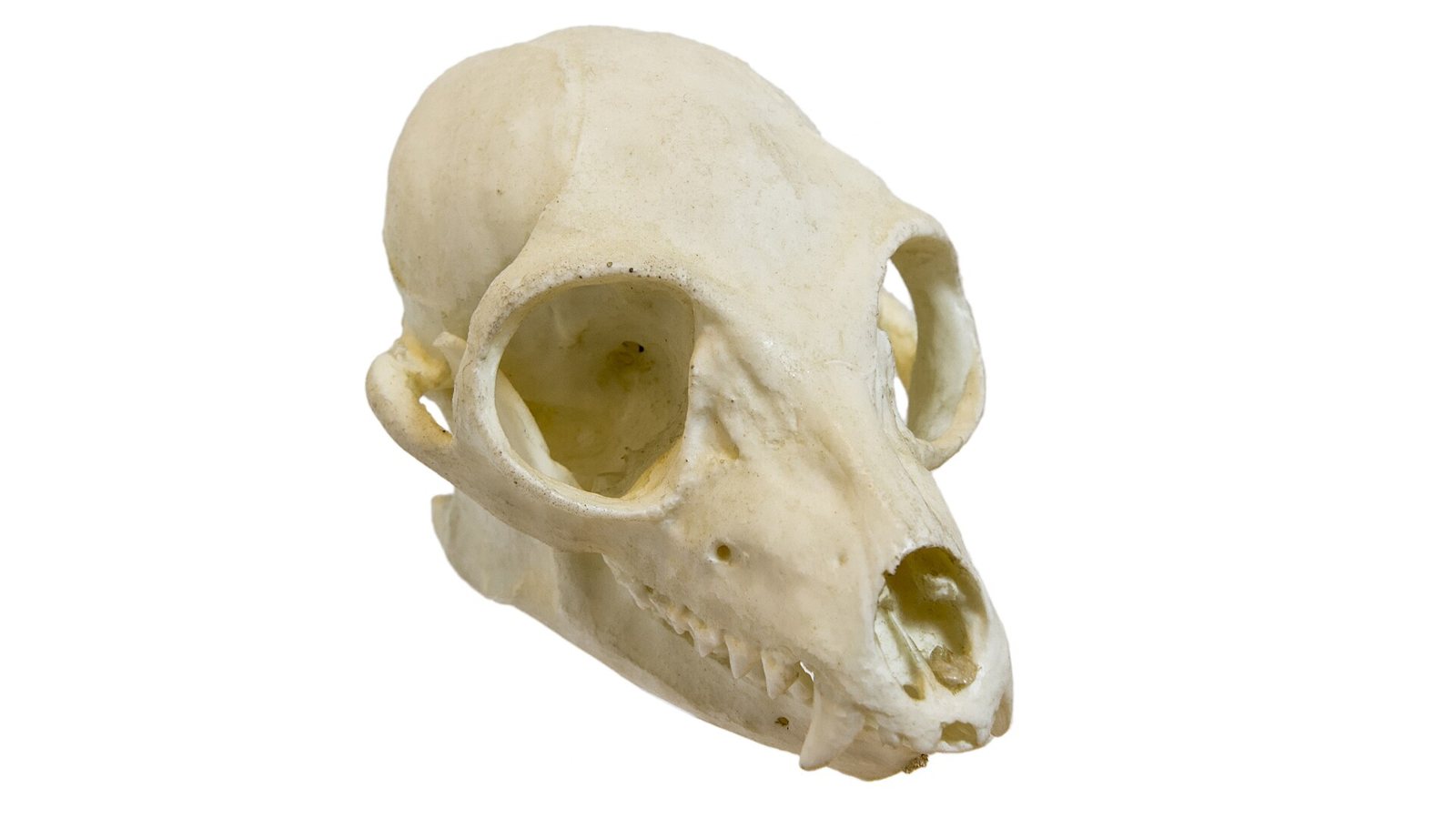
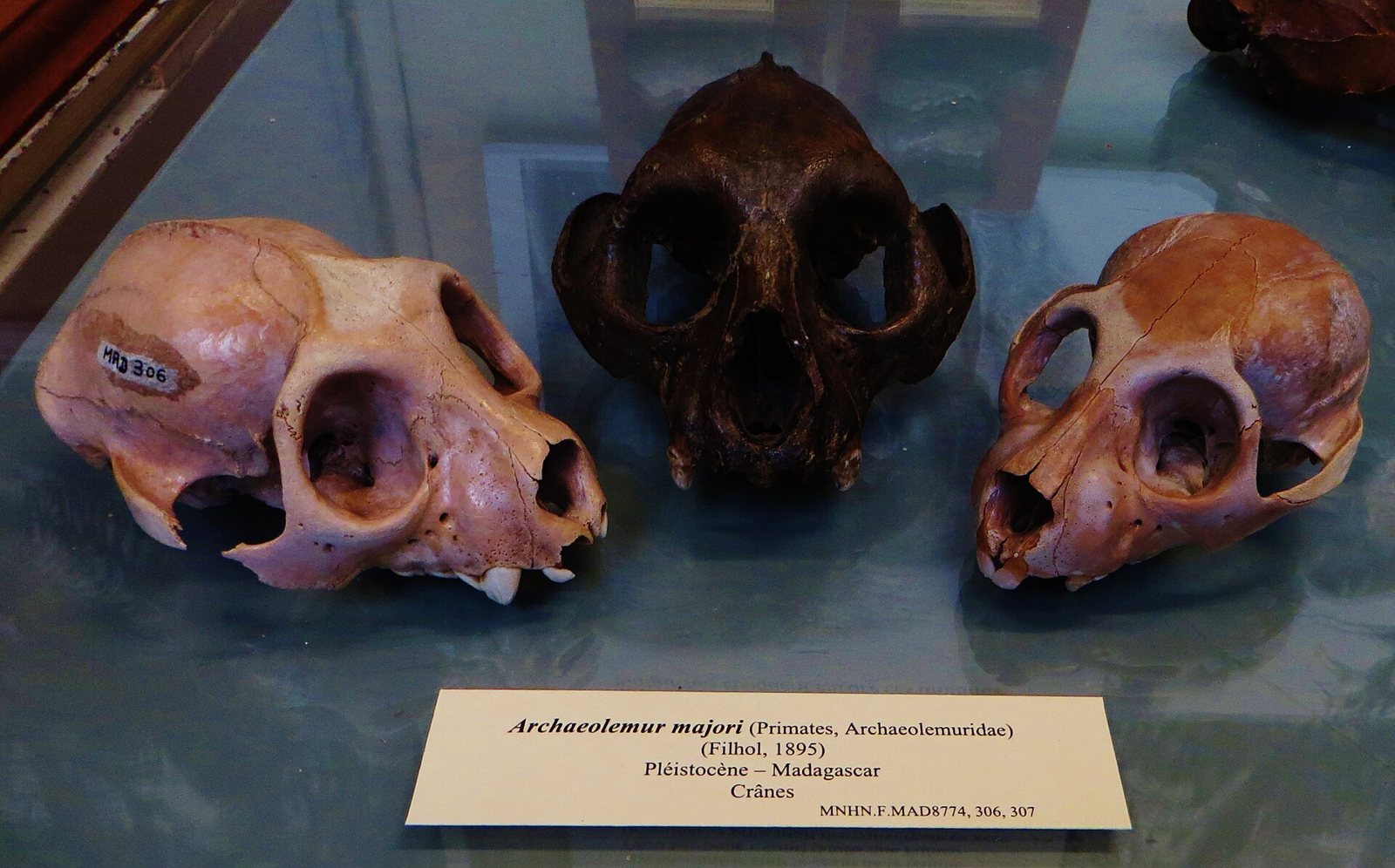
A typical lemur skull has a long snout, a small rounded braincase and big eye sockets that face forward, each ringed on its outer edge by a bar of bone called the postorbital bar. Look at the lower jaw and you will usually see the lemur's signature: a toothcomb, a row of front teeth that sticks straight out like the teeth of a comb.
In most lemurs that comb is made of four incisors and two canine-like teeth, and lemurs use it mainly for grooming, both their own fur and the fur of the lemurs around them. The Duke Lemur Center and the Smithsonian's National Zoo both describe it that way. A few lemurs put the comb to other jobs too, and one well-known lemur has no comb at all.
Reading a lemur skull
Hold a lemur skull, or a good cast of one, and the first impression is of a long face. The rostrum, the snout part of the skull, stretches well out in front of the eyes, and the braincase behind it is relatively small and rounded. The Australian Society of Zoo Keeping husbandry manuals for ruffed and brown lemurs describe exactly this shape.
The eye sockets, or orbits, are large and face forward. Around the outer edge of each one runs the postorbital bar, a bony ring that frames the eye from the side. Behind the eye, though, the socket stays open. Monkeys, apes and humans have a wall of bone closing off the back of the eye socket; lemurs do not. That single detail is one of the quickest ways to place a primate skull.
The teeth finish the job. The typical dental formula for brown lemurs of the genus *Eulemur* and for the ring-tailed lemur is 2.1.3.3 over 2.1.3.3, which means two incisors, one canine, three premolars and three molars on each side of each jaw, for 36 teeth in all (ASZK, White-fronted Brown Lemur manual). Lemurs are a varied group, so proportions and tooth details shift from species to species, but this long-faced, big-eyed, comb-toothed plan is the one to start from.
The toothcomb up close
The comb sits at the front of the lower jaw. In the ring-tailed lemur, *Lemur catta*, it has six teeth, four incisors flanked by two narrow canine-like teeth, all projecting forward. The Smithsonian's National Zoo gives the six-tooth count for this species.
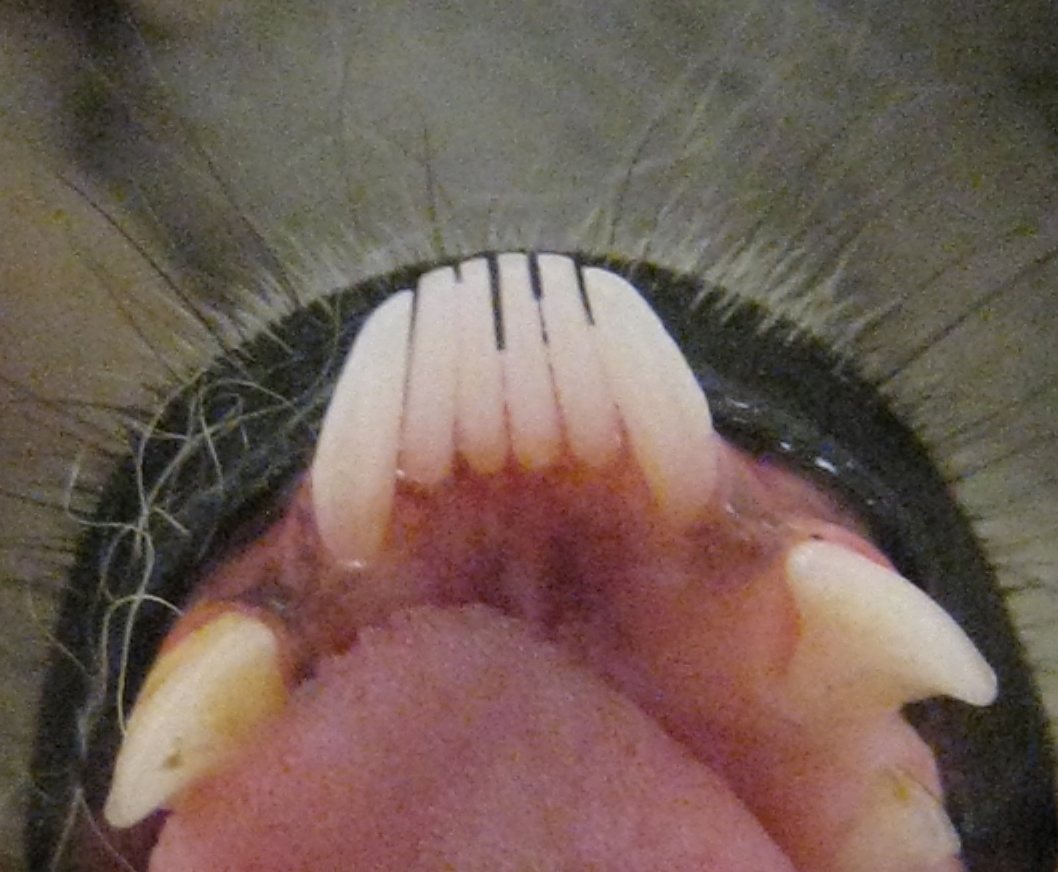
Grooming is its main documented use. Ring-tailed lemurs run those teeth through their own fur and through the fur of other members of their group. The Duke Lemur Center links that shared grooming to the social bonds that hold a group together. A lemur with a comb in its mouth is never short of a reason to visit a friend.
A comb that runs through fur all day fills up with hair, and lemurs have a tool for that too. Under the main tongue sits the sublingua, a small second tongue that helps clean hair and debris out of the comb. Both the Duke Lemur Center and Wilson and Hanlon's 2010 account of the ring-tailed lemur in *Mammalian Species* describe it. A built-in comb with its own built-in comb cleaner is a tidy piece of design.
The grooming role has been studied for decades. In 1981, Rose, Walker and Jacobs published "Function of the mandibular tooth comb in living and extinct mammals", which presented evidence for its grooming function.
More than a comb: feeding uses
Some lemurs put the comb to work at mealtimes as well. Ring-tailed lemurs can use it together with their upper incisors to pull small fruits and leaves off stems. Sifakas, mouse lemurs and fork-marked lemurs can use comparable front teeth to gouge bark or reach sap, according to Cuozzo and Yamashita's 2006 study, "Impact of Ecology on Teeth of Extant Lemurs".
All that work leaves marks. Field observations of wild ring-tailed lemurs in Madagascar by Sauther and colleagues in 2002 recorded toothcombs that were heavily worn, chipped or broken from grooming and handling food. For a collector, that wear is part of the skull's story: a worn comb belonged to an animal that used it hard.
Why the toothcomb evolved in the first place is still debated. The fairest summary is that it is a grooming adaptation that also serves feeding in some lemurs.
Lemur skull or monkey skull
Lemurs and monkeys are both primates, but they sit on different branches. Lemurs are strepsirrhines, monkeys are haplorhines, and the skulls show the split clearly once you know where to look.
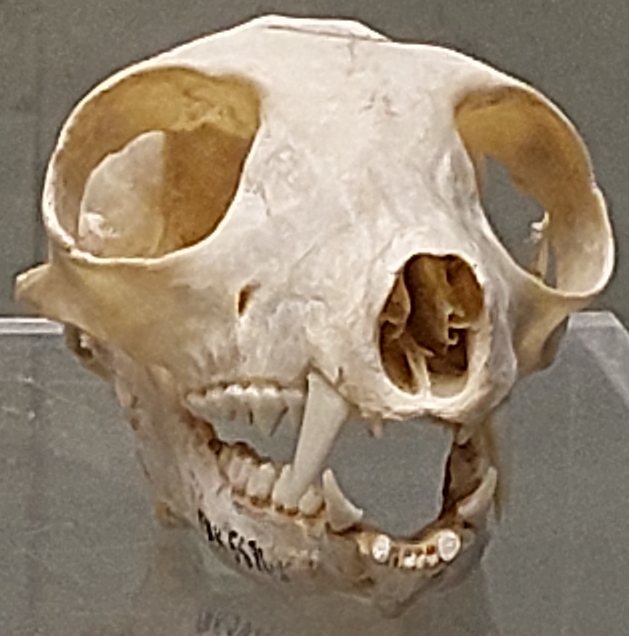
A lemur skull usually has the longer snout, and in life a moist nose. Its large, forward-facing orbit is bordered on the outer side by the postorbital bar, with the back left open. A monkey skull generally has a shorter face, and in life a dry nose, and a bony wall behind the eye that more completely separates the orbit from the temporal region behind it. The front teeth settle it: monkeys do not have the lemur's toothcomb, and they usually groom with their nimble fingers instead. The Duke Lemur Center's educational materials and the ASZK manuals set out these differences.
These are broad, group-level contrasts rather than an identification key for a particular specimen, but they are the first things to check. For the haplorhine side in detail, the chimpanzee skull and baboon skull stories cover two well-known primates, and the tarsier skull story covers a small haplorhine with enormous eyes.
Tap or hover a row to highlight it.
| Feature | Lemur (strepsirrhine) | Monkey (haplorhine) |
|---|---|---|
| FeatureSnout | Lemur (strepsirrhine)Usually longer | Monkey (haplorhine)Usually shorter face |
| FeatureNose in life | Lemur (strepsirrhine)Moist | Monkey (haplorhine)Dry |
| FeatureEye socket | Lemur (strepsirrhine)Postorbital bar on the outer edge, open behind | Monkey (haplorhine)Bony wall behind the eye more completely encloses the orbit |
| FeatureLower front teeth | Lemur (strepsirrhine)Toothcomb in most lemurs | Monkey (haplorhine)No lemur-style toothcomb |
| FeatureGrooming | Lemur (strepsirrhine)Mainly with the toothcomb | Monkey (haplorhine)Mainly with the fingers |
Are lemurs monkeys?
Lemurs are primates of their own branch, the strepsirrhines, and they are native to Madagascar and nearby islands. Monkeys belong to separate New World and Old World lineages within the haplorhines, so a lemur and a monkey are relatives in the primate family without being the same kind of animal.
Madagascar is the heart of the lemur story. The American Museum of Natural History presents lemurs as primates of Madagascar whose diversity reflects a long history of evolution on the island. That long isolation helps explain why lemur skulls come in such a range of shapes.
Lemur skulls that break the pattern
The aye-aye, *Daubentonia madagascariensis*, is the big exception. It has no toothcomb. Instead, its skull carries large front teeth that keep growing, much like a rodent's incisors, and it uses them to gnaw into bark, open hard food and reach insect larvae. The Duke Lemur Center's comparison of aye-aye and ring-tailed lemur jaws and the AMNH's aye-aye profile both describe these teeth. If you know the beaver skull, the aye-aye's front teeth will look oddly familiar.
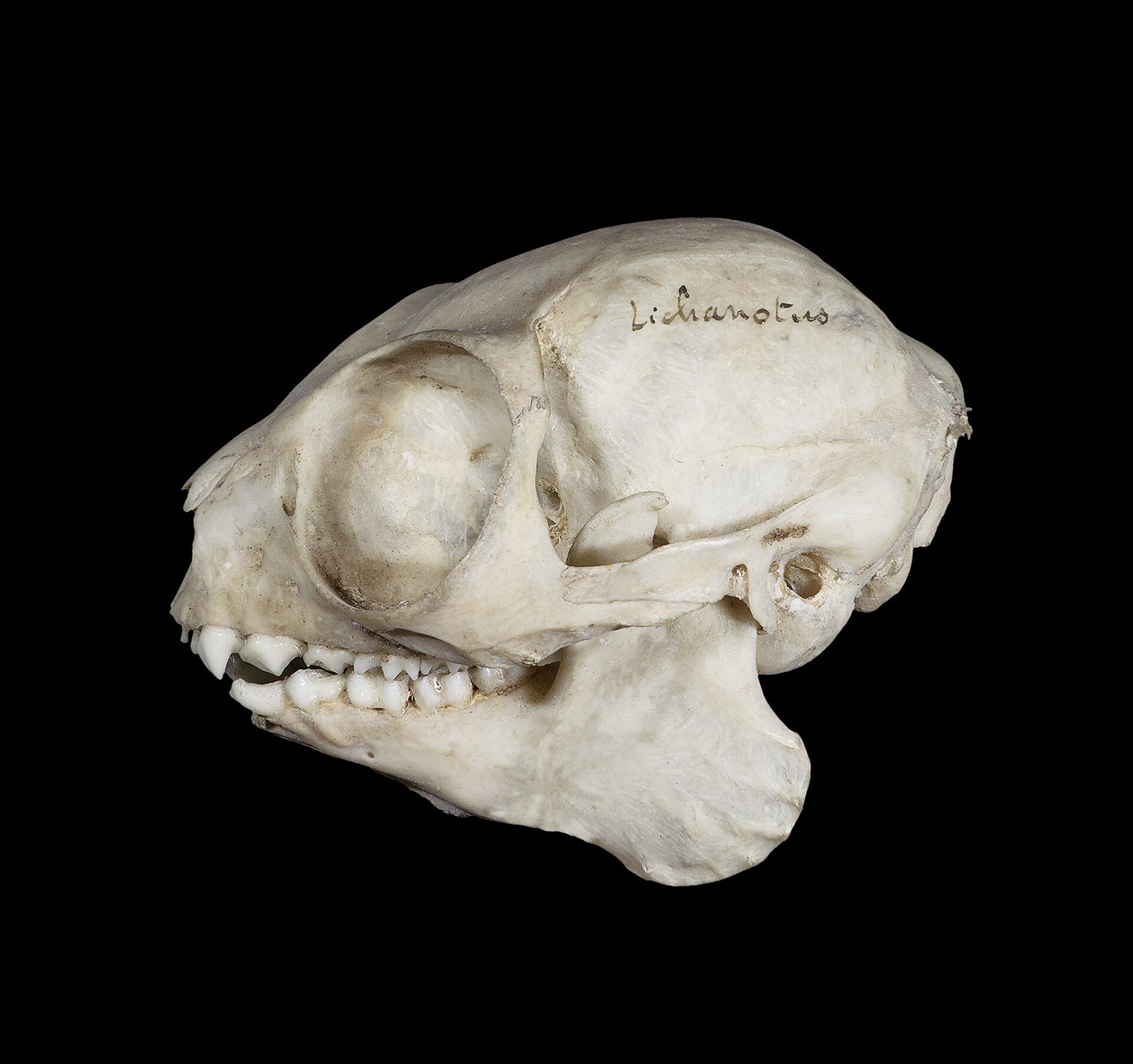
The comb itself varies too. Indriids, the family that includes the sifakas, can have a four-tooth comb rather than six, according to Cuozzo and Yamashita. Ruffed lemurs, *Varecia variegata*, and brown lemurs in the *Eulemur fulvus* group show the more familiar six-tooth arrangement, and the AMNH's ruffed lemur card notes the six bottom teeth they groom with.
So, lemur skulls share a strepsirrhine plan but differ a great deal in the number, shape and use of their front teeth, which is exactly what makes them rewarding to compare.
Where lemur skulls are studied
For anyone who wants to see lemur skulls without owning one, museum collections are the place. The Natural History Museum in London holds a collection of subfossil lemurs from Madagascar, and its Data Portal gives digital access to millions of collection records. The AMNH's video on Madagascar's lemurs features the scientist Laurie Godfrey and looks at lemur diversity and subfossils.
Older illustrations are worth a look as well. The 1911 *Encyclopaedia Britannica* printed a drawing of a ring-tailed lemur skull that is now in the public domain, and the MUSE Science Museum of Trento has shared a photograph of a *Lemur catta* skull under an open licence.
Owning a real lemur skull
What follows on ownership is general information, not legal advice, and it differs by country and by state.
CITES, the international agreement on trade in wild animals and plants, lists the lemur families. In the CITES Appendices dated 7 February 2025, the lemur families Cheirogaleidae, Daubentoniidae, Indriidae, Lemuridae and Lepilemuridae all sit in Appendix I. CITES covers whole animals and their parts, dead specimens included, so a skull is covered just as a living animal is. In the United States, the Fish and Wildlife Service explains the appendices and permits in its CITES FAQs, and federal rules at 50 CFR 23.55 restrict how imported Appendix I specimens may be used and what paperwork they need.
A skull that turns up in an old collection or an attic raises the same questions. What applies depends on the species, the location, who owns the land or the specimen, and local law; state agencies such as the Wisconsin Department of Natural Resources and the Alaska Department of Fish and Game show how rules for found animal parts are set state by state. Before moving or keeping any such skull, ask the relevant wildlife authority or the US Fish and Wildlife Service. The found an animal skull story has more on skulls that turn up unexpectedly.
For study, the usual route is a museum cast or a digital model, especially when a real skull's history or permits are uncertain.
Before you keep a lemur skull
Tap a card to bring it forward.
- What decides it: Species, location, land ownership and local rules all affect whether a skull may be kept.
- Ask first: Contact the relevant state or national wildlife authority before moving or keeping it.
- CITES Appendix I: As of 7 February 2025, the lemur families Cheirogaleidae, Daubentoniidae, Indriidae, Lemuridae and Lepilemuridae are listed.
- Parts count: CITES covers whole animals and their parts, including dead specimens.
- US rules: Imported Appendix I specimens carry restricted uses and documentation requirements.
- For study: A museum cast or digital model is the usual alternative.
FAQ
Short answers to a few more lemur skull questions.
Do all lemurs have a toothcomb?
Most lemurs do, usually made of six lower front teeth. The aye-aye is the main exception, with rodent-like incisors instead, and indriids such as sifakas can have a comb of four teeth.
How many teeth does a lemur have?
A typical brown lemur or ring-tailed lemur has 36 teeth. Its dental formula is 2.1.3.3 over 2.1.3.3, the same count in the upper and lower jaws. Other lemurs vary, and the aye-aye's teeth are very different.
Can you identify a lemur skull?
The long snout, the open-backed eye socket with its postorbital bar and the toothcomb usually point to a lemur. Naming the species takes comparison with known specimens, so a museum or university collection is the best place to confirm one.
A face built for grooming
A lemur skull rewards a slow look. The long snout, the big forward eyes framed by a bar of bone and the comb of front teeth all belong to a primate that grooms with its mouth and, in some species, eats with the same tools. Next to a monkey, the open-backed eye socket and that forward-tilted comb make it easy to tell apart. For more primate skulls, the gorilla skull story and human vs animal skull are good next reads.
Lemur skull quiz
Answer every question to check.
Terms in this story
Tap a term to see what it means.
Toothcomb. A row of forward-pointing lower front teeth, usually four incisors and two canine-like teeth, that most lemurs use for grooming.
---