No. 018
Three Skulls Tattoo Meaning: See No Evil, Memento Mori and Personal Stories
A three skulls tattoo has no single fixed meaning, but a few readings come up again and again. When one skull covers its eyes, one its ears and one its mouth, the tattoo is a skull version of "see no evil, hear no evil, speak no evil." Three skulls side by side or stacked often point to mortality and memento mori, the old idea that remembering death helps you live well, which painters were already putting into three-skull images in the 1500s. And many people choose three skulls for something personal: three family members, three friends, three chapters of a life. On any one person, the design and the wearer's own explanation decide which of these it is.
That leaves room for a good story behind each version. What follows is where the common readings come from, what tattooers say about skulls, and how placement and style change the look.
See no evil, hear no evil, speak no evil
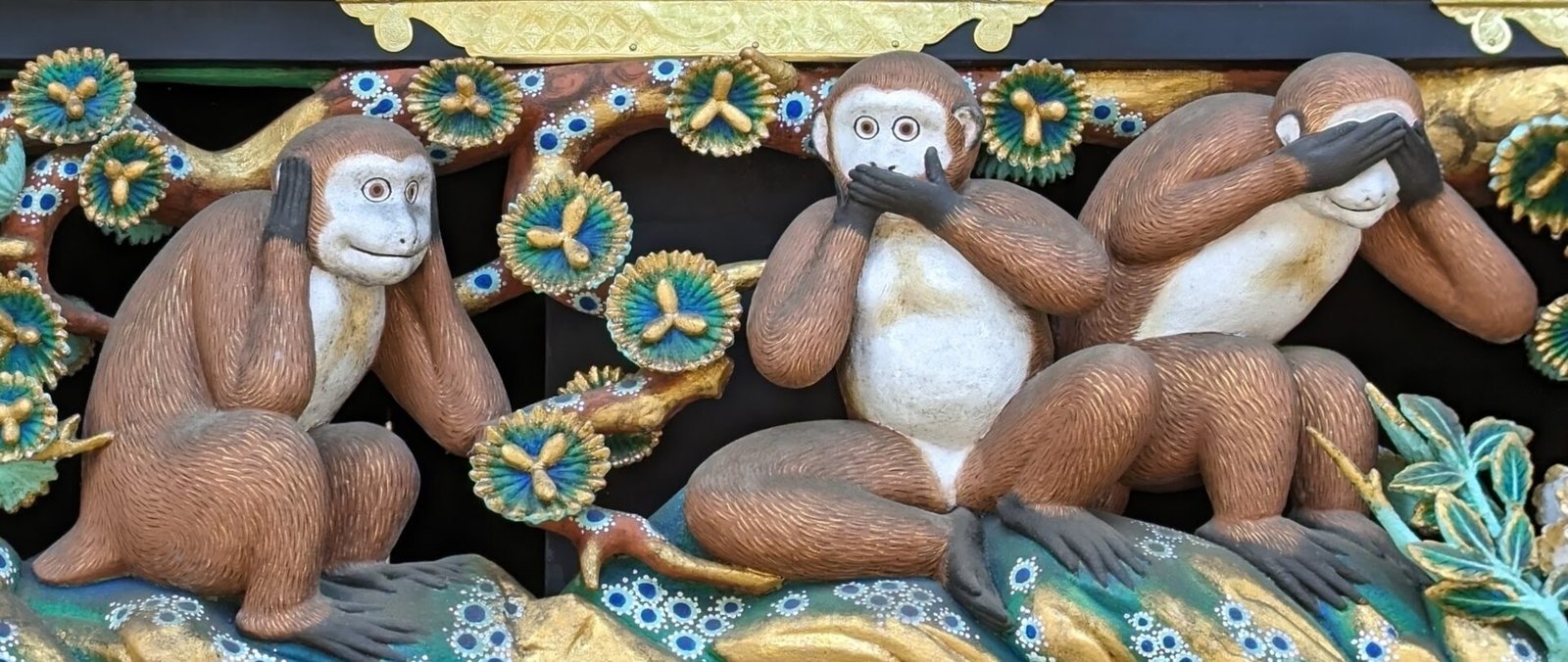
The most recognizable three-skull design borrows its layout from Japan. The Asian Art Museum holds a sculpture dated between 1800 and 1900, *Chestnut and Three Mystic Apes*, showing the three monkeys Mizaru, Kikazaru and Iwazaru. One covers its eyes, one its ears and one its mouth: see no evil, hear no evil, speak no evil. The museum's object is about monkeys, not tattoos, but the three gestures are so familiar that tattoo designs swap the monkeys for skulls and keep the meaning readable at a glance.
Country singer Kane Brown explained his own version in a 2016 iHeart interview. His forearm piece pairs three skulls with flowers. The skull with a hand over its mouth stands for "speak no evil," the one at the ear for "hear no evil," and the one at the eye for "see no evil." That is the reading most people mean when they say "see no evil skulls," and in his case it comes straight from the wearer.
Three skulls in older art
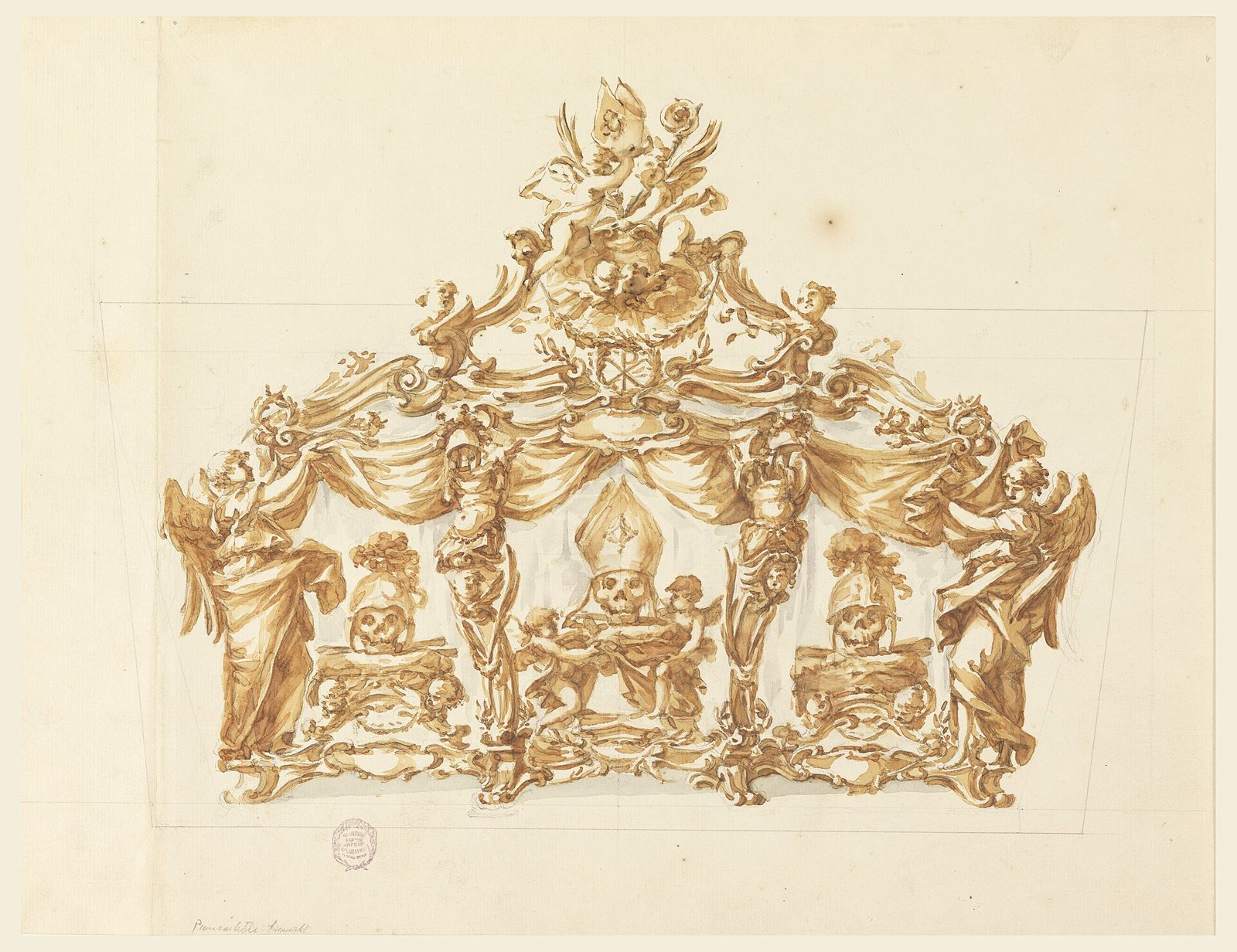
Long before tattoo flash sheets, European artists grouped skulls in threes to talk about mortality. Three pieces in public collections show how far back that goes.
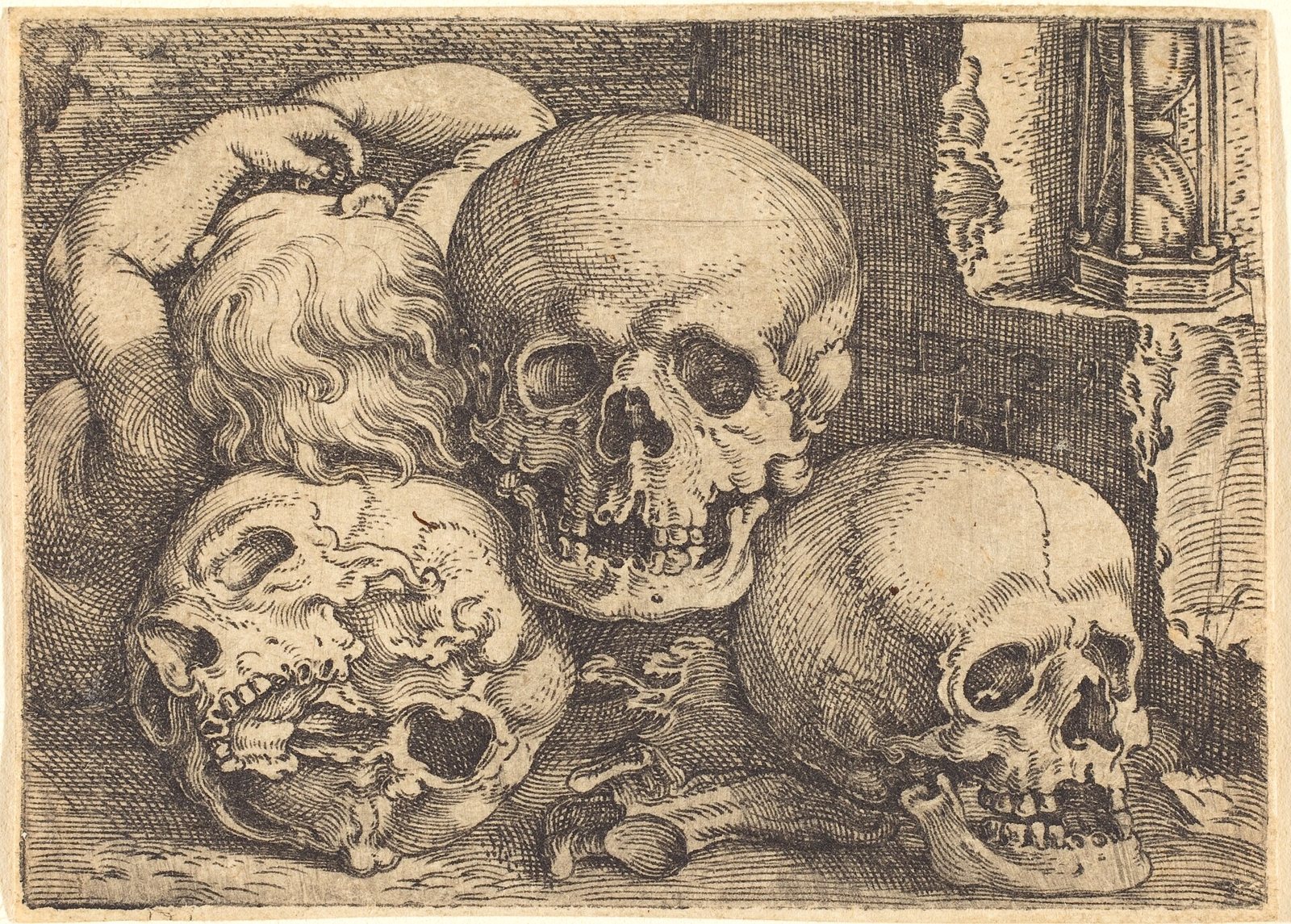
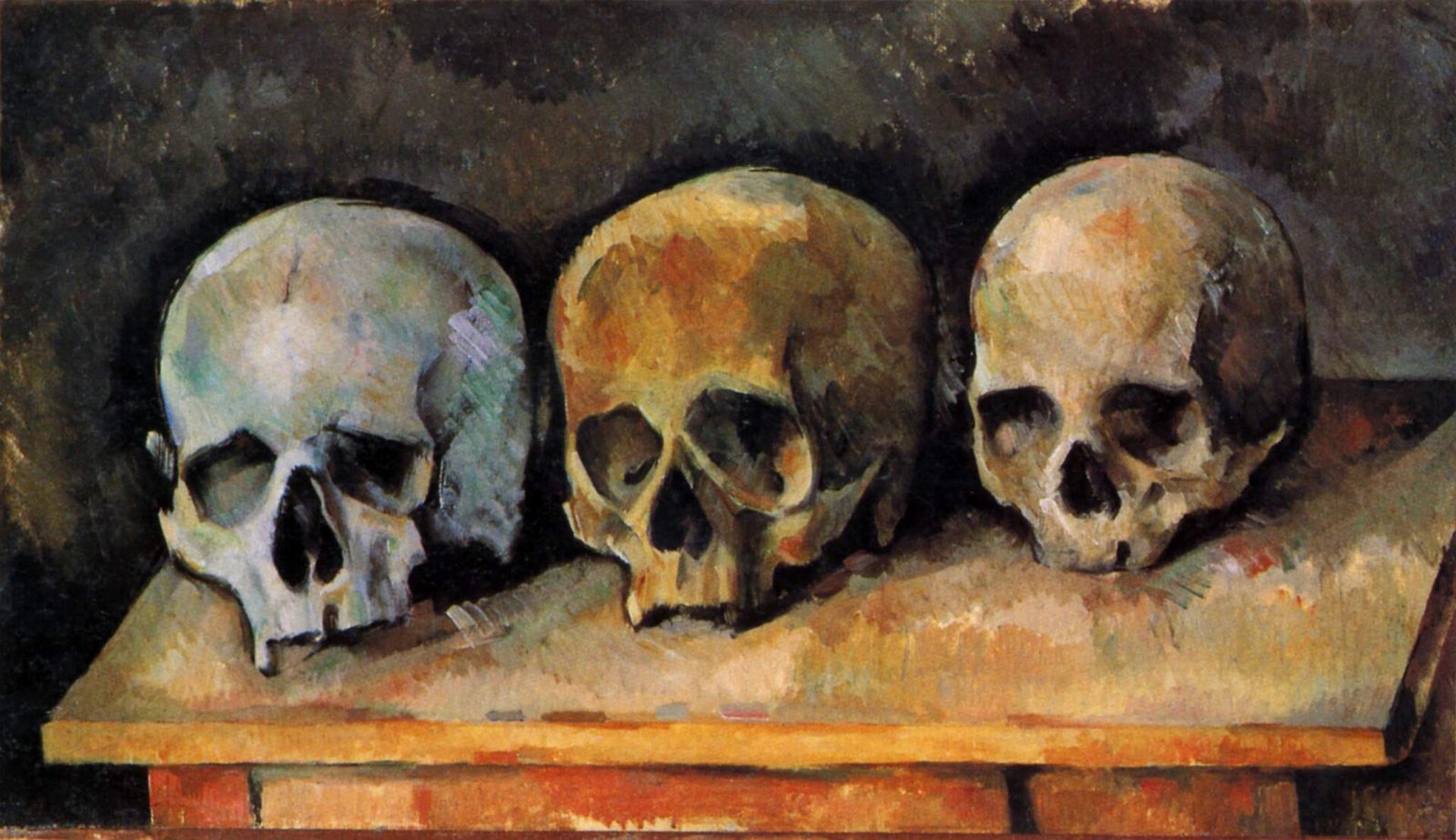
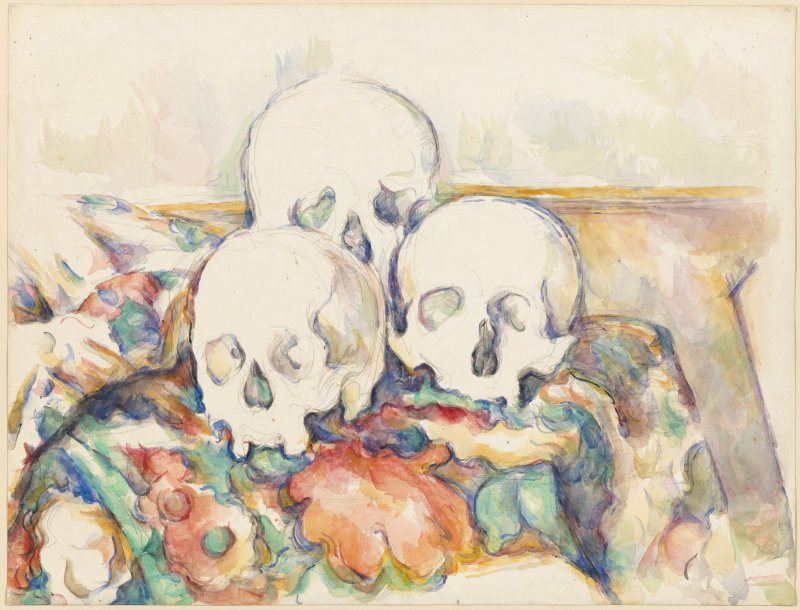
In 1529 the German printmaker Barthel Beham made a small engraving, *Child with Three Skulls*, now in the collection of the National Gallery of Art. It sets a child beside three skulls, a memento mori pairing of new life and certain death. Around 1733 to 1734 the French painter Michel-François Dandré-Bardon painted *The Adoration of the Skulls*, also at the National Gallery of Art, with three skulls piled on an altar and worshippers gathered around them. And around 1898 Paul Cézanne painted *The Three Skulls*, which the Detroit Institute of Arts catalogs as a French vanitas still life, the genre that sets skulls beside the things of life to say none of it lasts.
These works support readings of mortality, transience and religious contemplation in their own times and places. They do not set a rule for what three skulls mean on skin today, but they explain why a row or pyramid of three skulls feels so natural as a memento mori. For more on the painting tradition, see our pieces on vanitas paintings and famous skull art.
Three skulls through the centuries
Tap or hover a step to follow the order.
1529
Barthel Beham engraves Child with Three Skulls in the German printmaking tradition
About 1733 to 1734
Michel-François Dandré-Bardon paints The Adoration of the Skulls in France
1800 to 1900
A Japanese sculpture in the Asian Art Museum shows the three monkeys Mizaru, Kikazaru and Iwazaru
About 1898
Paul Cézanne paints The Three Skulls, a French vanitas still life
2015
A three-skull tattoo covering eyes, ears and mouth is made inside a prison in Ecatepec, Estado de México
What tattooers say about skulls
Tattooers who talk about skulls tend to talk about life as much as death. Chicago tattooer Nassim Dayoub, who works as Sema, told LVL3: "The skull symbolizes death and the rose symbolizes life and love." Sema's work includes a stacked three-skull tattoo in an American traditional style. If your design mixes skulls and roses, our piece on skull and roses meaning follows that pairing further.
The tattooist Scott Campbell described his own pull toward skulls to Shortlist as a mix of independence and a healthy fascination with mortality. "We're all going to die," he said. It is hard to put the memento mori idea more plainly than that.
Neither artist claims that three skulls carry a fixed code. What they offer is the general language of the skull, death, life and the time in between, which a three-skull design then adds its own story to. For the wider meanings of skull tattoos, see our skull tattoo meaning piece.
Personal meanings: people, years and chapters
A lot of three-skull tattoos are personal. People choose three skulls for three family members, for siblings, for three friends, for past, present and future, or as a memorial to people they have lost. These are real and common choices, but no tattoo tradition assigns them to the design. The number three gives the tattoo its shape; the wearer gives it its meaning.
That is also why multiple skull tattoos in general can mean so many things: mortality, remembrance, life and death side by side, or a set of people or experiences the wearer wants to carry. If you are curious about someone's three skulls, the best way to know is to ask them, and if you are getting one, tell your artist what each skull stands for. A good artist can make the three skulls different enough to tell apart, so the story stays readable.
Common variations
The same three skulls can look and read very differently depending on what goes with them.
Three-skull variations and what they are said to mean
Tap a card to bring it forward.
- Covering eyes, ears and mouth: See no evil, hear no evil, speak no evil, as in Kane Brown's forearm tattoo
- With roses: Death beside life and love, the contrast Sema describes
- Stacked in a column: Meaning comes from the wearer and the gestures of each skull, not from the stacking itself
- In a row, pyramid or triptych: Echoes three-skull memento mori and vanitas art by Beham, Dandré-Bardon and Cézanne
- With crowns: No established meaning; the crown belongs to that design's own story, so ask the wearer or artist
Crowns come up a lot in three-skull designs, and they have no settled reading of their own. Treat a crown, like a personal three-part meaning, as part of that particular design, and confirm what the wearer intended.
Placement and style
Where the tattoo sits changes how the three skulls read. A vertical stack suits a narrow area such as the forearm or calf and can suggest sequence, one skull after another. A horizontal row or a broad chest piece gives each skull more room and more detail. Traditional work uses bold outlines and simple shading, which keeps the eye, ear and mouth gestures easy to read; Sema's stacked three-skull piece sits in that American traditional style. Black-and-grey, realistic or neo-traditional work can make each skull look clearly different from the others, which helps when each one stands for a different person.
One documented example shows how much a vertical layout helps the gestures read. In a 2020 thesis, the Mexican academic Adán Mendizábal Bermúdez describes a three-skull tattoo on the back of the right forearm, about 18 cm by 5 cm, done with thick, irregular lines, limited shading and a handmade machine. The column format made the covered eyes, ears and mouth easy to read.
Placement does not create a universal meaning on its own. A stack on a forearm and a row across a chest can mean exactly the same thing to the person wearing them.
Prison and gang readings, in proportion
You may have heard that three skulls are a prison or gang tattoo. Most people with a three-skull tattoo have no such tie, and three skulls are not a documented universal gang mark. There is one well-documented prison case, and it is worth knowing in full rather than as a rumor.
The tattoo described above comes from Mendizábal Bermúdez's thesis. In 2015 a man identified as Juan received three vertically stacked skulls inside the Centro de Reinserción Social Chiconautla in Ecatepec, Estado de México. One skull covers its mouth, one its ears and one its eyes. The thesis describes the image as recognizable inside that prison and reads it there as a warning tied to silence, vigilance, death and equality. That meaning belongs to that place and that wearer's experience. It does not carry over to ordinary three-skull tattoos.
Law enforcement writing makes the same point about context. The U.S. Office of Justice Programs summarizes Richard Valdemar's 2006 article on gang tattoos: such tattoos can show affiliation, rank, prison history or crimes, but their meanings belong to specific gangs and settings. A skull with a documented gang meaning usually comes with its own distinct features. The ADL's *Hate on Display* guide, for example, lists a helmeted, winged skull with the letters "ACB" as the symbol of the Aryan Cowboy Brotherhood, a white supremacist prison or street gang in Minnesota and Kentucky. That is a specific hate symbol with its own lettering, not three ordinary skulls, and it signals exactly what the ADL says it does.
So, before reading anything sinister into a stranger's three skulls, look at the whole design, any lettering and the local setting, and if it matters, ask the person wearing it.
Three skulls tattoo quiz
Answer every question to check.
Quick answers about three skulls tattoos
What do three skulls mean?
Three skulls most often mean "see no evil, hear no evil, speak no evil," mortality and memento mori, or a personal group such as family or friends. Three-skull images go back at least to Barthel Beham's 1529 engraving, while the meaning of a modern tattoo depends on its design and on the wearer.
What do multiple skull tattoos mean?
Multiple skull tattoos usually stand for mortality, remembrance, life and death, or several people or experiences in the wearer's life. Context can change everything: in one documented 2015 prison tattoo from Ecatepec, Mexico, three skulls formed a local code about silence and vigilance.
What does a 3 skull tattoo mean?
A 3 skull tattoo has no single fixed definition; wearers use it for the three wise monkeys, mortality, a memorial, family unity or a private story. The wearer's own explanation, or the artist's, tells you more than any symbol list can.
What does a tattoo of 3 skulls mean in Spanish? (¿Qué significa un tatuaje de 3 calaveras?)
A tattoo of three calaveras means the same range of things in Spanish-speaking tattoo culture: mortality, a memento mori, "see no evil, hear no evil, speak no evil," a tribute or a personal story. In the one documented prison case from Ecatepec, Estado de México, the three skulls formed a specific code about silence and vigilance, which is why the design has no universal meaning.
Where to go next
Three skulls sit inside a much bigger family of skull imagery. For the idea underneath many of these designs, read what memento mori means. If you are weighing other designs, compare skeleton tattoo meaning and sugar skull tattoo meaning. And if you like the memento mori thought but are not ready for ink, our Memento Mori skull tee wears it on a shirt instead.