

No. 096
Snapdragon Seed Pods: Why They Look Like Tiny Skulls and How to Grow Them
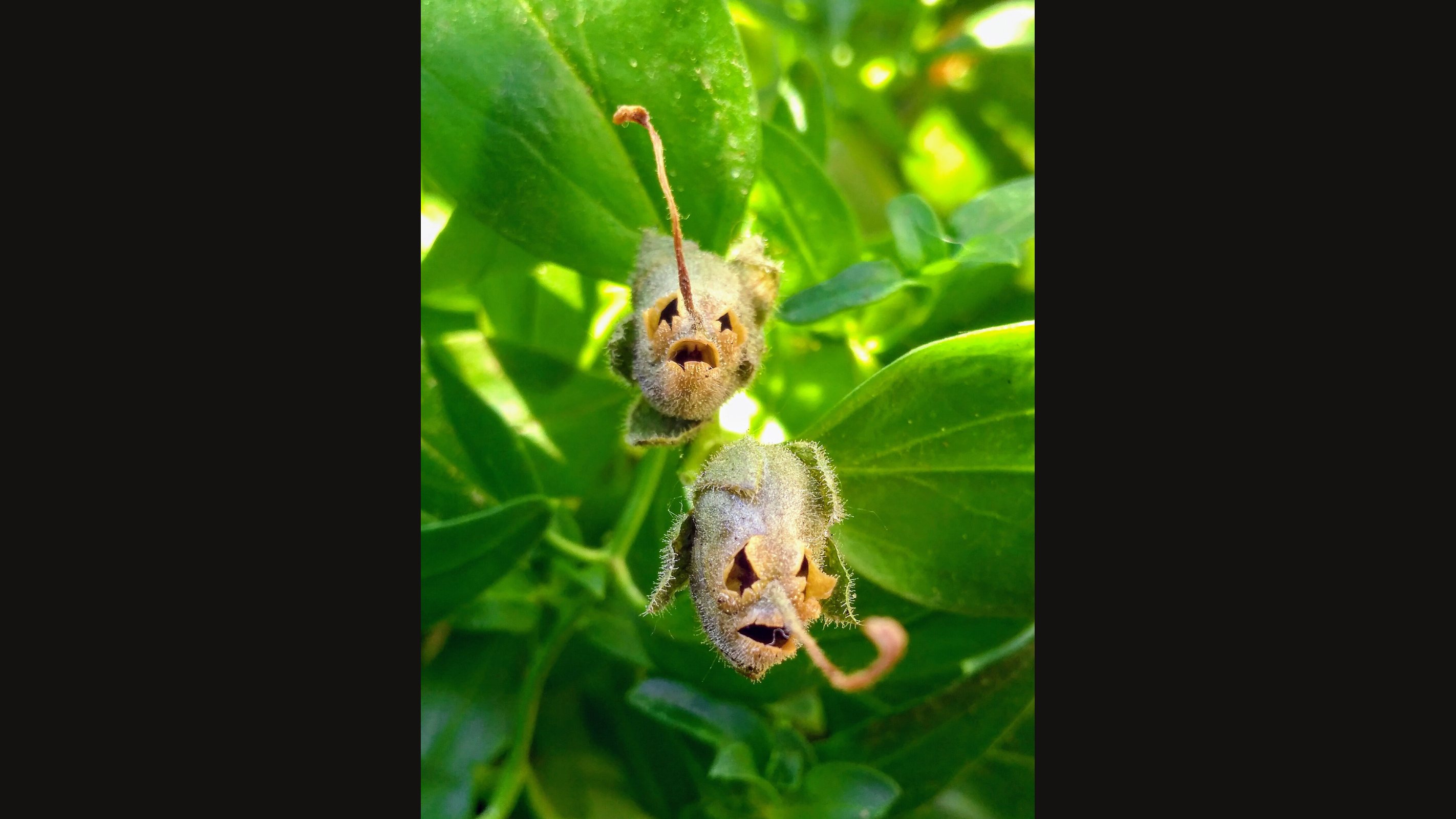
Those tiny screaming skulls are the dry seed capsules of the garden snapdragon, *Antirrhinum majus*. Each capsule is about 15 mm long and has two chambers inside, and as it dries, three pores open near its tip to let the seeds out (Go Botany; Müller et al., *The Plant Journal*). The rounded capsule and those dark openings happen to line up like eye sockets and a gaping mouth. It is an accident of shape, not a design. And yes, you can grow your own: plant snapdragons, then let some of the flowers fade on the plant instead of cutting every spike.
The rest is the fun part: what the pod is doing, how to grow and collect a crop of little skulls, the folklore people attach to them, and whether they are safe to have around children and pets.
What the little skulls really are
A snapdragon flower does not stay a flower for long. Once it has been pollinated and the petals fade, the ovary develops into a fruit, and in snapdragons that fruit is a dry capsule. Go Botany, the plant guide from the Native Plant Trust, records the capsule of *Antirrhinum majus* at about 15 mm long, with two internal chambers called locules (Go Botany).
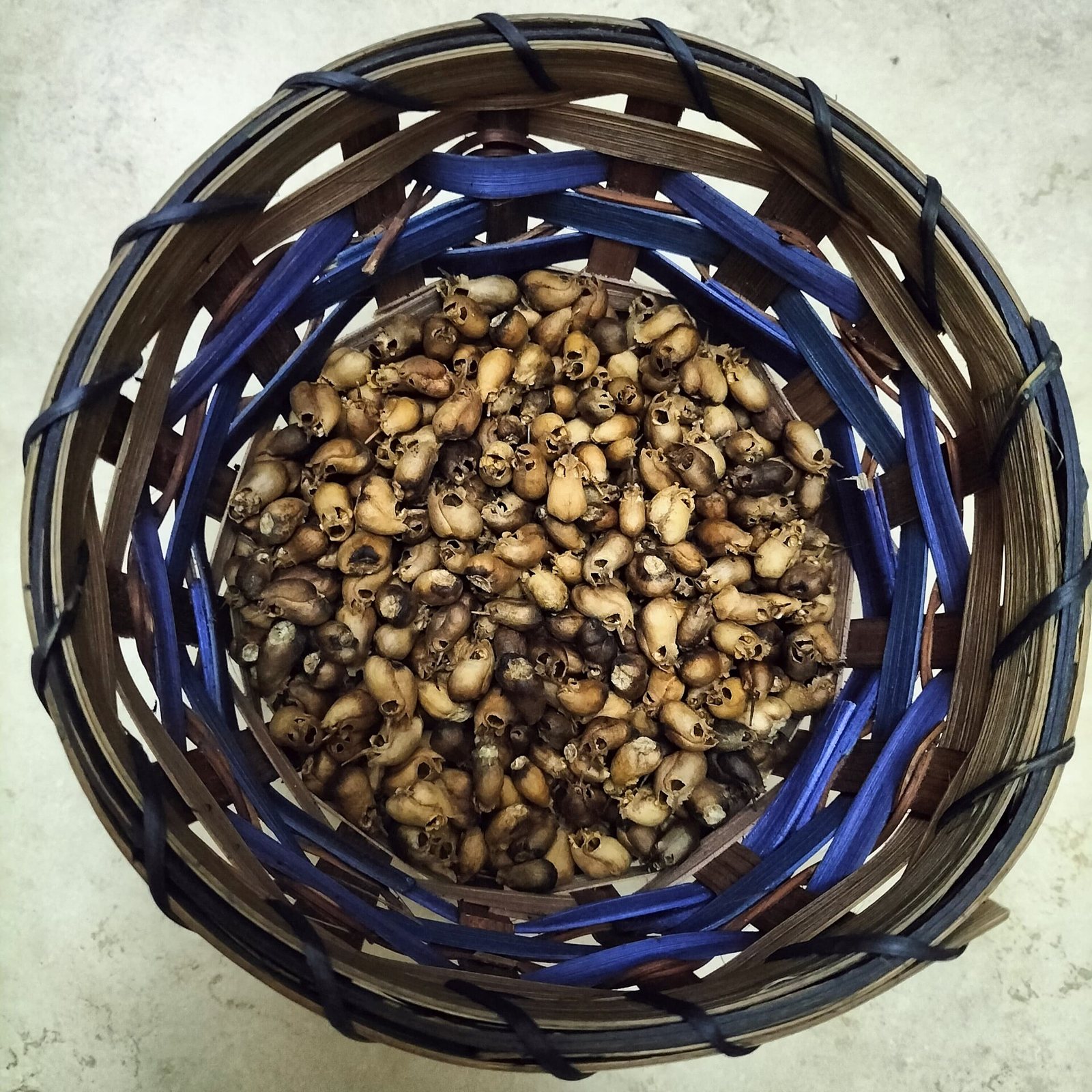
As the capsule ripens and dries, it opens in a neat way: three pores form at its dry tip. The botanist Ralf Müller and colleagues documented those three pores in mature *Antirrhinum* capsules in *The Plant Journal* (Müller et al.). The seeds are very small, and they shake out of the holes the way pepper comes out of a shaker.
So, what do snapdragon seed pods look like? Once ripe and dry, they turn brown, and with the pores open they look for all the world like a little skull with two hollow eyes and a mouth stretched open in a scream. The skull is a resemblance only. Nothing about the shape evolved to look like a face; it is simply how the chambers and pores happen to sit.
Tap or hover a row to highlight it.
| Topic | Detail |
|---|---|
| TopicPlant | DetailGarden snapdragon, Antirrhinum majus |
| TopicFruit type | DetailDry capsule |
| TopicCapsule length | DetailAbout 15 mm |
| TopicInside | DetailTwo chambers (locules) |
| TopicHow seeds get out | DetailThree pores at the dry tip |
| TopicLight | DetailFull sun |
| TopicSoil | DetailMoist, well-drained |
| TopicSeason | DetailCool-season flower, strongest in spring and fall |
| TopicIndoor sowing | DetailAbout eight weeks before the average frost-free date |
| TopicCold-frame sowing | DetailAbout six weeks before the average frost-free date |
| TopicPeople | DetailListed as non-poisonous by the Ontario Poison Centre |
| TopicDogs and cats | DetailListed as non-toxic by the ASPCA |
Why your brain sees a screaming face
Once you have seen the face, it is hard to stop seeing it. The two chambers and the three dark openings fall into the same arrangement as a face: two holes above, one below. Gardeners who post their pods online reach for the same words again and again, calling them tiny screaming skulls, alien skulls and little fairy skulls.
That instinct to find faces in objects is the same one that turns a rock into a skull, as our story on Skull Rock in Joshua Tree explains. Nature makes plenty of these accidental skulls, from rocks to the moth known as the death's-head hawkmoth.
Growing snapdragons for skull pods
If you want a crop of your own, start with the plant's basic needs. Illinois Extension recommends full sun and moist, well-drained soil, and describes snapdragons as cool-season flowers that handle light cold better than many annuals (Illinois Extension, Snapdragon). It suggests planting in spring, then again in mid to late summer for a fall show (Illinois Extension, Cool-Season Annuals).
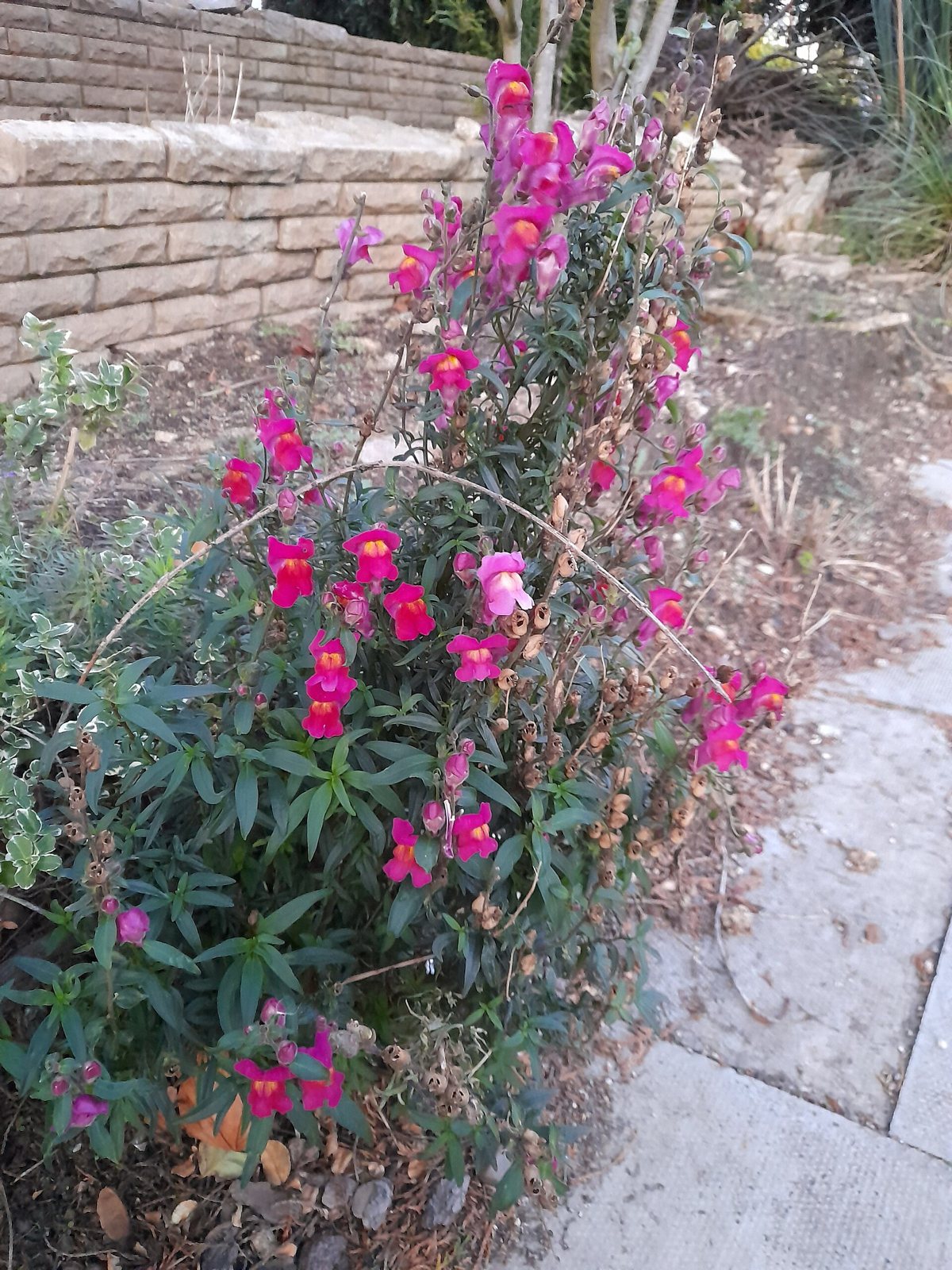
To start from seed indoors, Colorado State University Extension recommends sowing snapdragons about eight weeks before your average frost-free date, or about six weeks ahead if you use a cold frame (Colorado State University Extension). Snapdragon seed needs light to germinate, so press it onto the surface of the growing mix rather than burying it.
How long a plant lasts depends on where you live and which variety you grow. The Missouri Botanical Garden describes snapdragons as short-lived tender perennials, generally hardy in USDA Zones 7 to 10 for the cultivar it lists, and grown as annuals elsewhere (Missouri Botanical Garden). As one example of local timing, the University of Illinois planting guide for Cook County, Illinois, which sits in Zones 5b to 6a, lists sowing indoors or in the garden around March 1 and setting plants outside around April 30 (University of Illinois Extension). Your dates will differ, so check with your local university extension office for your area.
Getting pods: deadhead, or let them go to seed?
This is where most gardeners have to make a choice. Deadheading, which means cutting off the spent flower spikes, encourages snapdragons to keep blooming. It also removes the very part that becomes the skull. Illinois Extension notes that removing spent spikes encourages more flowers, while leaving some in place lets the capsules and seeds mature (Illinois Extension, Snapdragon).
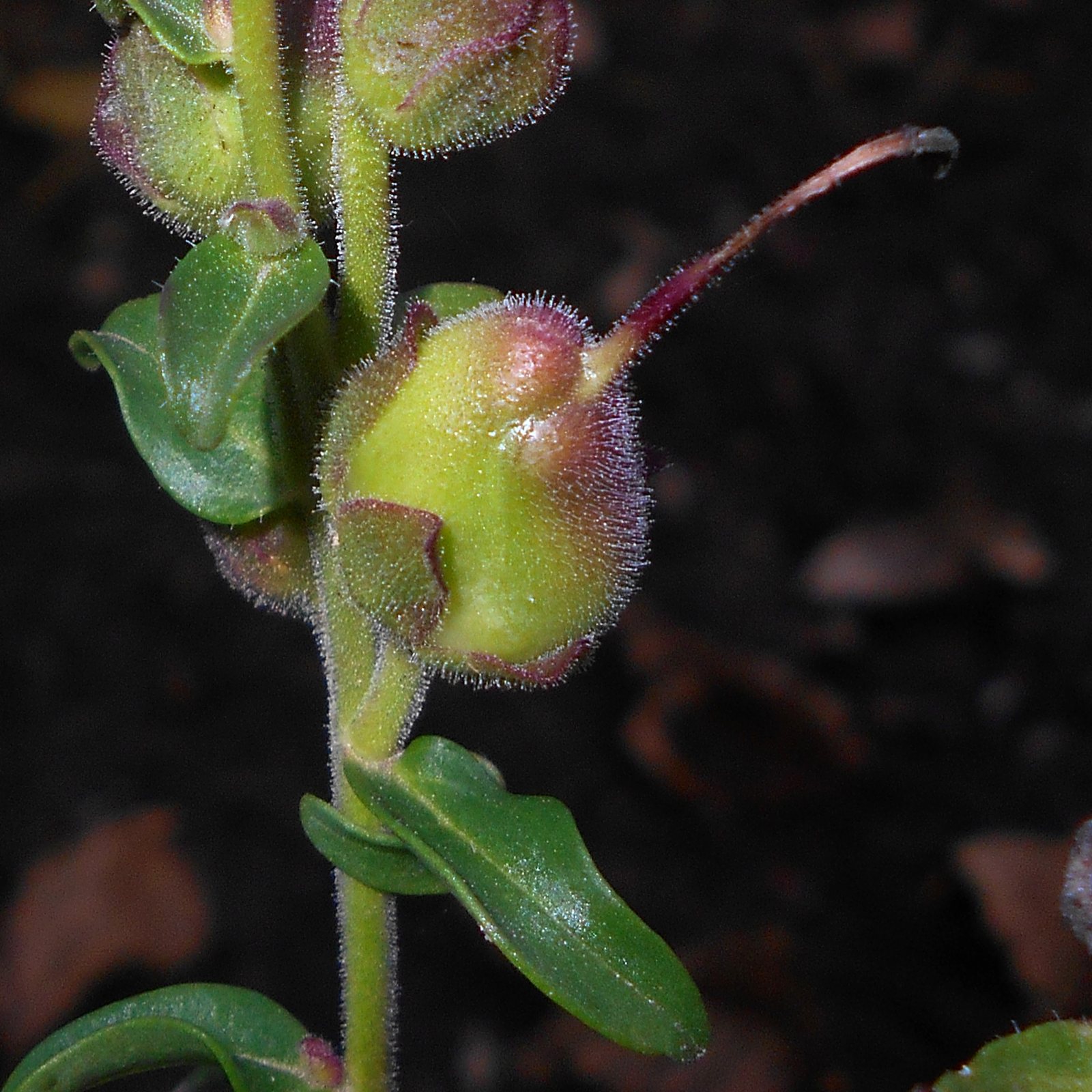
The easy compromise is to do both. Deadhead most of the plant to keep it flowering, and leave a few spikes alone. Those spikes will slowly turn into stalks lined with little green pods, and then, as they dry, with little brown skulls.
From snapdragon flower to a jar of seeds
Tap or hover a step to follow the order.
After flowering
The petals fade and the ovary develops into a capsule.
Ripening
The capsule enlarges and the seeds mature inside its two chambers.
Dry stage
The capsule turns dry and brown, and three pores open near its tip.
Seed release
Drying, wind, rain or handling shakes the seeds out of the pores.
Seed saving
Collect the dry capsules before they empty, dry them fully, label them and store them cool and dry.
Collecting the pods and saving the seed
The trick to collecting snapdragon seed is timing. Wait until the capsules have turned dry and brown, then pick them on a dry day, before wind or rain has a chance to empty them. The San Diego chapter of the California Native Plant Society lists *Antirrhinum* among the plants with dry seed pods and recommends collecting such pods before the weather scatters the seed (CNPS San Diego). Exact timing varies with your climate, so a university extension office is a good place to ask about your own area.
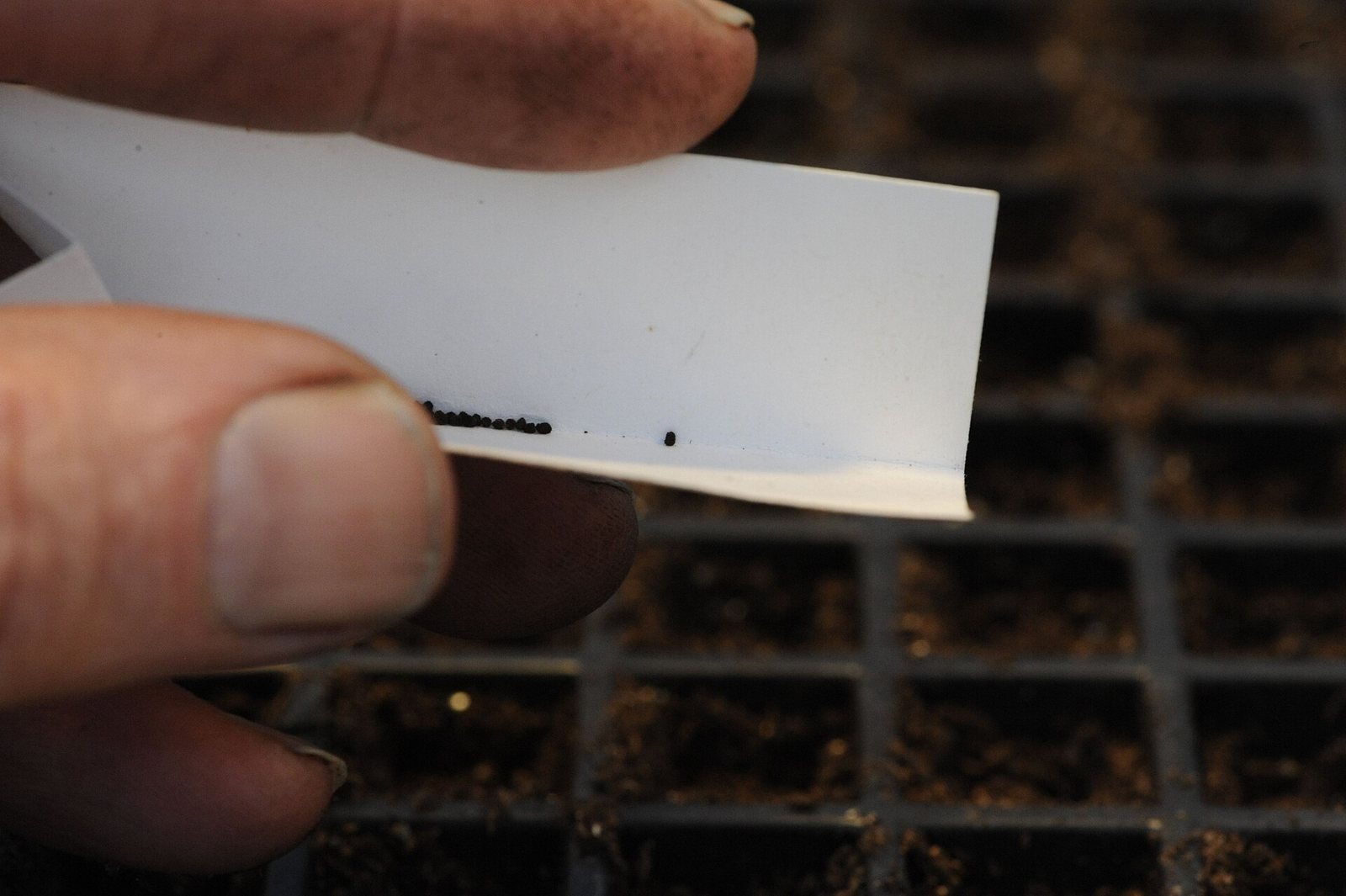
Cut or gently pull off the dry stalks and drop them into a paper bag to finish drying indoors. When they are fully dry, shake or rub the capsules over the bag to release the seeds, which are very small. Store the seed completely dry, in a labeled envelope or an airtight container, somewhere cool, dry and dark. Penn State Extension advises keeping leftover seed cool and dry, and cautions that seed saved from hybrid varieties may not grow into plants just like the parent (Penn State Extension). So, if you loved the color of this year's plant, expect a few surprises next year.
Checklist for saving snapdragon seed
Tap a card to bring it forward.
- Leave some spikes: Skip deadheading on a few flower spikes so the capsules can form.
- Wait for brown: Collect capsules once they are dry and brown.
- Pick on a dry day: Gather them before wind or rain shakes the seeds out.
- Finish drying indoors: Let the stalks dry completely in a paper bag.
- Shake out the seed: Rub or shake the capsules over the bag to free the tiny seeds.
- Label everything: Write the variety and harvest date on the envelope or container.
- Store cool, dry and dark: Keep the seed fully dry until planting time.
Snapdragon folklore, as folklore
Plants that look like skulls attract stories, and snapdragons have a few. They belong to folklore, and it helps to know exactly where each one comes from.
In *English Folk-lore*, published in 1880, William Thiselton-Dyer wrote that the snapdragon was said in many places to have supernatural influence and the power to destroy charms (Thiselton-Dyer, 1880). The same passage mentions branches of mountain ash hung in stables in the north of England against witchcraft, but it does not say that snapdragon pods were hung there.
A second account involves a different plant. In a 1959 article, Johan Tucakov described a healer in France who used the mature, dried capsules of *Antirrhinum orontium*, the lesser snapdragon, in a ceremony meant to drive away evil spirits and calm frightened people (Tucakov, 1959). That is a cousin of the garden snapdragon, not the same species.
You may also come across claims online that skull-shaped garden snapdragon pods were used all over Europe as protection against witchcraft. That is a folklore claim, and it has no dated record behind it that names a community, a place and a time. If you enjoy the idea, enjoy it as folklore. For the documented history of skulls and the occult, our story on skulls in witchcraft is the place to go next.
Are snapdragon pods safe around children and pets?
Snapdragons are generally listed as safe. The ASPCA lists garden snapdragon, *Antirrhinum majus*, as non-toxic to dogs and cats (ASPCA). The Ontario Poison Centre lists snapdragon among plants considered non-poisonous to people, while cautioning that any plant can be a choking hazard and that individual people can react unexpectedly (Ontario Poison Centre).
Non-toxic is not the same as edible. The seeds and pods are not food, and young children can choke on small plant parts, so keep a bowl of dried skulls out of reach of little hands. If someone does swallow something and you are worried, contact a poison centre, or a veterinarian for a pet. This is general information, not medical or veterinary advice.
Showing off your skulls
Once you have a bag of dried pods, you have a few options. You can leave some on the plant so it reseeds itself, save the seed for next year, or keep the prettiest stalks for a dried botanical display. A small jar of screaming skulls on a shelf makes a fine conversation piece, and if you are decorating with skulls more broadly, our ideas for skull home decor might help. For another plant with a skeletal reputation, meet the skeleton flower.
If you want photos to share, two openly licensed images on Wikimedia Commons show the pods well: fruits and seeds of *Antirrhinum majus* from the Lower Galilee in Israel, by DascyllusM, under CC BY-SA 4.0, and snapdragon seed pods photographed in Kyiv by K. Chaikovska, under CC BY 4.0. Keep the credit and licence terms with them.
Questions people ask about snapdragon seed pods
These are the questions gardeners and skull fans ask most about the pods.
Why do snapdragon seed pods look like skulls?
Snapdragon seed pods look like skulls because each dry capsule has two rounded chambers and three dark pores at its tip. When the capsule dries and the pores open, the shape reads as a tiny skull with eye sockets and an open mouth. It is a coincidence of structure, since the pores exist to release seed.
What can you do with snapdragon seed pods?
You can leave snapdragon seed pods on the plant to reseed, collect them to save the seed, or dry them for display. If you save seed, store it fully dry, labeled with the variety and date, in a cool, dark place.
Are snapdragon seeds poisonous?
Snapdragon seeds are not listed as poisonous: the Ontario Poison Centre lists snapdragon as non-poisonous to people, and the ASPCA lists *Antirrhinum majus* as non-toxic to dogs and cats. They are still not food, and small children can choke on plant material.
Do snapdragons have seeds?
Snapdragons do have seeds, many very small ones, packed inside each dry capsule. After the flower is pollinated, the capsule develops, and when it is mature it lets the seeds out through pores near its tip.
Should you deadhead snapdragons or let them go to seed?
To get seed pods, let some snapdragons go to seed while deadheading the rest. Cutting spent spikes keeps the plant blooming, but it removes the capsules, so the skulls only form on the spikes you leave alone.
Test yourself on snapdragon skulls
How well do you know snapdragon seed pods?
Answer every question to check.
A garden full of tiny skulls
Snapdragons give you two shows for one plant: spikes of flowers in the cool months, then rows of little screaming skulls once the flowers are done. All it takes is a sunny spot, some patience, and the willingness to leave a few spikes uncut. If you are the kind of gardener who already sees skulls everywhere, our Garden Crew Skull Tee is our shirt for you: an engraved skull overgrown with vines and roots, with mushrooms at its base and a marigold on top.
Terms in this story
Tap a term to see what it means.
Antirrhinum majus. The scientific name of the garden snapdragon, the plant whose dried seed capsules look like tiny skulls.
---