

No. 277
Omo Kibish Skulls: The Early Homo sapiens Fossils from Ethiopia and How Old They Are
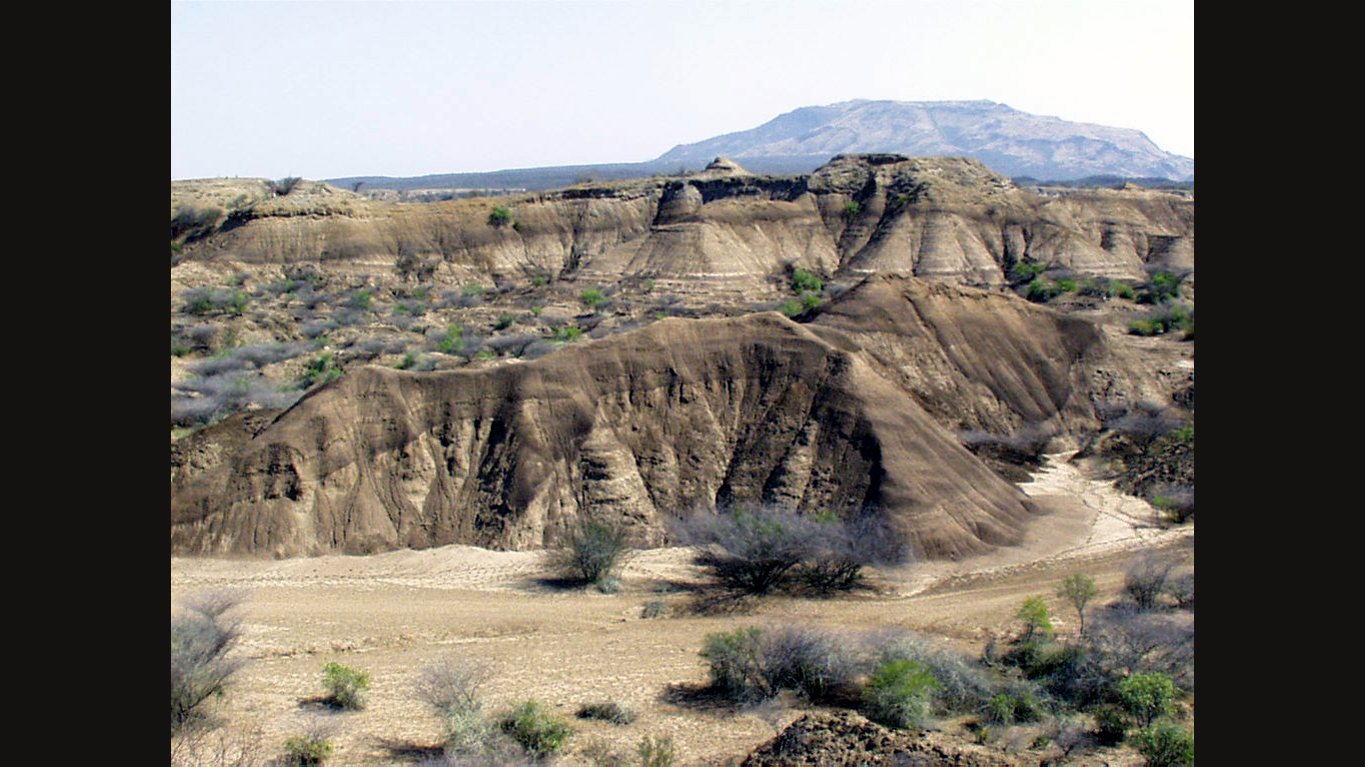
The Omo Kibish skulls are early *Homo sapiens* fossils found in 1967 in the Kibish Formation, beside the lower Omo River in southern Ethiopia, by a Kenya National Museums team directed by Richard Leakey. The two best known are Omo I, a partial skeleton with much of its skull, and Omo II, a nearly complete braincase (Smithsonian Human Origins Program; Fleagle, Assefa, Brown and Shea, 2008).
As for age, a 2022 study by Vidal and colleagues in *Nature* gives the fossils a minimum age of 233,000 years, plus or minus 22,000 (Vidal and colleagues, 2022). So, they are at least about 230,000 years old, and they could be older. That places them among the oldest *Homo sapiens* fossils known.
These were real people who lived in what is now southern Ethiopia, and what their bones can tell us comes down to a few specific places, layers and names.
The 1967 finds beside the Omo River
In 1967, a team from the Kenya National Museums, directed by Richard Leakey, worked in the Kibish Formation along Ethiopia's lower Omo River. They recovered human remains at more than one spot along the formation (Fleagle and colleagues, 2008).
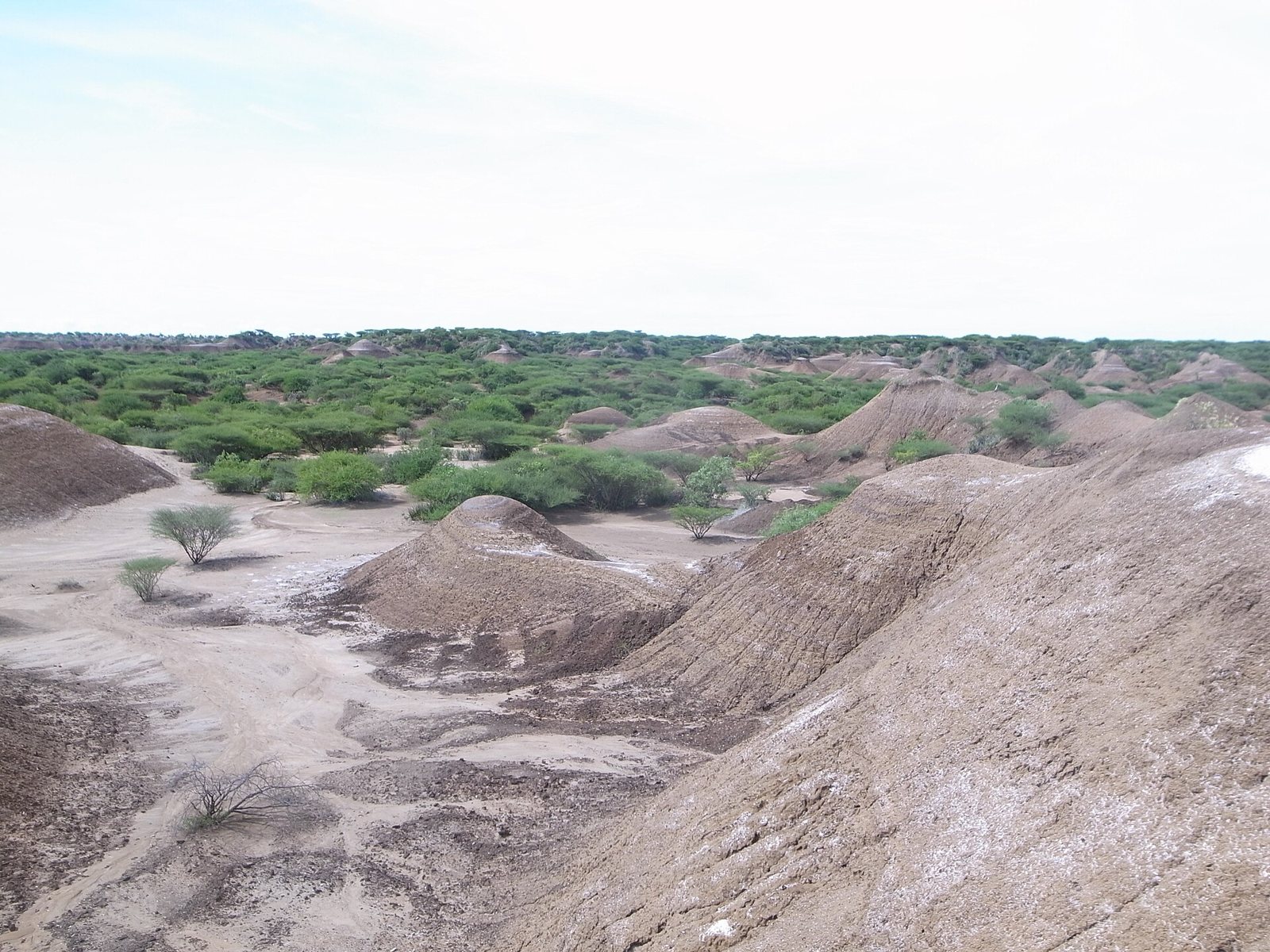
Omo I came from Kamoya's Hominid Site. Kamoya Kimeu found it in situ, meaning still in place in the ground, and that mattered enormously: it fixed the fossil's position in the layer of sediment that geologists call Member I. Omo I is much more than a skull. It includes most of the cranial vault (the dome of the skull), parts of the face and lower jaw, and bones from the rest of the body (Smithsonian Human Origins Program).
Omo II came from Paul's Hominid Site. It is a virtually complete calvaria, the braincase without the face. The original report, published in *Nature* in 1969 by Leakey, Butzer and Day, also recorded a third skull and associated skeletal material (Leakey, Butzer and Day, 1969). That third find is often listed as Omo III.
The setting is protected today. The Kibish Formation lies within the Lower Valley of the Omo, a UNESCO World Heritage site in southwestern Ethiopia (UNESCO World Heritage Centre). The sediments around the fossils are associated with Middle Stone Age technology, though the bones themselves do not point to one specific behavior or cultural tradition (Fleagle and colleagues, 2008).
How old are the Omo Kibish skulls?
The best current answer is at least about 230,000 years, and the way that figure was reached is a neat piece of detective work.
Lying above the Member I sediments that hold Omo I is a layer of volcanic ash, the Kamoya's Hominid Site Tuff. Vidal and colleagues chemically matched that ash to a particular eruption, called Qi2, of Shala volcano in Ethiopia. They then dated 113 sanidine crystals, a mineral that forms in volcanic rock, from the Shala deposits using the argon-argon method (written 40Ar/39Ar), which measures how argon builds up in a crystal after an eruption. The result was 233,000 years, plus or minus 22,000 (Vidal and colleagues, 2022; IUGS Geological Heritage Site).
Why "minimum"? Because the ash sits above the fossil layer. It fell after the bones were already buried, so the bones must be at least as old as the ash, and they could be older. It is a floor for their age, not a precise birthday.
The number has moved over the years. Dating work in 2005 put the fossils at about 195,000 years, and a 2008 special issue led by Smithsonian scientists gave Member I an age of about 196,000 years, plus or minus 2,000 (Fleagle and colleagues, 2008). The 2022 paper notes that the commonly cited figure of about 197,000 years depended on ash correlations that had since been challenged, which is why the new minimum is older.
Omo Kibish from 1967 to today
Tap or hover a step to follow the order.
1967
Richard Leakey's Kenya National Museums team recovers Omo I and Omo II in the Kibish Formation.
1969
Leakey, Butzer and Day publish the first scientific descriptions in Nature.
2005
Dating work places the Omo fossils at about 195,000 years.
2008
A Smithsonian-led special issue gives Member I an age of about 196,000 years, plus or minus 2,000.
2017
Jebel Irhoud fossils in Morocco are reported at 315,000 years, plus or minus 34,000.
2022
Vidal and colleagues report a minimum age of 233,000 years, plus or minus 22,000, for Omo I.
Omo I and Omo II: two skulls that look different
Put the two skulls side by side and they do not quite match, which is one of the most interesting things about the site.
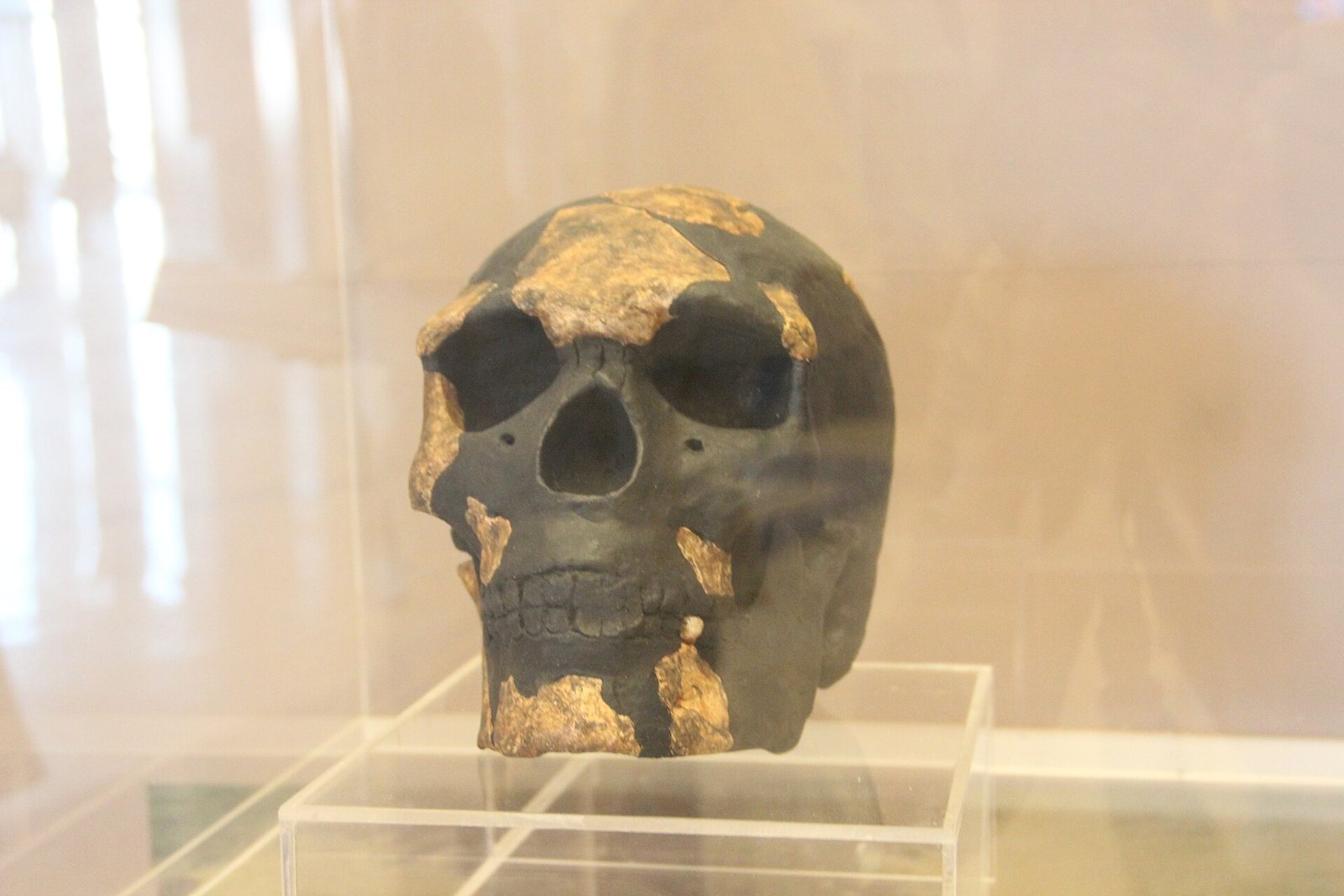
Omo I looks strikingly like us. It has a high, rounded and fairly globular vault, a rounded back of the skull, a bony chin, relatively modern teeth and body bones that are broadly human-like (Smithsonian Human Origins Program).
Omo II also has a large braincase, but its shape is more archaic. The vault is narrower and more parallel-sided. It shows sagittal keeling, a slight ridge running front to back along the top of the skull, and its occipital bone at the back of the head is strongly angled, with a pronounced occipital torus, a thick horizontal bar of bone (Fleagle and colleagues, 2008; Schwartz, 2010).
Scientists have read that contrast in several ways. Michael Day first treated both skulls as variants of *Homo sapiens*, with Omo I more modern and Omo II more archaic. Day and Chris Stringer later aligned Omo I with *Homo sapiens* and compared Omo II with *Homo erectus*, the earlier human species described in our Homo erectus skull story. Other researchers argue the differences could simply be variation within one population living at the same time, while some propose two roughly contemporary populations. Schwartz reviews these readings in a 2010 paper (Schwartz, 2010).
Where things stand is plain enough: Omo I's place in *Homo sapiens* is widely accepted, and Omo II remains harder to interpret.
Omo I and Omo II side by side
Tap a card to bring it forward.
- Found at: Omo I at Kamoya's Hominid Site; Omo II at Paul's Hominid Site.
- What survives: Omo I is a partial skeleton with much of the skull; Omo II is a nearly complete braincase.
- Skull shape: Omo I has a high, rounded vault; Omo II has a narrower, more parallel-sided vault.
- Back of the skull: Omo I is rounded; Omo II is strongly angled with a pronounced occipital torus.
- Face and jaw: Omo I has a bony chin; Omo II has no face preserved.
- Usual reading: Omo I is widely accepted as Homo sapiens; Omo II is a mix of modern and archaic traits and harder to interpret.
Omo beside Jebel Irhoud and Herto
Omo Kibish is one of three sites that come up again and again in the story of our species' early days. Each tells a slightly different part of it.
Jebel Irhoud in Morocco is older in number, dated to 315,000 years, plus or minus 34,000, by thermoluminescence, and its fossils pair a modern-looking face, jaw and teeth with a more primitive braincase shape (Hublin and colleagues, 2017). Our Jebel Irhoud skull story covers that site in full.
Herto, also in Ethiopia but in the Middle Awash region, is younger. It is generally dated to about 160,000 to 155,000 years, with the original study placing the fossils at roughly 154,000 to 160,000 years (White and colleagues, 2003). Its people, too, show a mix of archaic and modern traits.
Set together, the three sites point to an African history of *Homo sapiens* spread across widely separated populations, with features combining in different ways in different places, rather than one look appearing at one place and one date (Vidal and colleagues, 2022). Omo I stands out in that group for having more clearly modern skull features, while Omo II carries a mosaic. For the wider question of which fossils count as the oldest of all, see our guide to the oldest human skull.
Tap or hover a row to highlight it.
| Specimen or site | Place | Date | Dating or basis | Key description |
|---|---|---|---|---|
| Specimen or siteOmo I | PlaceKibish Formation, southern Ethiopia | DateMinimum 233 ± 22 kyr | Dating or basisArgon-argon dating of sanidine crystals from the correlated Shala Qi2 eruption | Key descriptionPartial skeleton, modern-looking cranial vault, chin |
| Specimen or siteOmo II | PlaceKibish Formation, southern Ethiopia | DateSame Member I context as Omo I; generally treated as broadly contemporary | Dating or basisStratigraphic association with Member I | Key descriptionVirtually complete calvaria with modern and archaic traits |
| Specimen or siteHerto | PlaceMiddle Awash, Ethiopia | DateAbout 160 to 155 kyr | Dating or basisStratigraphy and tephra dating | Key descriptionEarly Homo sapiens with a mosaic of archaic and modern traits |
| Specimen or siteJebel Irhoud | PlaceMorocco | Date315 ± 34 kyr | Dating or basisThermoluminescence dating | Key descriptionModern-looking face and jaws with a more primitive neurocranium |
Where the Omo fossils are today
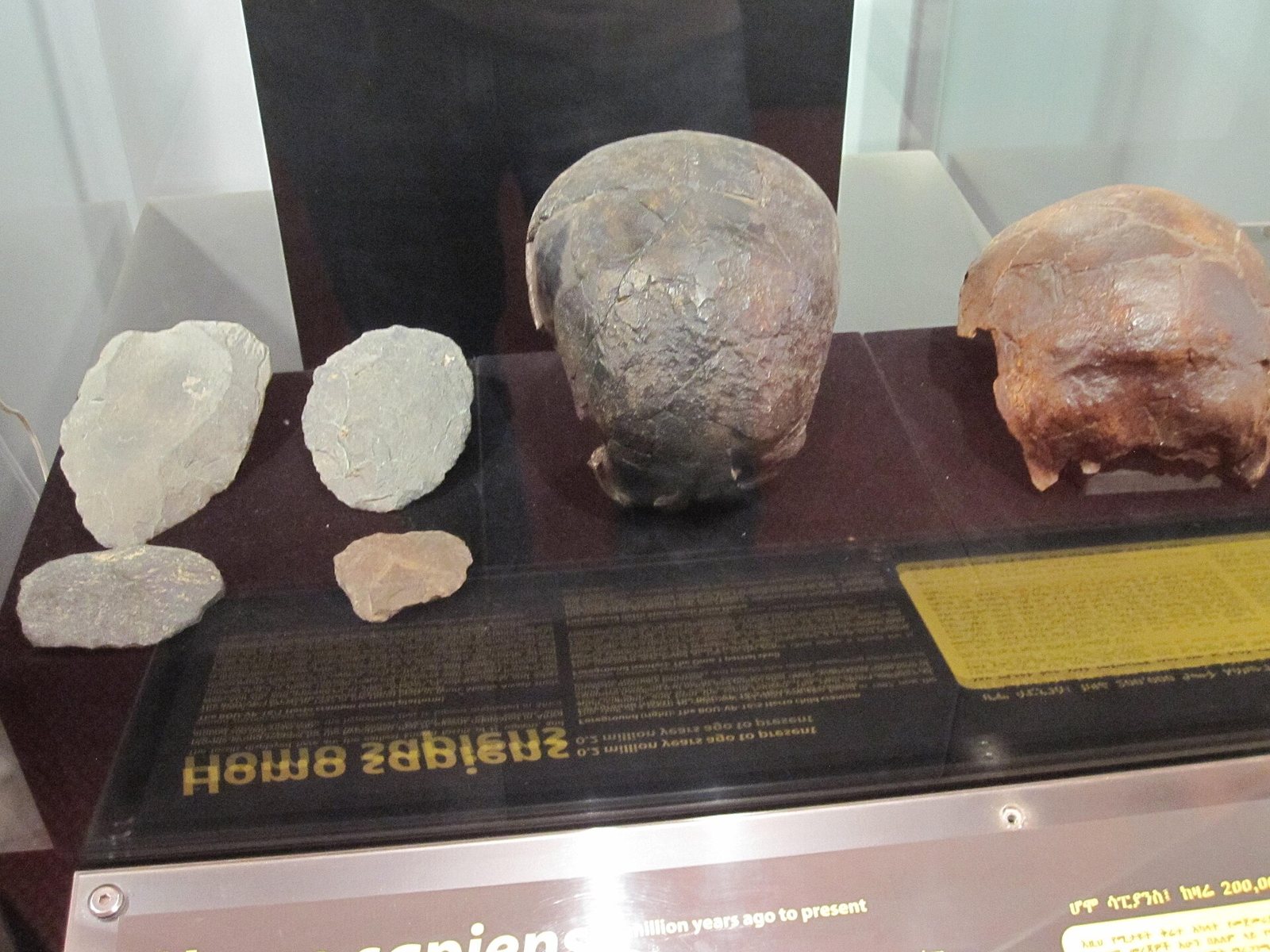
The fossils belong to Ethiopia's heritage. Omo I is associated with the National Museum of Ethiopia in Addis Ababa (Hombres de Kibish). If you hope to see the original fossils, confirm the present holdings and access conditions with the National Museum of Ethiopia before you plan a visit.
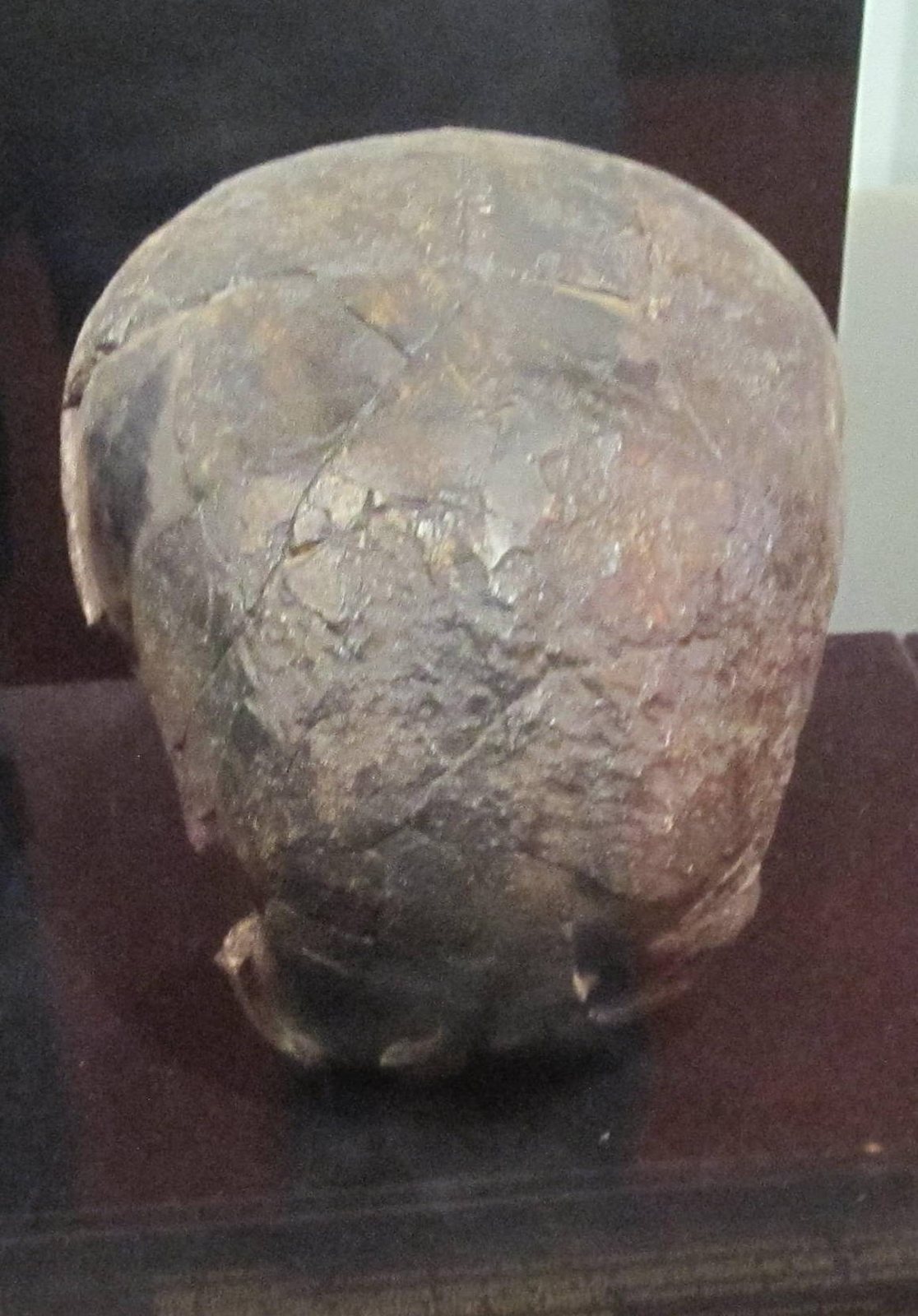
Reproductions travel further. A cast of an Omo Kibish skull is shown at the Musée des Civilisations Noires in Dakar, Senegal, and a photograph of it is openly licensed on Wikimedia Commons. From anywhere, the Smithsonian Human Origins Program keeps an online page on Omo I with its find, its species and its earlier age estimate (Smithsonian Human Origins Program).
How well do you know the Omo Kibish skulls?
Answer every question to check.
Frequently asked questions
A few more questions about the Omo fossils, answered briefly.
What is Omo I?
Omo I is a partial *Homo sapiens* skeleton found in 1967 at Kamoya's Hominid Site in the Kibish Formation of southern Ethiopia. It includes most of the skull's vault, parts of the face and lower jaw, and many bones from the rest of the body, and its high, rounded vault and chin are generally considered consistent with *Homo sapiens* (Fleagle and colleagues, 2008).
Where were the oldest Homo sapiens found?
The answer depends on how fossils are classified and dated. Jebel Irhoud in Morocco has fossils dated to 315,000 years, plus or minus 34,000, that document early members of the *Homo sapiens* group, while Omo I in Ethiopia, at a minimum of 233,000 years, is among the oldest fossils with widely accepted modern human skull features.
What are the Omo Kibish skulls?
They are early *Homo sapiens* fossils found in 1967 in the Kibish Formation, beside the Omo River in southern Ethiopia. Omo I is part of a partial skeleton with mostly modern skull features, Omo II is a nearly complete braincase mixing modern and archaic traits, and volcanic ash dating published in 2022 gives them a minimum age of about 233,000 years.
Who found Omo I?
Kamoya Kimeu found Omo I in place in the ground, working with the Kenya National Museums team directed by Richard Leakey. Because he found it in situ, its position in the Member I layer could be fixed, which ties it to the volcanic ash dated above it.
More human skull stories to look at next
The Omo fossils sit near the start of our own species' story, and other skulls fill in what came before and around them. The Toumaï skull from Chad is a far older possible member of the human lineage, about 7 million years old. Turkana Boy is another famous fossil skeleton from East Africa, and the Neanderthal skull tells the story of some of our closest extinct relatives.
Terms in this story
Tap a term to see what it means.
Kibish Formation. The layers of sediment beside the lower Omo River in southern Ethiopia where the Omo fossils were found in 1967.
---