

No. 340
The Giant Panda Skull: Why It Is So Big and Bear-Like
A giant panda skull looks big and bear-like because the giant panda, *Ailuropoda melanoleuca*, is a bear. It belongs to the bear family, Ursidae, and its skull is built around a diet of bamboo.
Very wide cheekbones and a tall ridge of bone along the top of the head, the sagittal crest, anchor enormous chewing muscles. Behind them sit broad, flat cheek teeth made for crushing and grinding tough stems.
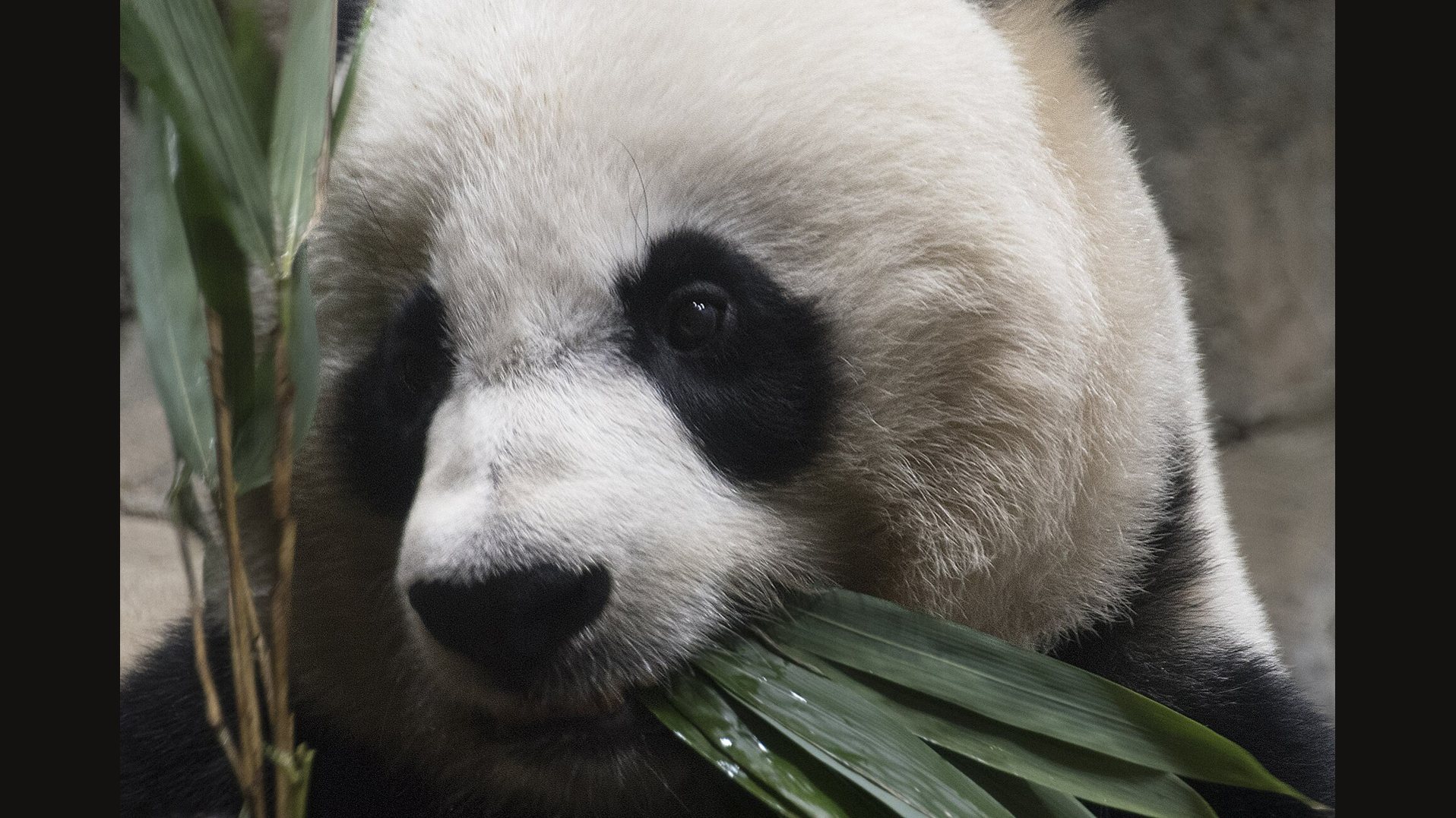
The soft black-and-white face hides a heavy-duty chewing machine. Once the fur is gone, the skull makes no secret of what the animal eats.
What you are looking at
Start with the shape. A giant panda skull has a short muzzle and very wide zygomatic arches, the bony bars that form the cheeks. Those arches flare out to make room for large masseter muscles, the chewing muscles that run from the cheek to the lower jaw.
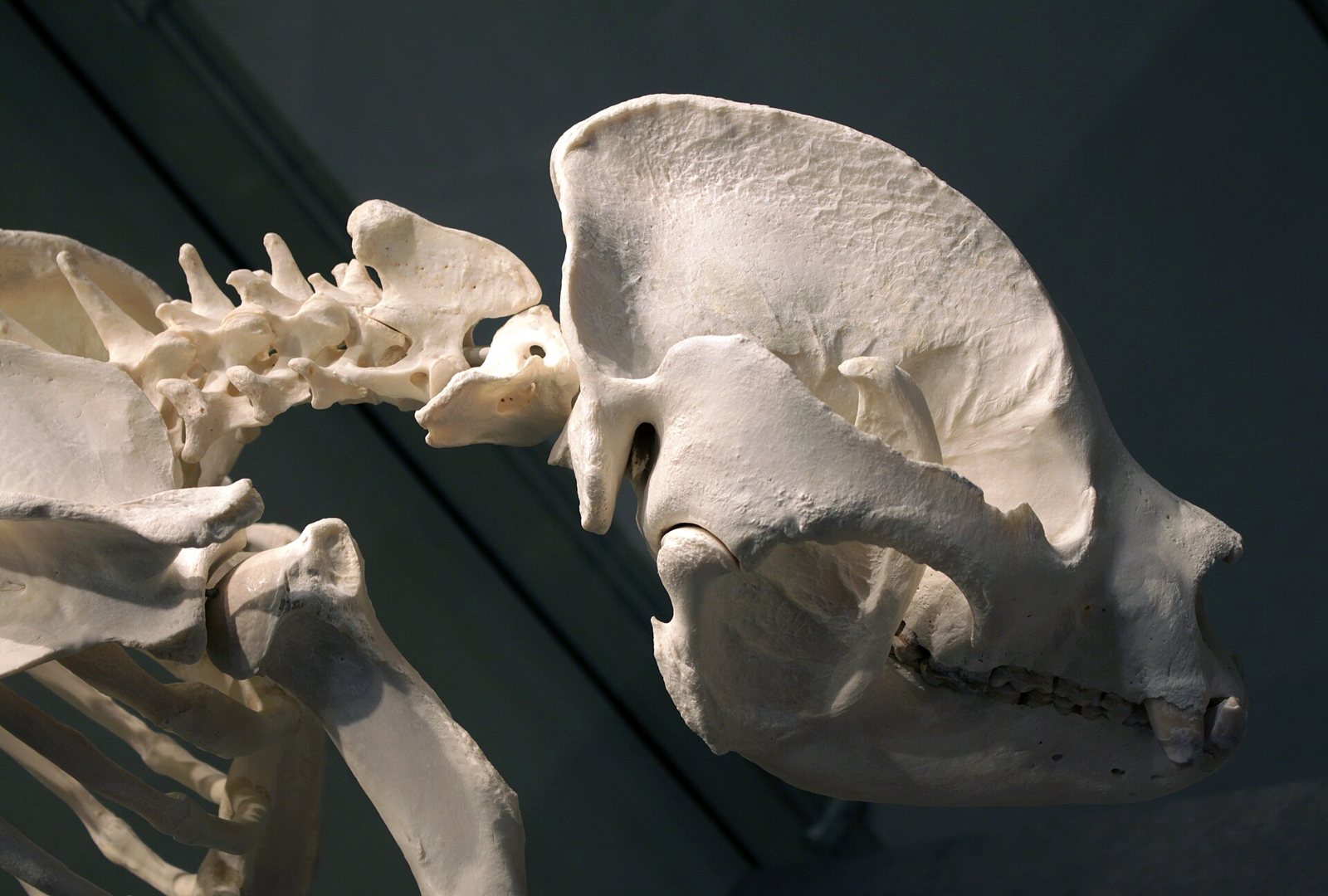
On top of the skull runs a pronounced sagittal crest. It works like a fin of bone, giving extra surface for the temporalis muscles that help close the jaw with force. Between the crest and the cheekbones, a living panda's head carries a great deal of chewing muscle.
Then turn to the teeth. The molars are large, broad and relatively flat, built for crushing and grinding bamboo. A 2020 skull study from Ohio State University gives the giant panda 40 teeth, with a dental formula of I 3/3, C 1/1, P 4/3, M 2/3. Read it as incisors, canines, premolars and molars on one side, upper over lower.
What each part of the panda skull does
Tap a card to bring it forward.
- Short muzzle: Keeps the jaw compact, with the teeth close to the muscles that power them.
- Wide zygomatic arches: The flaring cheekbones leave room for large masseter muscles.
- Sagittal crest: A ridge on top of the skull where the strong temporalis muscles attach.
- Broad, flat molars: Large grinding surfaces for crushing and grinding bamboo.
- 40 teeth: The dental formula is I 3/3, C 1/1, P 4/3, M 2/3.
Are pandas bears?
Yes. The Smithsonian's National Zoo classifies the giant panda in Ursidae, the bear family, and that is why its skull looks so familiar next to other bears. The overall plan is a bear's plan.
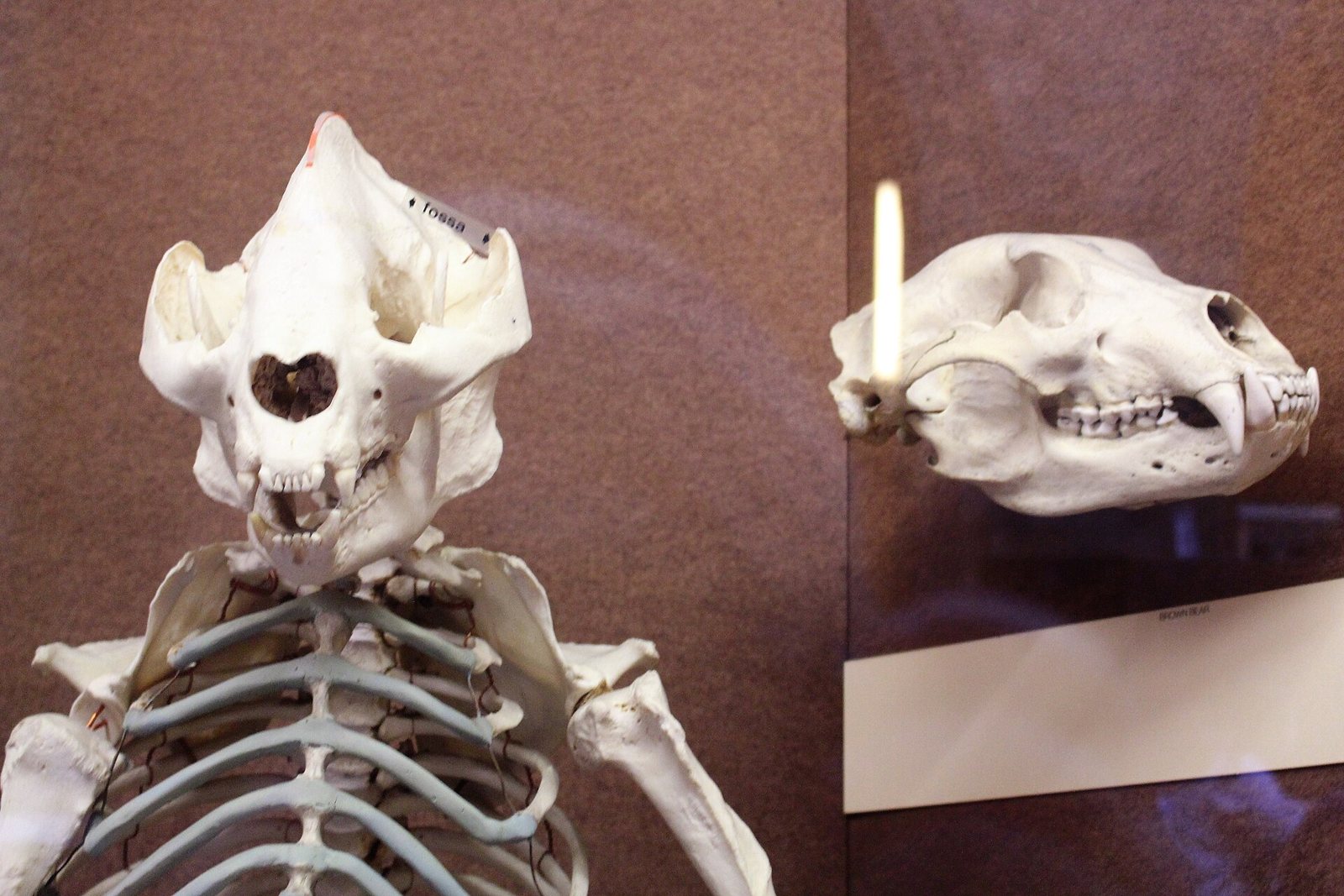
What makes it stand out is the proportions. In a comparison of polar bear, brown bear and giant panda skulls, Sasaki and colleagues reported the panda's skull as the tallest of the three. It also had the widest gap between the cheekbone and the lower jaw, the space the masseter muscle fills, and the longest coronoid process, a part of the lower jaw. Each of those points to the same thing: a bear skull reshaped around chewing muscle.
Bear skulls vary with species and age, so no single feature settles an identification. Tooth arrangement, jaw shape and the overall proportions are best read together. For the wider family, see our bear skull story.
How the panda skull came to fit bamboo
The bamboo-crushing skull has deep roots. Fossils of an extinct panda, *Ailuropoda microta*, from Jinyin Cave in southern China date to roughly 1.9 to 2.4 million years ago, in the late Pliocene. Those fossils already show the main skull and tooth features linked with processing bamboo.
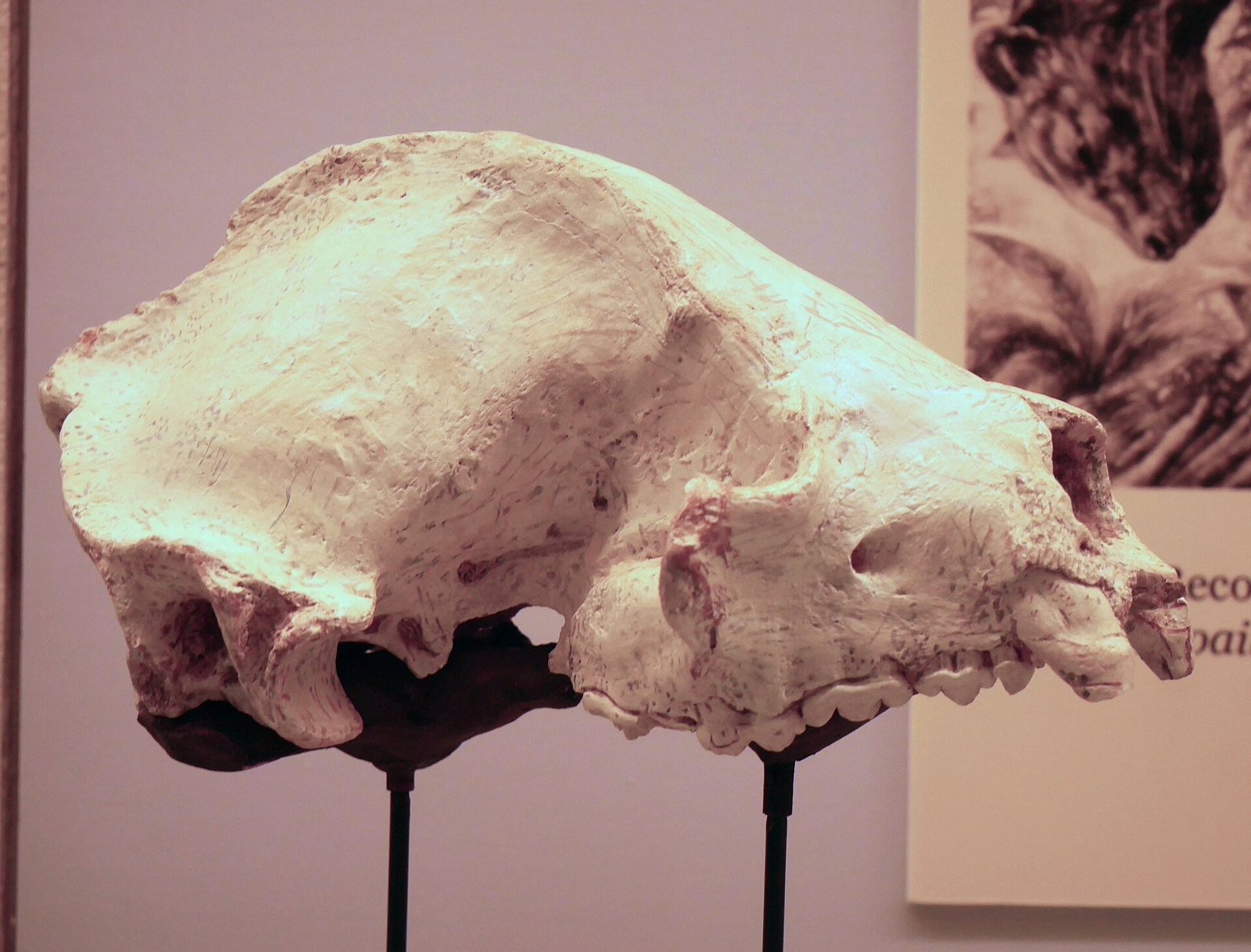
The story reaches further back still. Earlier panda relatives such as *Ailurarctos* show an early stage of the crushing teeth by about 7 million years ago. In 2007, John L. R. Hunt, Jinyi Liu, Marc Jaeger and Qizhi Zhu described the first skull of the earliest giant panda in the journal PNAS and argued that a bamboo-centred diet may have marked the panda line by the late Pliocene.
Later work on the jaw joint by Jin and colleagues looked at how the panda actually chews. They described a joint, premolars and molars that support strong side-to-side and crushing movements, exactly what an animal needs to strip and break down fibrous bamboo.
How the panda skull got its shape
Tap or hover a step to follow the order.
About 7 million years ago
Ailurarctos, an early panda relative, shows a first stage of crushing cheek teeth.
About 2.4 to 1.9 million years ago
Ailuropoda microta at Jinyin Cave in southern China already has the main skull and tooth features for bamboo.
2007
Hunt, Liu, Jaeger and Zhu publish the first skull of the earliest giant panda in PNAS.
How hard does a panda bite?
A giant panda has a strong bite for its body size, and the numbers come from models of the skull rather than from a gauge between the teeth of a live bear. One skull-mechanics model gives a range of roughly 539 to 1,836 newtons for *Ailuropoda melanoleuca*.
That wide range is not a typo. The figure changes with the individual animal, with the tooth doing the biting, and with whether the number was measured or modelled. Bite force at a back molar is not the same as at a canine. So, the fair way to quote panda bite strength is as an estimate, with the method and the tooth named.
Bears are not the only animals whose skull is shaped around the bite. The jaguar skull is another example, built around big jaw muscles for a very different menu.
The red panda, a look-alike from another family
The red panda, *Ailurus fulgens*, shares a name, a taste for bamboo and some skull features with the giant panda, but it is not a bear. The Smithsonian's National Zoo explains that the red panda is the only living member of its own family, Ailuridae. It is also much smaller.
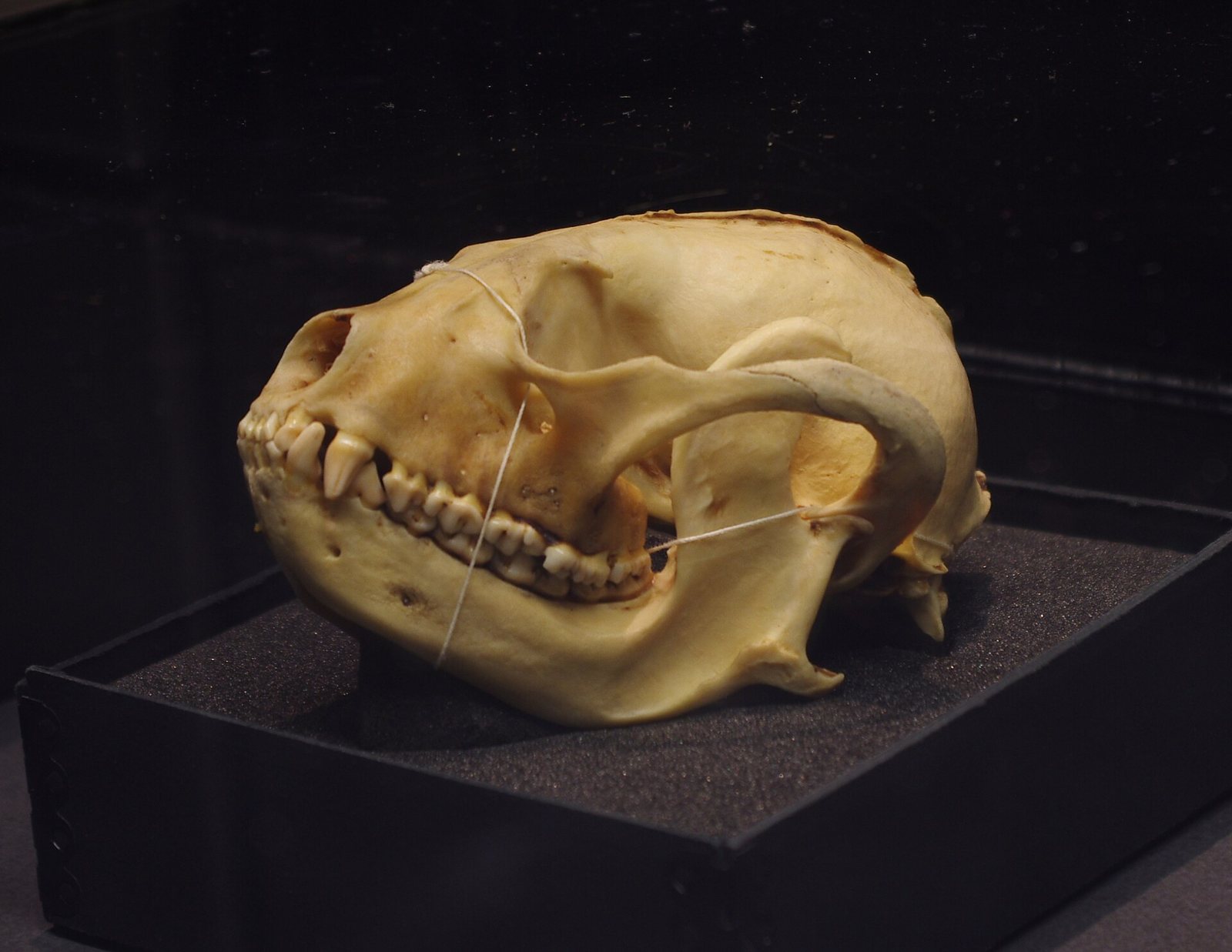
Even so, its skull shows broad zygomatic arches, deep lower jaws and strong chewing muscles. Scientists call this convergent evolution: two separate lineages eating similar food and arriving at similar feeding equipment. Samuels and colleagues compared the feeding mechanics of the two pandas in three-dimensional simulations. For another small carnivore skull to set beside the red panda's, see the raccoon skull.
Panda skulls in museum collections
A few panda skulls are on public display. The Smithsonian National Museum of Natural History shows a giant panda skull. The Museum für Naturkunde in Berlin has the skull of Bao Bao, a giant panda. The Muséum National d'Histoire Naturelle holds a cast of the skull of the extinct *Ailuropoda microta*, the Pliocene panda from Jinyin Cave.
Next to other bear skulls, the panda's is the one whose cheekbones look as if someone inflated them with a bicycle pump.
Tap or hover a row to highlight it.
| Feature | Giant panda |
|---|---|
| FeatureScientific name | Giant panda*Ailuropoda melanoleuca* |
| FeatureFamily | Giant pandaUrsidae, the bear family |
| FeatureAdult teeth | Giant panda40 |
| FeatureDental formula | Giant pandaI 3/3, C 1/1, P 4/3, M 2/3 |
| FeatureMain food | Giant pandaBamboo |
| FeatureCITES listing | Giant pandaAppendix I |
If you see a panda skull for sale or come across one
General information only, not legal advice: rules vary by country and by state. The giant panda appears in Appendix I of CITES, the global agreement that regulates trade in wildlife, in the version of the Appendices valid from 25 November 2024.
If a skull offered to you, or one that turns up some other way, looks like a panda's, do not keep it and do not buy it. Ask the relevant wildlife agency first, which in the United States means your state wildlife agency or the US Fish and Wildlife Service, and confirm what CITES and local rules require. Our found an animal skull story covers general background on skulls people come across.
FAQ
Short answers on panda teeth, the red panda and how panda skulls compare.
Why do pandas have flat teeth?
Pandas have broad, flat molars because they crush and grind bamboo. The large, flat surfaces break down the fibrous stems. The jaw joint supports side-to-side movement to work those surfaces against each other.
How many teeth does a giant panda have?
An adult giant panda has 40 teeth. The dental formula is I 3/3, C 1/1, P 4/3, M 2/3, counting incisors, canines, premolars and molars on one side, upper over lower.
Is a red panda a bear?
No, the red panda is not a bear. It is the only living member of the family Ailuridae, while the giant panda belongs to Ursidae. Their skull similarities come from similar diets, not close kinship.
How is a panda skull different from other bear skulls?
A panda skull is taller and wider in the cheeks than a polar bear or brown bear skull. In Sasaki and colleagues' comparison, it had the widest space for the masseter muscle and the longest coronoid process of the three. Those features give it more room for chewing muscle.
The skull under the fur
The giant panda's skull is a bear skull rebuilt for bamboo: wide cheekbones and a tall crest for muscle, a jaw joint for grinding, and 40 teeth with broad, flat molars. The cuddly face is real enough, but the bone underneath belongs to a serious chewer. For more on how to read the differences between skulls, see human vs animal skull.
Panda skull quiz
Answer every question to check.
Terms in this story
Tap a term to see what it means.
Ailuropoda melanoleuca. The scientific name of the giant panda, a member of the bear family.
---