

No. 338
Newgrange and the Winter Solstice: The Tomb the Sunrise Enters
At dawn around the winter solstice, sunlight slips into Newgrange through a small opening called the roof box, set above the entrance rather than through the doorway itself. The beam runs up to 19 metres along the stone passage, widens as the Sun climbs, and lights the inner chamber for about 17 minutes before it pulls back down the passage and fades.
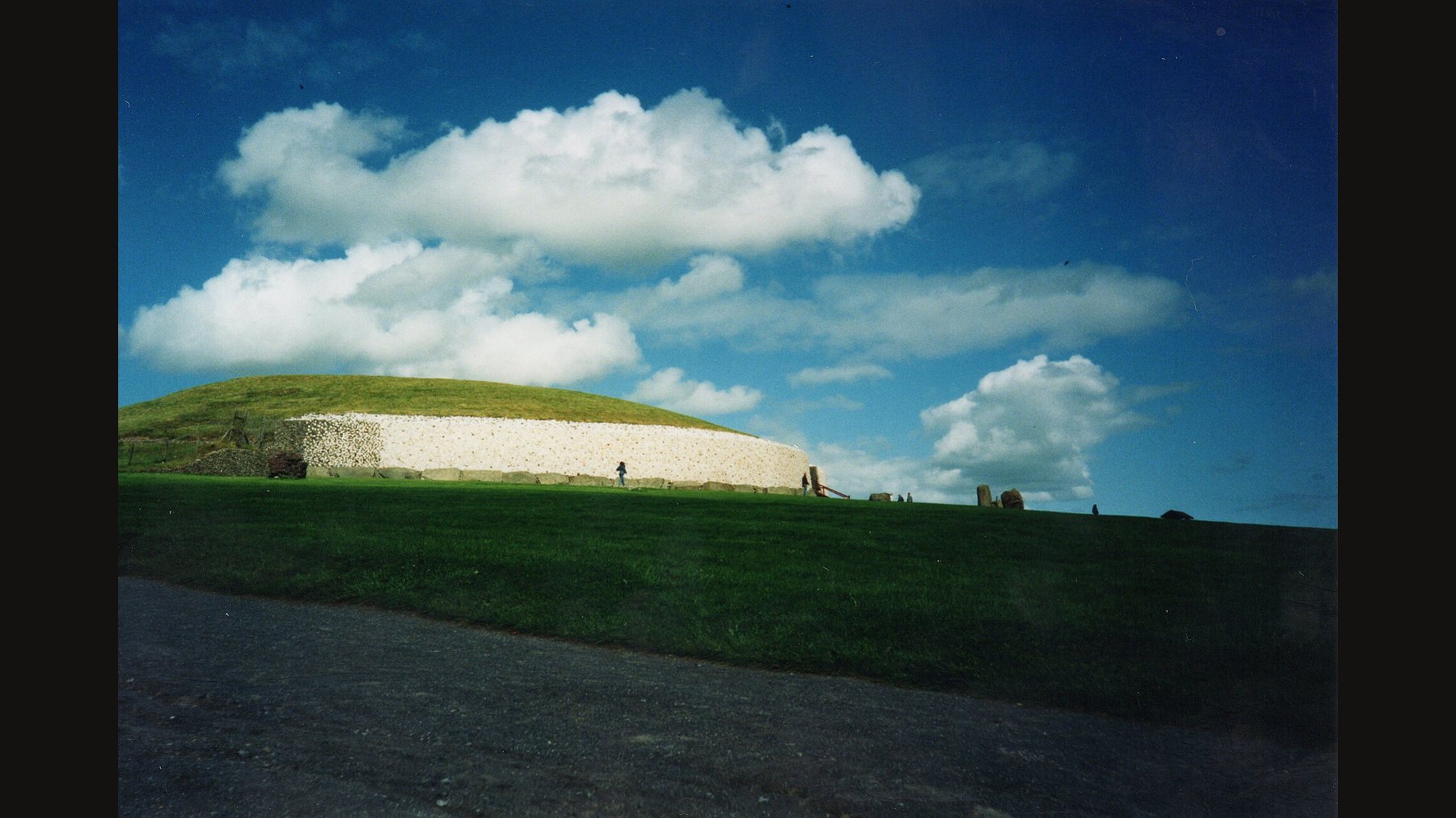
The monument was built around 3200 BC by Neolithic farming communities in the Boyne Valley, County Meath, in Ireland. It was a tomb, and its chamber held the cremated and unburned bones of people who died more than five thousand years ago.
Whether anyone sees the light on a given morning depends on the Irish weather, which has its own opinions about December. A clear sky gives the full effect; cloud can hide it completely.
What the sunrise does inside the tomb
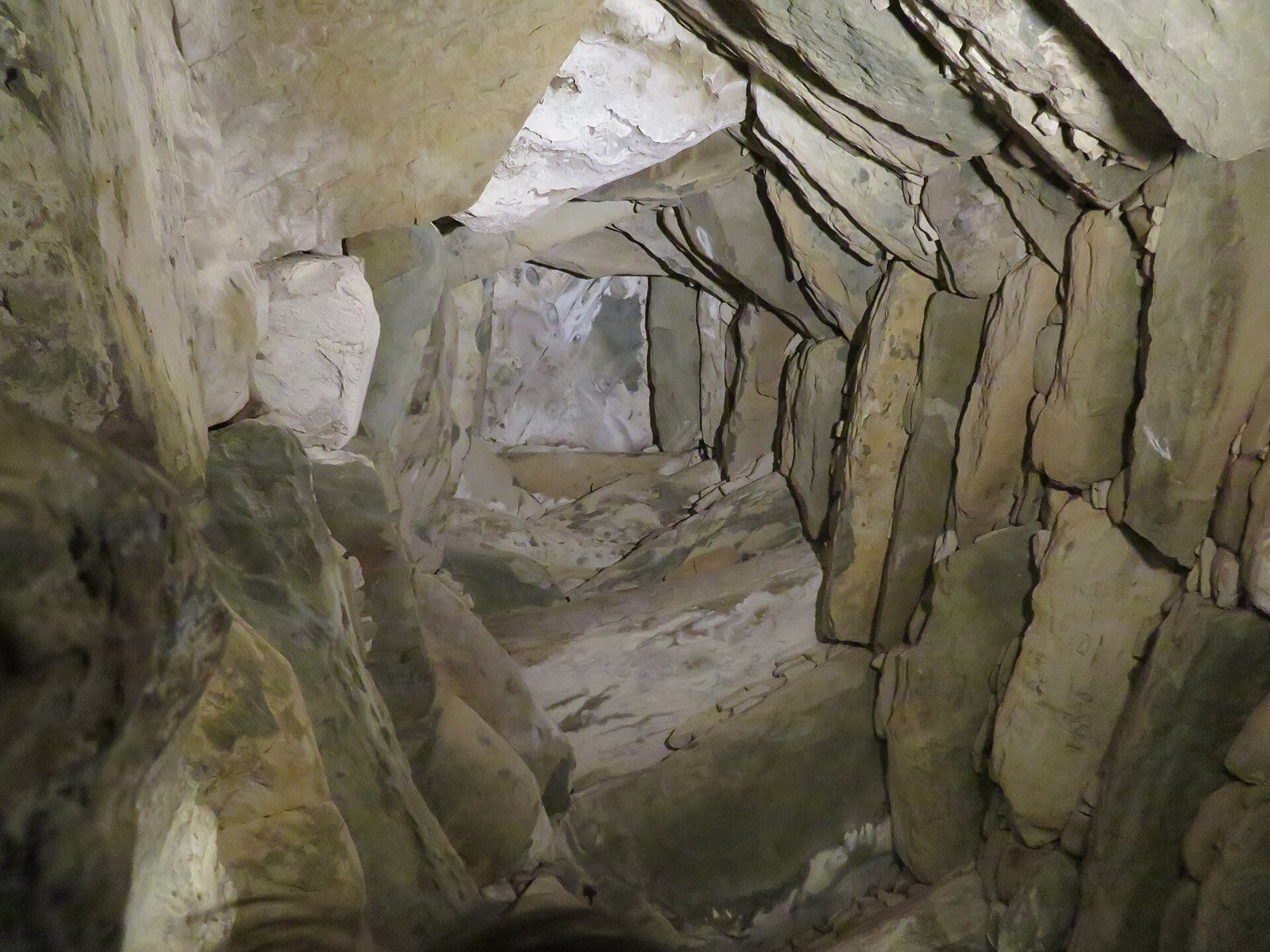
The trick of Newgrange is the roof box. According to Heritage Ireland, the Office of Public Works (OPW) site for the monument, the rising Sun enters through this small opening above the entrance, not through the doorway below it. From there the beam travels up to 19 metres along the passage until it reaches the chamber at the heart of the mound.
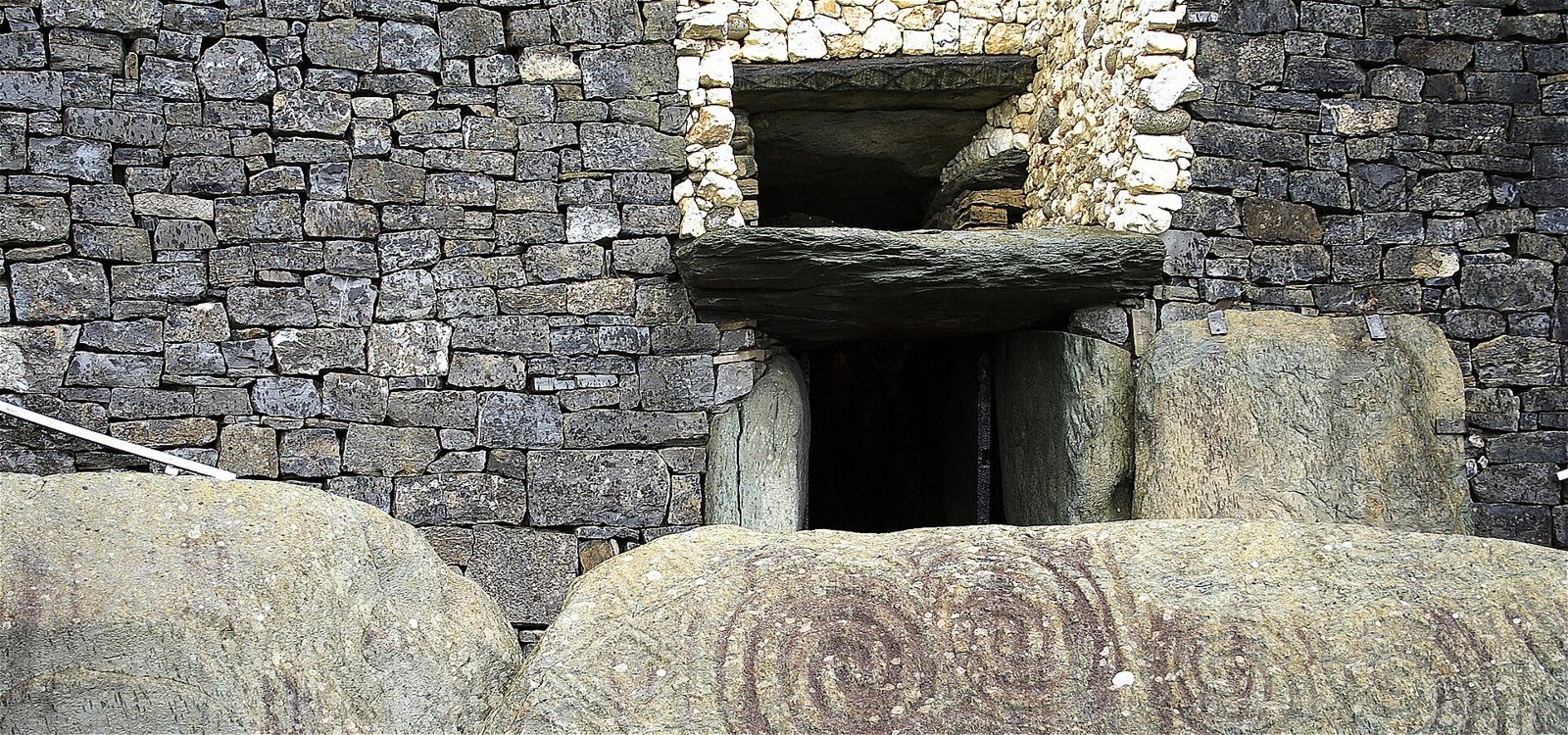
As the Sun rises higher, the narrow beam broadens and lights the chamber more fully. Heritage Ireland gives the length of the illumination as about 17 minutes. Then the light retreats the way it came, sliding back down the passage until the chamber is dark again.
The alignment is not a single-morning event. The OPW describes it as working across the mornings of December 18 to 22, with the solstice itself around December 21. That spread of dates is helpful, because weather can stop the effect from being visible on any one of those mornings.
The solstice effect at a glance
Tap a card to bring it forward.
- Where the light enters: Through the roof box, a small opening above the entrance, not through the doorway.
- How far it reaches: Up to 19 metres along the passage into the chamber.
- How long it lasts: About 17 minutes, widening as the Sun rises and then fading back down the passage.
- When it happens: Mornings of December 18 to 22, around the winter solstice, per the OPW.
- What can stop it: Cloud and weather can keep the beam from showing.
The morning the beam came back
The roof box came back to light during the excavations led by the archaeologist Michael J. O'Kelly for the Office of Public Works, which ran from 1962 to 1975.
The National Museum of Ireland records the result. On December 21, 1967, O'Kelly and his team became the first people in modern times to watch the chamber light up. The passage and the roof box had been exposed by the excavation, and the midwinter Sun once again reached the place where the dead had been laid.
The same excavations rebuilt the front of the mound, and the bright white quartz wall at the entrance is a modern reconstruction of one reading of the evidence. Newgrange was made of a great cairn, a 19-metre passage, a cross-shaped chamber with three recesses, a corbelled roof, 97 kerbstones and the roof box. The white quartz and dark granite in the present façade were recovered during the dig. O'Kelly read that layer of stone as a retaining wall about three metres high that had collapsed outward, and the rebuild set the stones on a concrete support wall.
Other archaeologists have argued that the quartz may have formed a lower revetment, a collar or a pavement instead, because the layer of fallen stone does not show exactly how it was once arranged. The OPW's own Heritage Ireland magazine calls the quartz wall a debated part of the reconstruction, while the roof box is widely accepted as original. A study in the journal *Kuml*, "Newgrange and the white wall," sets out the case in detail.
Since 2000, the winners of an annual lottery have stood where O'Kelly stood, waiting in the dark to see whether the sky would cooperate.
Who built Newgrange, and how old is it?
Newgrange is about 5,200 years old. It was built around 3200 BC by Neolithic farming communities in the Boyne Valley, the date given by both the OPW and UNESCO. The builders are not known by name. What survives of them is their monument, their burial practice and the care they took with the Sun.
The tomb belongs to the developed Irish passage-tomb tradition: a long passage leading into a chamber inside a great mound. It was never a lone structure. UNESCO describes Brú na Bóinne, the bend of the River Boyne where Newgrange stands, as a major prehistoric ritual and funerary site. It holds three great mounds, Newgrange, Knowth and Dowth, and about forty smaller satellite passage graves around them.
The people who built Newgrange lived in Ireland thousands of years before the Celts, whose societies and languages belong to Iron Age Europe. They were part of a wider Neolithic passage-tomb tradition, linked through objects and monument forms with Britain, Brittany and Iberia, according to the OPW's Heritage Ireland education pack. People of the Bronze Age, the Iron Age and the Roman period later reused or visited the mound, but the passage tomb was already ancient by then.
Brú na Bóinne was inscribed on the UNESCO World Heritage List in 1993. Later Irish mythology tells its own stories about the mounds, calling the place Brug na Bóinne, the dwelling of the Tuatha Dé Danann, and those stories came long after the building. The archaeology gives a plainer account: farming people of the Neolithic, building for their dead on a scale that still impresses anyone who walks up to the entrance.
Newgrange through time
Tap or hover a step to follow the order.
Around 3200 BC
Newgrange and the main Brú na Bóinne monuments are built during the Neolithic period.
1962 to 1975
Michael J. O'Kelly leads excavations at Newgrange for the Office of Public Works.
December 21, 1967
O'Kelly and his team see the solstice light enter the chamber, the first people in modern times to do so.
1993
Brú na Bóinne is inscribed on the UNESCO World Heritage List.
2000
The OPW introduces an annual lottery for places in the chamber at the solstice.
2025
A study in Antiquity reassesses the fragmented human remains and cautions against reading them as an intact royal burial.
2026
The OPW records 34,263 lottery entries and 38 winners, each allowed to bring a guest.
The people laid in the chamber
Newgrange was a place for the dead, and O'Kelly's excavations recovered their remains. The chamber held both cremated human bone and unburned human bone. Alongside the people lay animal remains and small objects: pendants, stone or clay balls, and fragments of bone pins.
The bones were broken into fragments and disturbed. O'Kelly suggested that the unburned bones might have come from two skeletons. A 2025 study in the journal Antiquity by Smyth and colleagues, titled "The 'king' of Newgrange?", counted at least two individuals among the unburned remains and at least three among the cremated remains. That makes a minimum of five people whose bones rested in the chamber.
The same study stresses how much the deposits were moved over the centuries. Later human and animal activity scattered and mixed the fragments. No articulated human remains, meaning bones still lying in their natural connected position, have been securely reported from Irish passage-tomb contexts.
So, the plain and respectful description is this: Newgrange held human mortuary deposits, cremated bone and unburned, disarticulated bone, from several people. The evidence does not point to one named person, or to an intact royal burial laid out beneath the solstice beam. If you want to know how archaeologists read age, sex and history from remains like these, see what bones tell archaeologists, and for later places where the bones of many people were gathered together, see ossuaries around the world.
How do you get into Newgrange for the solstice?
Standing inside the chamber at solstice sunrise is decided by an annual lottery run by the OPW. Heritage Ireland dates the lottery to 2000, the year the OPW introduced it.
The official Newgrange Winter Solstice Lottery page sets out how it works, as of November 2026:
- Entry is online only.
- Applicants must be over 10 years old.
- Applicants under 18 must be accompanied by an adult.
- Only one entry is allowed per email address.
- Places cannot be transferred to someone else.
- Winners must show photo ID.
In 2026, the OPW's winter solstice page recorded 34,263 entries for the draw held on October 15, 2026, and 38 winners, each allowed to bring a guest into the chamber.
How hard it is to win changes from year to year, as do the number of winners and the exact arrangements for the solstice mornings. For the current year's entry dates, winner numbers and details, check the OPW lottery page and the notices from the Brú na Bóinne Visitor Centre.
Visiting Brú na Bóinne the rest of the year
Most visitors see Newgrange on an ordinary day, and yes, they can go inside: the passage and chamber are open on guided OPW tours. The OPW is clear about how that works. Heritage Ireland says every visit begins at the Brú na Bóinne Visitor Centre in Donore, County Meath, and visitors should not go directly to the monument. From the centre, a shuttle bus takes visitors across, and access to Newgrange is by guided tour only.
The visitor centre is open year-round, with seasonal hours, a limited number of tickets and advance booking. Around the solstice the routine changes: from December 18 to 22 the centre opens earlier and the regular tour options are suspended.
A few practical points from the OPW are worth knowing before going. The passage is low and narrow. Photography is not permitted inside. The site is outdoors, so it can be cold or wet, and weather can change access at short notice.
A visit inside Newgrange costs €18 for an adult on the Brú na Bóinne Tour plus Newgrange Chamber, which runs from March 1 to November 1, according to the OPW's 2026 trade catalogue. The same tour is €16 for seniors over 60, €12 for students and children 12 and over, and €48 for a family. In January, February, November and December, the Newgrange Tour plus Exhibition is €10 for an adult, €8 for a senior, €5 for a student or child 12 and over, and €25 for a family. Children under 12 go free but still need a ticket. Confirm current prices on the official Heritage Ireland booking page before travelling.
Newgrange, Maeshowe and Stonehenge
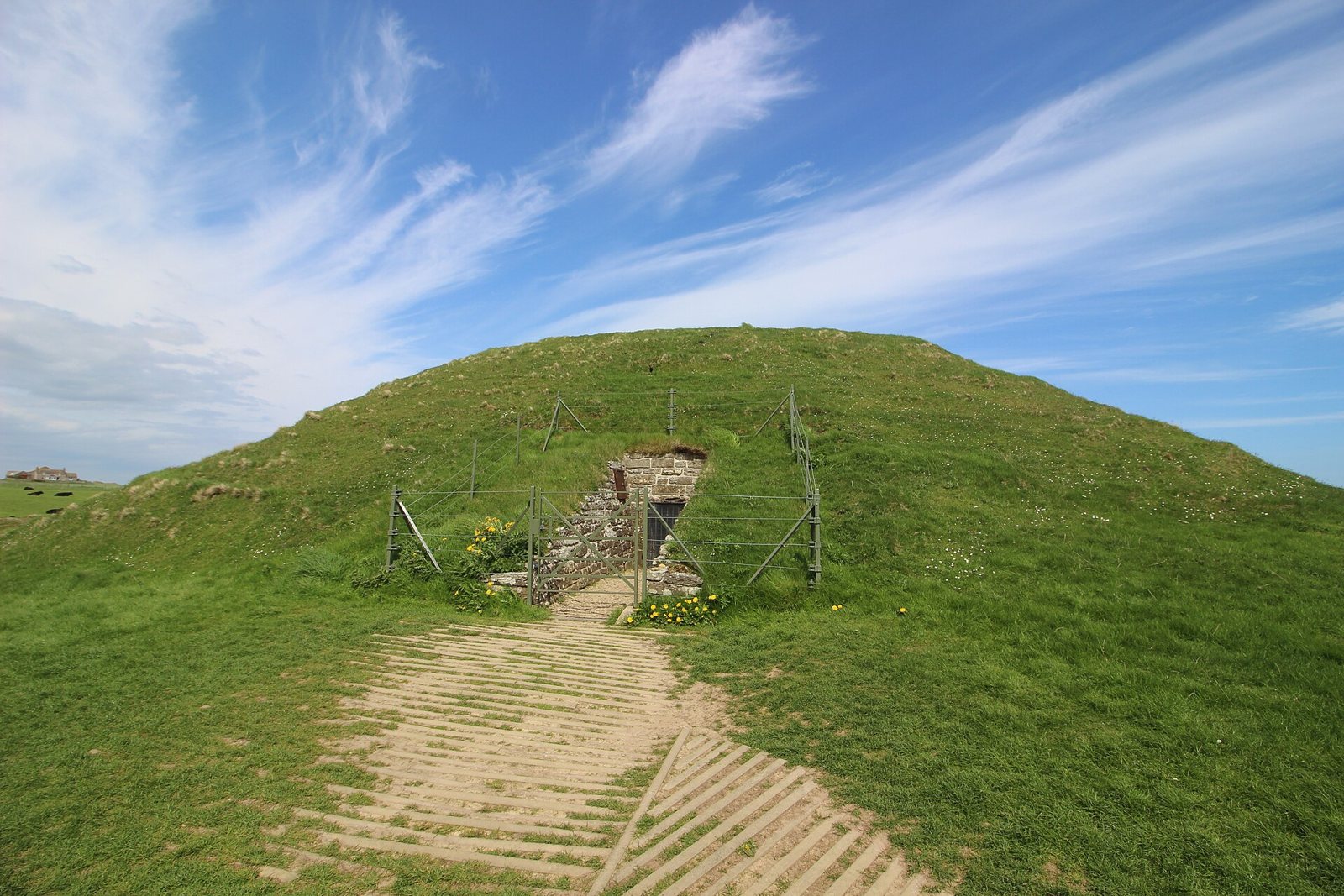
Newgrange is not the only ancient monument built with the midwinter Sun in mind. Maeshowe, on Orkney, is also a passage tomb, and both use a narrow passage to carry sunlight into a chamber. The difference is the time of day: Newgrange faces the rising Sun at the winter solstice, while Maeshowe is aligned with the setting Sun.
Stonehenge is a different kind of monument altogether. English Heritage describes its main axis as linking the midsummer sunrise and the midwinter sunset, and notes that nearby monuments around Stonehenge also line up with midwinter sunrise and sunset.
All three show a shared concern with the Sun and with ceremony at the turning points of the year. That does not mean one was copied from another. Newgrange, Maeshowe and Stonehenge belong to different regional traditions and periods, and their builders left no written record of what they believed.
Tap or hover a row to highlight it.
| Monument | Place | Form | Solstice alignment |
|---|---|---|---|
| MonumentNewgrange | PlaceBoyne Valley, County Meath, Ireland | FormPassage tomb with a roof box | Solstice alignmentWinter solstice sunrise enters the chamber |
| MonumentMaeshowe | PlaceOrkney | FormPassage tomb | Solstice alignmentWinter solstice sunset enters the chamber |
| MonumentStonehenge | PlaceEngland | FormStone monument, not a covered tomb | Solstice alignmentMain axis links midsummer sunrise and midwinter sunset |
FAQ
Short answers on solstice visits, the roof box, the light, the age of the tomb and its carvings.
Can you visit Newgrange on the winter solstice?
Yes, but only lottery winners stand inside the chamber at sunrise. The visitor centre opens earlier from December 18 to 22, and regular tour options are suspended during those days. Check the current notices from the OPW before planning a trip.
How does the Newgrange roof box work?
The roof box is a small opening above the entrance that lets the midwinter sunrise into the passage. Because it sits higher than the doorway, it aims the low winter Sun up along the passage and into the chamber. The beam reaches up to 19 metres inside.
How long does the light stay inside Newgrange?
The light stays in the chamber for about 17 minutes. It widens as the Sun rises, then narrows and slips back down the passage. Cloud can cut it short or hide it entirely.
Is Newgrange older than Stonehenge?
Newgrange dates to around 3200 BC, according to UNESCO and the OPW. The two monuments belong to different regional traditions and building periods, and they were made for different purposes: Newgrange as a covered passage tomb, Stonehenge as an open stone monument.
Is there anything buried in Newgrange?
Yes, the chamber held the remains of at least five people, as cremated bone and unburned, disarticulated bone. Animal remains and small objects such as pendants and stone or clay balls lay with them. The bones were scattered over time, so they do not form one intact burial.
What do the spirals at Newgrange mean?
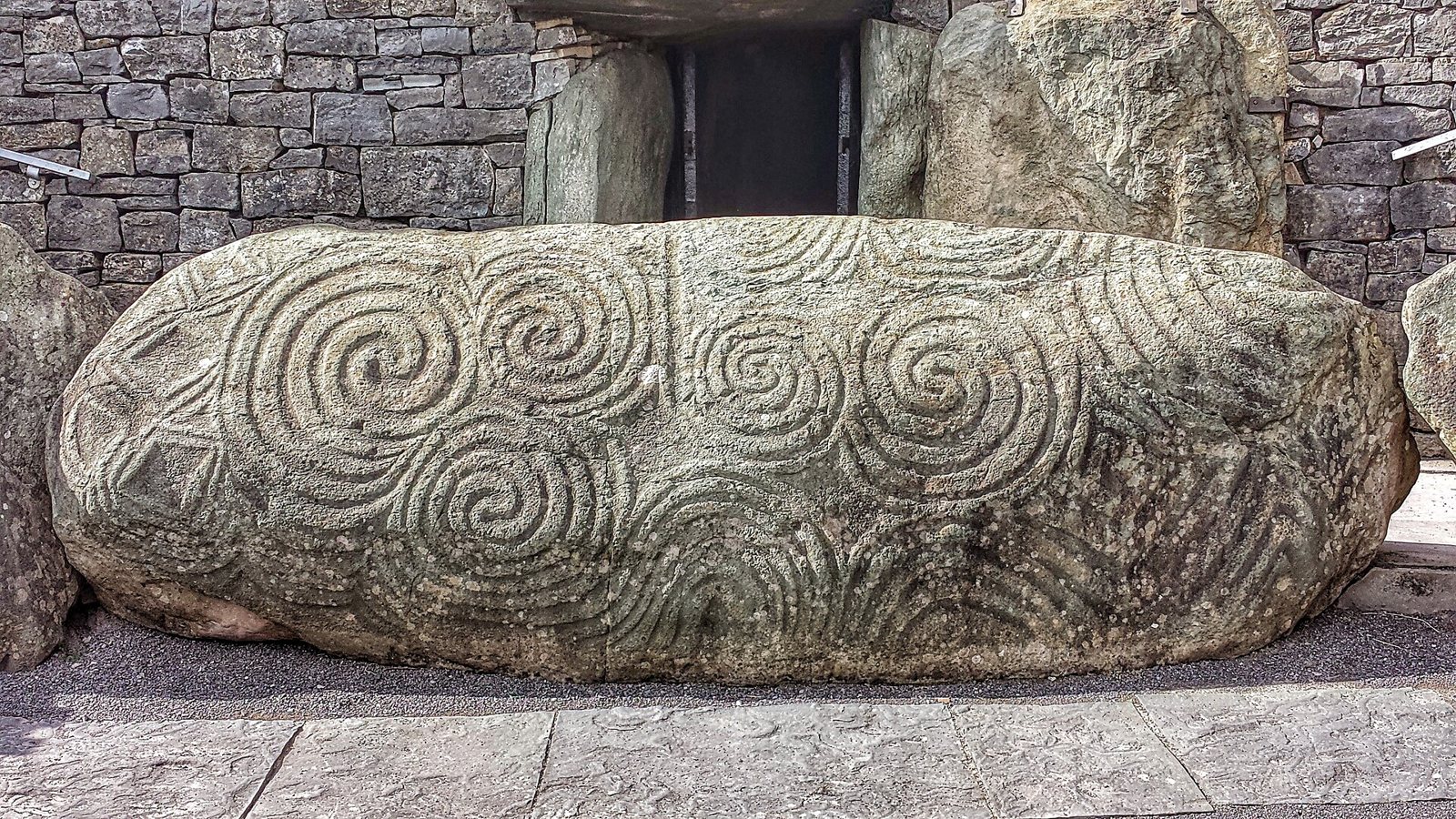
The original meaning of the Newgrange spirals is unknown, though archaeologists have proposed solar and cosmological readings. The entrance stone carries interlocking spirals, including a prominent three-spiral motif, and a related three-spiral is carved inside the chamber on the stone known as orthostat C10. Claire O'Kelly preferred the name "three-spiral" because each of its three parts is made of two parallel coils.
In 2025, the archaeologist Joe Fenwick proposed, in work reported by the University of Galway, that the entrance-stone spirals stand for the solar year: a central groove marking the solstice alignment, inward-turning spirals for shortening days and outward-turning spirals for lengthening ones. The National Museum of Ireland records another reading, that spirals may represent a vortex between this world and an other world. Both are interpretations of Neolithic art, carved long before Celtic Ireland.
The light, the stones and the dead
Newgrange is a tomb where, on the darkest days of the year, sunlight reaches the chamber of the dead. Its builders are nameless, the people in its chamber survive as fragments, and the roof box still works more than five thousand years later, weather permitting. For more on how ancient remains are dated, read how old are these bones, and for another window on Ireland's ancient dead, read about bog bodies.
Newgrange and the solstice: test yourself
Answer every question to check.
Terms in this story
Tap a term to see what it means.
Roof box. The small opening above the Newgrange entrance. It lets the midwinter sunrise into the passage so the beam can reach the chamber.
---