

No. 345
El gran calavera (1949): Buñuel's Mexican Comedy About a Reckless Rich Man
*El gran calavera* is a 1949 Mexican comedy directed by Luis Buñuel. Fernando Soler stars as Ramiro, a wealthy widower whose drinking and reckless spending let his whole family live off him, until they pretend the fortune is gone and everyone has to go to work.
In the title, *calavera* describes the man himself. Besides meaning a skull, *un calavera* in Spanish is a dissipated, partying, irresponsible man, and Ramiro fits the description perfectly.
The film was a hit, and that success gave Buñuel room to make *Los olvidados* the following year. For a comedy he did not write, it turned out to matter a great deal to his career.
The film at a glance
*El gran calavera* was made in Mexico City in 1949. The Cervantes Virtual filmography of Buñuel's work records that filming began on 9 June 1949 at Estudios Tepeyac and that the film premiered at Cine Orfeón in Mexico City on 25 November 1949.
The screenplay is credited to Luis Alcoriza and Janet Alcoriza, adapted from the play *El gran calavera* by the Spanish dramatist Adolfo Torrado. The film was produced by Ultramar Films, with Óscar Dancigers and Fernando Soler as producers. So, Soler was both the star and one of the people behind the money.
The cast includes Fernando Soler as Ramiro, with Rosario Granados, Andrés Soler, Rubén Rojo, Gustavo Rojo, Maruja Grifell, Francisco Jambrina and Luis Alcoriza. The Museum of Modern Art lists a 92-minute 35mm print under the English title *The Great Madcap*.
Tap or hover a row to highlight it.
| Detail | El gran calavera | Nosotros los nobles |
|---|---|---|
| DetailYear | El gran calavera1949 | Nosotros los nobles2013 |
| DetailDirector | El gran calaveraLuis Buñuel | Nosotros los noblesGaz Alazraki |
| DetailWriters | El gran calaveraLuis Alcoriza and Janet Alcoriza, from Adolfo Torrado's play | Nosotros los noblesGaz Alazraki, Adrián Zurita and Patricio Saiz |
| DetailLead | El gran calaveraFernando Soler as Ramiro | Nosotros los noblesGonzalo Vega as Germán Noble |
| DetailPremise | El gran calaveraA rich, hard-drinking widower's family stages a ruin so everyone must work | Nosotros los noblesA rich businessman fakes bankruptcy and puts his spoiled children to work |
What happens in El gran calavera
The plot is simple and built for laughs. Ramiro is rich, widowed and fond of the bottle, and his relatives are perfectly happy to let his money carry them. According to the synopsis from CulturaUNAM, the family decides to teach a lesson about responsibility and work: they make it look as if the fortune has disappeared and everyone is ruined.
From there, the comedy comes from rich people suddenly having to behave like everyone else. How the lesson lands, and on whom, is best left for the film itself.
What "un calavera" means
Most people know *calavera* as the Spanish word for a skull, and it is. But the Real Academia Española's *Diccionario de la lengua española* gives a second sense for the masculine noun: "hombre disipado, juerguista e irresponsable," a dissipated, partying and irresponsible man.
The dictionary's own example sentence reads, "Era un calavera, que nunca sentaría la cabeza," which means "He was a reckless man who would never settle down." That is Ramiro in one line, and it is the sense the title uses. *El gran calavera* is "the great reckless man," a big spender and bigger drinker, not a great skull.
Two meanings of calavera
Tap a card to bring it forward.
- Calavera, the skull: The everyday Spanish word for a skull.
- Un calavera, the man: In the DLE's second sense, a dissipated, partying and irresponsible man.
- The dictionary example: "Era un calavera, que nunca sentaría la cabeza," meaning "He was a reckless man who would never settle down."
- In the film title: El gran calavera uses the second sense for Ramiro, the hard-living rich widower.
The word has plenty of other lives in Mexico and beyond. For the skull side of it, read our story on calavera meaning. For the comic verses written for Día de Muertos that also carry the name, see calaveras literarias. And for English insults built on the skull, see numbskull and skulduggery.
Why Buñuel made a studio comedy
By 1949 Luis Buñuel had a commercial flop behind him. His first Mexican feature, *Gran Casino*, released in 1946 to 1947, had failed commercially. *El gran calavera* came to him as a commercial assignment, a popular comedy that he had not written.
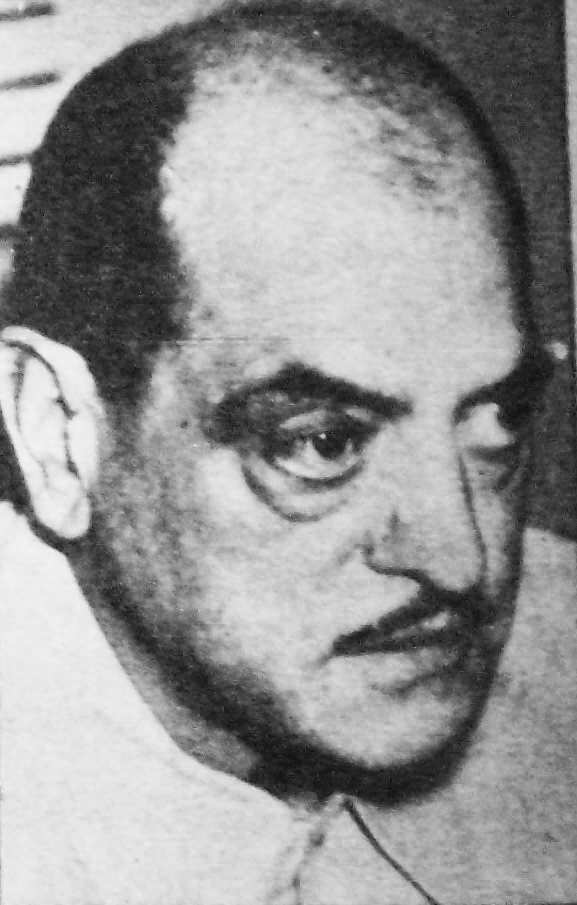
Film historian Amparo Martínez Herranz, writing in the journal Artigrama, describes the project as a chance for Buñuel to establish himself in the Mexican film industry. She also notes that Fernando Soler, as lead actor and producer, closely supervised the production.
It worked. Martínez Herranz calls *El gran calavera* Buñuel's first success in Mexico, and MoMA describes it as a hugely popular comedy. A crowd-pleaser about a rich man's drinking problem became a real turning point in Buñuel's Mexican career.
The road to Los olvidados
The success of *El gran calavera* mattered most for what came next. Martínez Herranz says it opened the way for *Los olvidados*. Film scholar Ernesto Acevedo-Muñoz, in his book on Los olvidados and the crisis of Mexican cinema, argues that the commercial success gave Buñuel enough independence to pursue the serious social, political and aesthetic concerns of *Los olvidados*, his third Mexican film, made in 1950.

Laid end to end, the sequence is clear: a failed commercial debut with *Gran Casino*, a successful studio comedy with *El gran calavera*, and then the far more personal and socially severe *Los olvidados*. The reckless rich man, in other words, helped pay the way for *Los olvidados*.
From Gran Casino to Nosotros los nobles
Tap or hover a step to follow the order.
1946 to 1947
Gran Casino, Buñuel's first Mexican film, is made and released and fails commercially.
9 June 1949
Filming of El gran calavera begins at Estudios Tepeyac in Mexico City.
25 November 1949
El gran calavera premieres at Cine Orfeón in Mexico City.
1950
Buñuel makes Los olvidados, his next Mexican film.
28 March 2013
Nosotros los nobles, a modern version of the same premise, opens in Mexico.
Is Nosotros los nobles a remake of El gran calavera?
Yes, in the sense that it is a modern adaptation of the same premise with new characters. *Nosotros los nobles* is a 2013 Mexican comedy directed by Gaz Alazraki and written by Alazraki, Adrián Zurita and Patricio Saiz. The Secretaría de Cultura record, drawing on data from the Instituto Mexicano de Cinematografía (IMCINE), lists Gonzalo Vega, Karla Souza, Luis Gerardo Méndez and Juan Pablo Gil among its stars.
The setup has been updated for a new generation. Germán Noble, a wealthy businessman, fakes the bankruptcy of his company, takes away his children's cars, phones and credit cards, moves them to a poor neighbourhood and puts them to work. A study from the university ITESO gives its Mexican opening date as 28 March 2013.
The two films' family tree is described in slightly different ways. Netflix describes *Nosotros los nobles* as based on Adolfo Torrado's play *El Gran Calavera*, the same play behind Buñuel's film. The Vancouver distributor Iberoamerican Images describes it as influenced by Buñuel's 1949 comedy. Either way, the spoiled family, the faked ruin and the forced lesson in work all come from the same story.
Where to watch El gran calavera
As of November 2026, three services list the film. Filmin has a page for it, with a "Ver en Filmin" link, describing it as a 1949 Mexican classic directed by Luis Buñuel. Apple TV lists it in its United States catalogue, with Fernando Soler, Rosario Granados and Luis Alcoriza in the cast. Plex lists it as free to watch, subject to regional availability and the platform's own conditions.
What you can actually play depends on where you live and when you look, since catalogues change by country and by date. Before settling in for the evening, confirm on the service itself whether the film is available to stream, rent or watch with a subscription in your country.
FAQ
Quick answers on the release date, the director, the English title and the lead role.
When was El gran calavera released?
*El gran calavera* premiered at Cine Orfeón in Mexico City on 25 November 1949. Filming had begun at Estudios Tepeyac on 9 June that year, according to the Cervantes Virtual filmography.
Who directed El gran calavera?
Luis Buñuel directed *El gran calavera*, working from a screenplay by Luis Alcoriza and Janet Alcoriza. It was his second Mexican film, made after *Gran Casino* and before *Los olvidados*.
What is El gran calavera called in English?
MoMA lists *El gran calavera* under the English title *The Great Madcap*. In Spanish, *un calavera* is a dissipated, partying man, which "madcap" only partly captures.
Who plays Ramiro in El gran calavera?
Fernando Soler plays Ramiro, the rich widower at the centre of the story. Soler also produced the film with Óscar Dancigers for Ultramar Films and closely supervised the production.
A reckless man and a turning point
*El gran calavera* is a family comedy about a rich man who drinks too much and the relatives who live off him, built on a Spanish play and shaped by its star. It is also the hit that gave Luis Buñuel the room to make *Los olvidados*. For another film with a skull in its name, from a very different corner of cinema, read about The Skull (1965).
El gran calavera quiz
Answer every question to check.
Terms in this story
Tap a term to see what it means.
Calavera. The Spanish word for a skull. As a masculine noun it can also mean a reckless, partying, irresponsible man.
---